
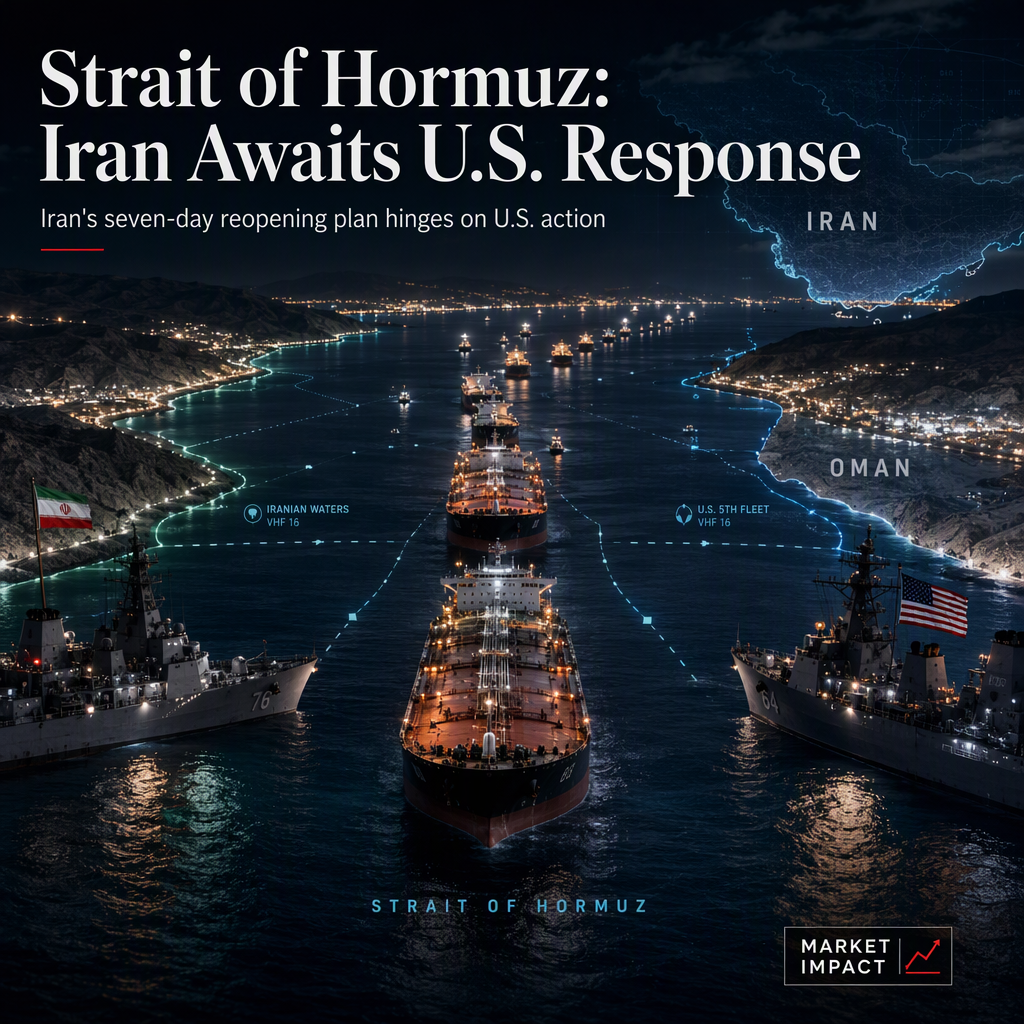
Iranian Foreign Minister Abbas Araghchi announced that the decision to reopen the Strait of Hormuz now depends on the United States, following the presentation of a 'concrete seven-day plan' to U.S. officials via Qatari mediators after indirect talks at the United Nations General Assembly in New York [1]. Araghchi stated that normal maritime passage through the critical waterway could resume within seven days once the U.S. accepts the plan, emphasizing that the required actions by the U.S. are already part of the commitments outlined in the June Memorandum of Understanding between the two countries, which had previously collapsed after renewed hostilities [1].
One key condition of the proposal is for the U.S. to accept a maritime transit route through the Strait of Hormuz, agreed upon by Iran and Oman [1]. While Iran expressed confidence that the U.S. could implement the necessary steps within four or five days, a U.S. official indicated that the Trump Administration is not in a hurry to reach an agreement, citing the U.S.'s strong position and ongoing control of the Strait. The official noted that nearly 40 million barrels of oil had transited the Strait in the past 48 hours [1].
President Donald Trump posted an image labeling the Strait as the 'Trump Strait' and reiterated that he is still considering whether to 'annihilate' Iran or pursue a deal [1]. Iranian President Masoud Pezeshkian, in a separate interview, stated that resolving the Hormuz issue is possible through negotiations rather than force, but expressed distrust toward talks with Washington [1]. The closure of the Strait by Iran earlier in the conflict had disrupted the flow of approximately 20% of the world's oil, causing significant economic repercussions [1].
According to the latest NBC News Decision Desk Poll, only 31% of respondents approved of Trump's handling of the Iran war, while 69% disapproved [1].
CONCLUSION
Iran has presented a seven-day plan to reopen the Strait of Hormuz, contingent on U.S. acceptance of previously agreed commitments. While Iran signals readiness for a swift resolution, the U.S. maintains a cautious stance, and market uncertainty persists given the strategic importance of the waterway and ongoing geopolitical tensions.