
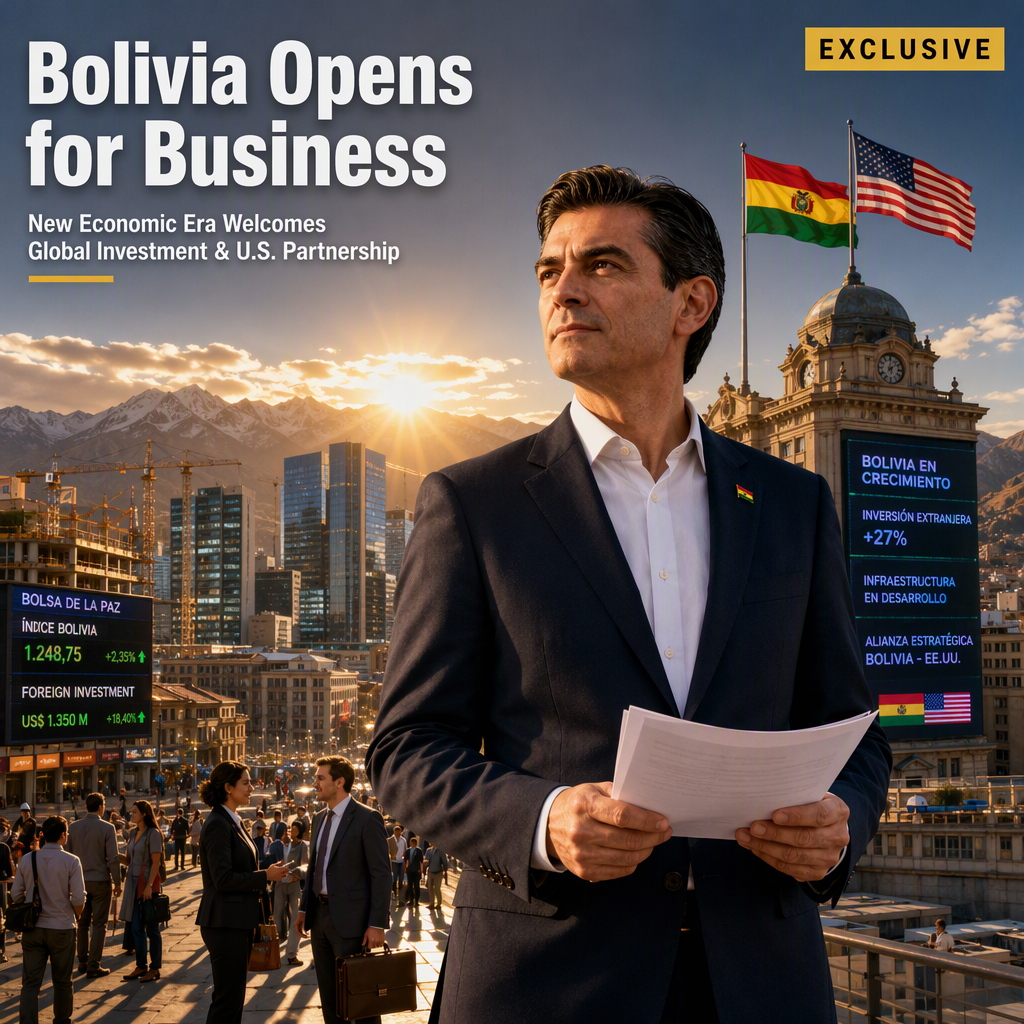
Bolivia has announced a significant shift in its economic and political direction, moving away from nearly two decades of socialist governance under the Movement Toward Socialism. President Rodrigo Paz Pereira stated that his administration is focused on rebuilding confidence, strengthening institutions, and opening the economy to investment, with an emphasis on private enterprise and entrepreneurship [1].
When President Paz took office, Bolivia's Central Bank reserves stood at only $51 million. Within ten months, reserves increased to nearly $1.2 billion, with the stated objective to continue rebuilding them. Despite ongoing challenges such as high inflation and fuel shortages, the government is committed to putting the country's economic house in order [1].
President Paz described his approach as 'capitalism for everyone,' emphasizing access to capital, investment opportunities, and job creation. He stressed that Bolivia is open for business and welcomes international investment, capital, technology, and expertise, particularly from American and international investors. However, he clarified that Bolivia seeks long-term partnerships that include employment, training, technology transfer, infrastructure development, and value addition within Bolivia, rather than simply exporting raw materials [1].
The new economic direction is also fostering a renewed relationship with the United States. President Paz highlighted discussions with U.S. Secretary of State Marco Rubio as evidence of a shift toward cooperation based on mutual respect, economic opportunity, security, and shared interests. Bolivia intends to engage constructively with the U.S. and other international partners to support growth and stability, while prioritizing its own national interests [1].
Bolivia's natural resources—including natural gas, agricultural capacity, forests, and strategic minerals such as lithium, copper, and tin—are positioned as key assets in the country's strategy to attract investment and drive economic growth [1].
CONCLUSION
Bolivia is signaling a clear departure from its previous socialist policies, focusing on economic openness, institutional strengthening, and international investment. The government’s efforts to rebuild reserves and foster partnerships with the U.S. and global investors suggest a medium-term positive outlook for the country’s economic prospects.