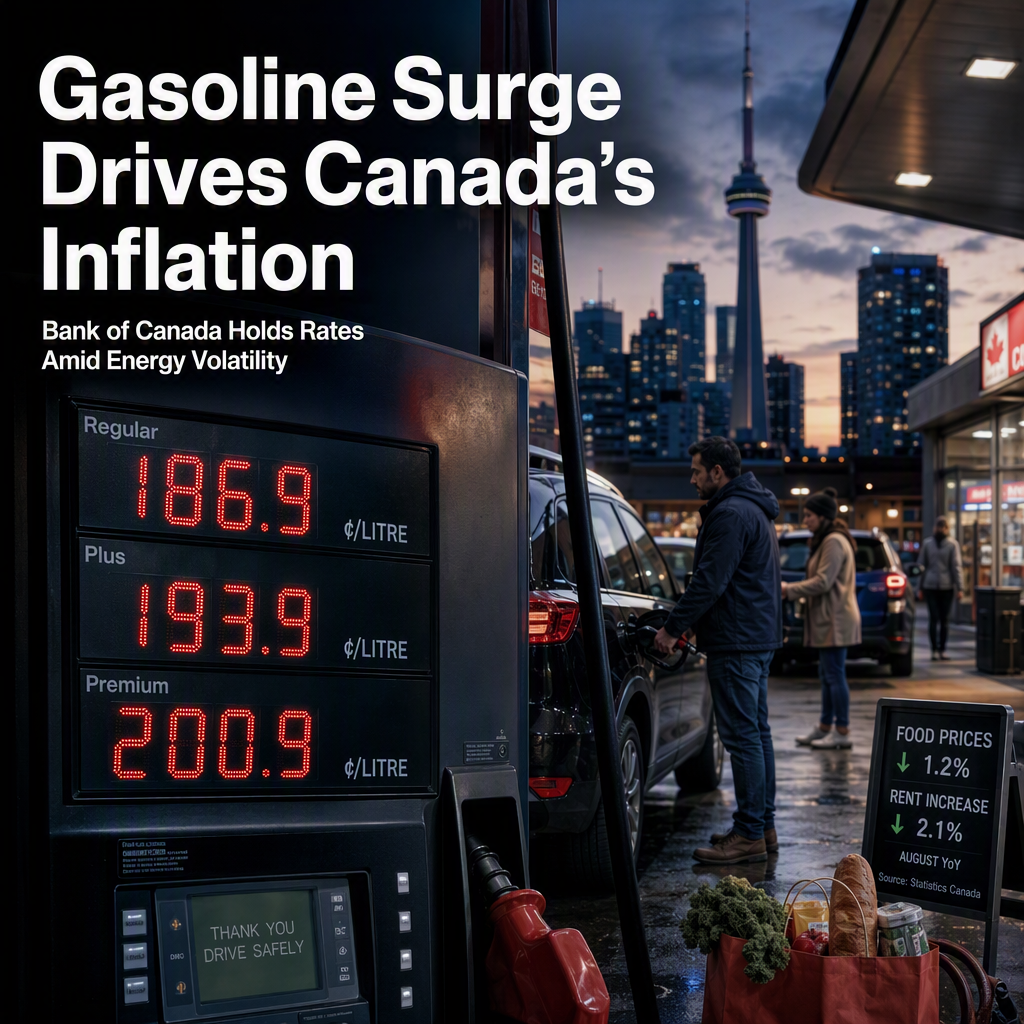
Canada's annual inflation rate remained steady at 3.0% in August 2026, matching both the July figure and economists' forecasts, according to Statistics Canada's Consumer Price Index release [1]. The headline CPI was driven primarily by a 22.8% year-over-year increase in gasoline prices, which, while slightly cooler than July's 25.7% surge, continued to exert significant upward pressure on overall inflation [1]. Excluding gasoline, consumer prices rose 2.4% in August, up from 2.2% in July, indicating that energy costs are masking a more subdued inflation environment for other goods and services [1].
On a monthly basis, prices fell 0.1%, but after seasonal adjustment, they rose 0.2%, suggesting that underlying price pressures persist despite the headline dip [1]. Core inflation, as measured by the Bank of Canada's preferred trim and median averages, hovered around 2.0%, slightly above the central bank's target but well below the headline rate, highlighting the outsized impact of volatile energy prices [1]. Grocery prices increased by 2.8% year-over-year, marking the first time since July 2024 that food inflation lagged behind the overall CPI [1].
The Bank of Canada maintained its policy rate at 2.25% on September 2, marking the seventh consecutive hold, as policymakers weighed the influence of energy-driven headline inflation against more moderate underlying trends [1]. The ongoing conflict in the Middle East was cited as a factor keeping oil prices elevated, with crude trading near US$100 a barrel in recent days [1]. Travel and rent also contributed to upward price pressures, with travel tour prices surging 26.1% year-over-year [1].
Market implications center on the divergence between headline and core inflation, with the Bank of Canada likely to remain cautious given the persistent energy volatility but reassured by the stability in core measures [1]. No explicit forward-looking statements or analyst opinions were provided in the source article.
CONCLUSION
Canada's inflation data for August 2026 underscores the outsized role of gasoline in driving headline CPI, while core inflation remains near the Bank of Canada's target. With the policy rate on hold and underlying price pressures subdued, markets may interpret the data as supportive of a continued wait-and-see approach by the central bank. The persistence of energy volatility, however, remains a key risk factor.