
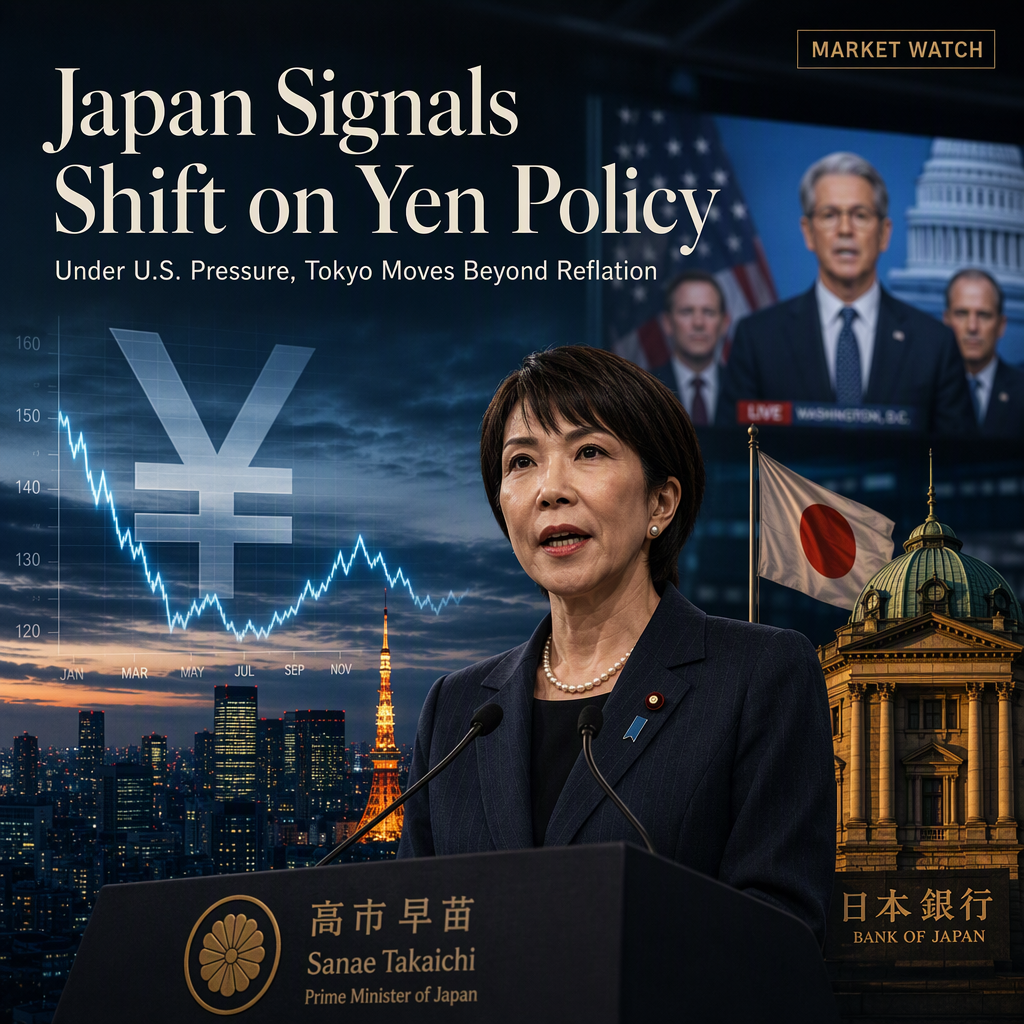
Prime Minister Sanae Takaichi's government in Japan is signaling a departure from the reflationary policies that have characterized its recent economic strategy, as the United States intensifies pressure for changes in Japan's fiscal and monetary policy. The Trump administration, including figures such as Bessent, is urging Japan to address the strength of the yen, marking a continuation of longstanding U.S. demands for Japan to alter its monetary stance to influence currency values [1].
This escalation in U.S. demands now extends beyond trade issues to direct calls for policy adjustments that could impact exchange rates. Takaichi's administration is emphasizing its independence in policy-making, seeking to avoid perceptions of capitulating to U.S. pressure. Officials are publicly highlighting a shift toward a more balanced approach to economic management, moving away from aggressive reflation [1].
The policy pivot aims to reassure both domestic and international markets that Japan remains committed to stable economic growth while managing risks associated with currency fluctuations. Market participants are closely monitoring for signs of intervention or changes in policy direction that could affect the yen's trajectory [1].
Financial analysts note that the yen is highly sensitive to both domestic policy signals and external pressures from the U.S. Any indication of coordinated intervention or a shift in Japan's approach to monetary easing could trigger significant movements in currency markets [1].
CONCLUSION
Japan's move away from reflationary policies under U.S. pressure signals a potential shift in the country's approach to monetary and fiscal management. Market participants and analysts are watching closely for any signs of intervention or policy changes that could impact the yen. The situation underscores the ongoing sensitivity of currency markets to both domestic and international policy developments.