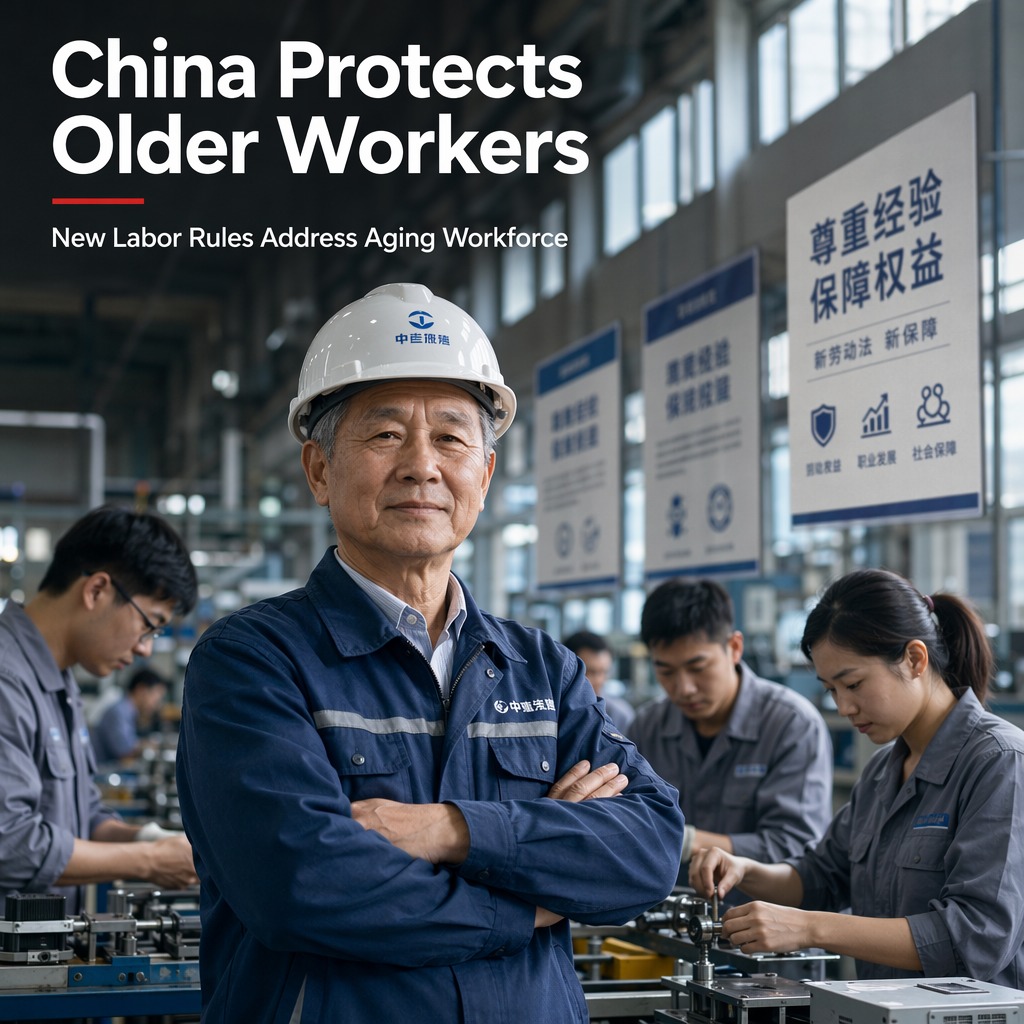
The Chinese government has introduced new regulations aimed at strengthening protections for workers who continue employment beyond the official retirement age, as part of a broader strategy to address the country's shrinking labor force and declining birth rates [1]. The new rules specify wage requirements and prohibit overtime for older workers, with the goal of encouraging seniors to remain active in the workforce and improving their job security and working conditions [1].
This policy shift reflects mounting concerns among Chinese policymakers about labor shortages and the economic risks posed by a rapidly aging population [1]. By tapping into the experience and skills of senior workers, authorities hope to mitigate some of the negative effects associated with demographic changes, such as a falling birth rate and a shrinking working-age population, which could otherwise hamper economic growth [1].
No specific financial values, technical analysis, or market reactions were provided in the article. The measures are positioned as a proactive response to demographic challenges, but the article does not include forward-looking statements from analysts or detailed market forecasts [1].
CONCLUSION
China's new protections for older workers signal a policy response to demographic headwinds threatening its labor force and economic growth. While the immediate market impact is not quantified, the move is intended to stabilize the workforce by retaining experienced senior employees.