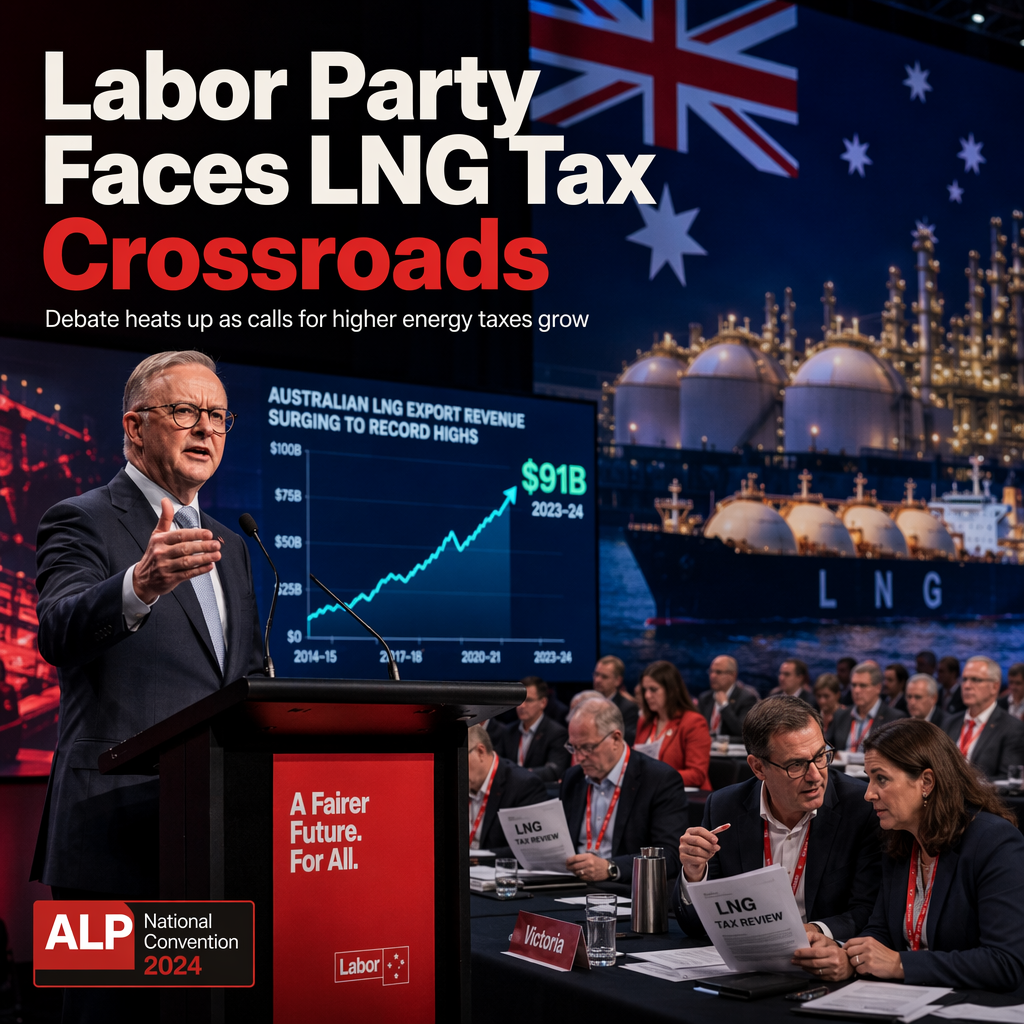
Senior members of Australia's ruling Labor Party are working to manage internal pressure for an increase in taxes on the country's liquefied natural gas (LNG) exporters, as the issue took center stage at the 50th Australian Labor Party (ALP) national convention in Adelaide [1]. The push for higher taxes comes as some party members argue that the current tax regime does not provide adequate returns to the Australian public, especially after LNG producers benefited from surging global energy prices following Russia’s invasion of Ukraine [1].
Prime Minister Anthony Albanese, incoming Labor President Kate Ellis, and ALP National Secretary Paul Erickson attended the conference, where senior leaders emphasized the need for policy stability and investor confidence in the energy sector [1]. LNG exports are a major contributor to Australia's economy, with export revenues reaching AUD 70 billion in 2025, positioning the country as one of the world's largest LNG exporters [1].
Some delegates called for a review of the Petroleum Resource Rent Tax (PRRT), suggesting that its current structure allows multinational gas companies to minimize their tax obligations through deductions and offsets [1]. Market analysts highlighted that any increase in taxes could affect the profitability of major LNG exporters such as Woodside Energy and Santos, with potential implications for their share prices amid ongoing global energy market volatility [1].
No formal decision was made on the LNG tax issue during the conference, and the government has not announced any immediate changes. However, discussions are expected to continue, with further analysis of fiscal and market impacts likely to shape future policy directions [1].
CONCLUSION
Australia's Labor Party is navigating internal calls for higher taxes on LNG exporters, but no immediate policy changes have been announced. The ongoing debate signals potential future shifts that could impact major energy companies and investor sentiment.