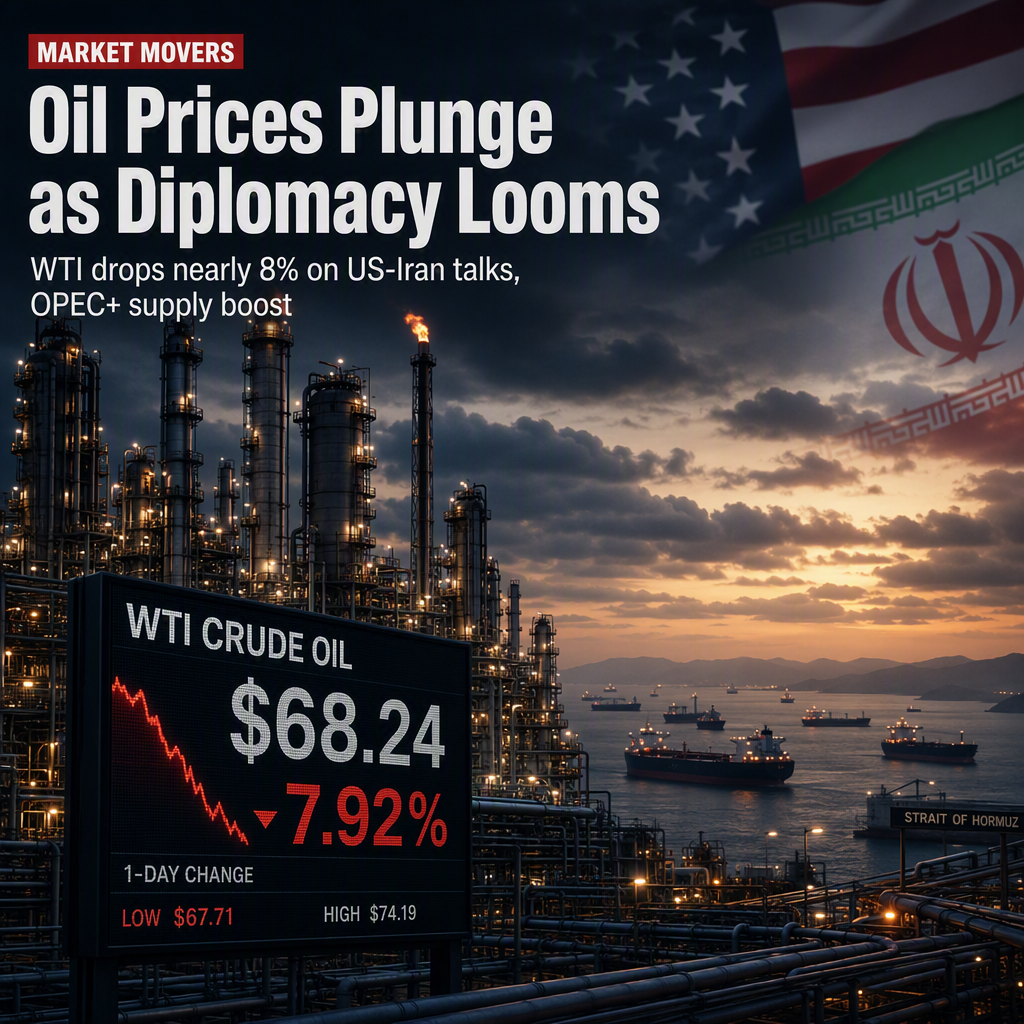
West Texas Intermediate (WTI) US Oil prices plunged by 7.76% to around $78.45 on Monday, as investors unwound the geopolitical risk premium following announcements of a potential agreement between the United States and Iran regarding Iran's nuclear program and the reopening of the Strait of Hormuz [1]. US President Donald Trump stated that a large-scale military strike against Iran had been suspended after Tehran agreed to the framework of a deal, and that talks between the two countries were scheduled to begin on Monday afternoon, fueling expectations of de-escalation and reduced risk of disruptions to global oil supplies [1].
However, Iran's Foreign Ministry, through spokesperson Esmail Baghaie, expressed a more cautious stance, stating that Tehran is not currently holding discussions with the United States regarding the reopening of the Strait of Hormuz, though talks with Oman on the issue are ongoing [1]. Meanwhile, the Organization of the Petroleum Exporting Countries and its allies (OPEC+) agreed on Sunday to increase production quotas by around 188,000 barrels per day from September, completing the unwinding of voluntary output cuts introduced in 2023. This anticipated increase in supply added further downward pressure on oil prices [1].
According to TD Securities, renewed hopes for a deal have led Commodity Trading Advisors (CTAs) to become modest sellers of crude oil, but the bank argues that the market's reaction is overly bearish given that global oil flows remain heavily constrained [1]. Strategists highlighted that production recovery in the Middle East has faltered amid recent escalations, and warned that any potential agreement, similar to previous failed attempts, may not be sufficient to generate consistent incoming tanker traffic. They noted that flows through Hormuz, including Gulf of Oman ship-to-ship transfers, have been at 3-4.5 million barrels per day in the last two weeks, which aligns with the current production profile and indicates that physical supply remains tight despite the price drop [1].
BNY observed that diplomacy is buying time, with the US and Iran communicating again, likely through regional intermediaries. The bank reported that President Trump canceled planned strikes after allies outlined a potential framework covering de-escalation, the Strait of Hormuz, and Iran’s nuclear program, leading to the sharp fall in oil prices [1]. Trump indicated that the talks could help reopen the Strait of Hormuz and keep oil supplies flowing, presenting the move as a response to appeals from Middle Eastern allies, including Saudi Arabia, and as part of efforts to reach a broader deal [1].
CONCLUSION
WTI oil prices experienced a sharp decline as prospects for US-Iran diplomacy and increased OPEC+ supply eased market fears of supply disruptions. While the market reacted bearishly, analysts caution that physical supply remains tight and that any agreement may not immediately resolve underlying constraints. The situation remains fluid, with talks and supply dynamics continuing to influence oil prices.