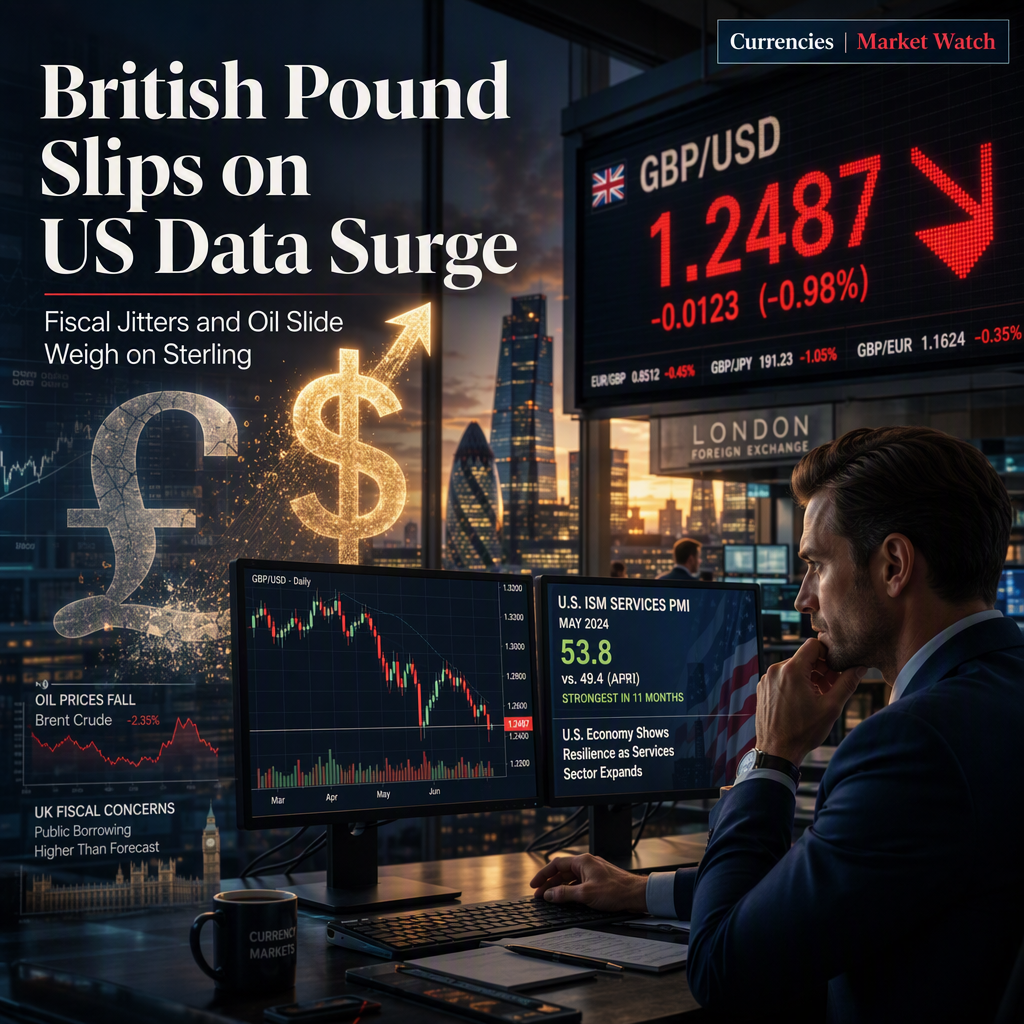
The British Pound Sterling (GBP) declined by approximately 0.27% against the US Dollar (USD) on Monday, with the GBP/USD pair trading at 1.3439 after reaching a daily high of 1.3506 [1]. This movement was driven by a combination of stronger-than-expected US ISM Manufacturing PMI data, UK fiscal policy concerns, and easing oil prices [1]. The ISM Manufacturing PMI for July rose from 53.5 to 55.6, surpassing estimates of 54, marking the fastest pace of improvement since 2022. Additionally, the employment sub-component increased for the first time since 2023, while input costs remained elevated [1].
The US Dollar Index (DXY), which tracks the USD against a basket of six currencies, rose 0.14% to 99.94, as the Greenback recovered following two days of FX market intervention aimed at supporting the Japanese Yen (JPY) [1]. In the UK, investors are closely watching the fiscal policy direction under new Prime Minister Andy Burnham. Chancellor John Healey instructed cabinet ministers to cut budgets as the government seeks to meet pre-election spending commitments [1].
Geopolitical developments also influenced market sentiment, as US President Donald Trump paused attacks on Iran at the request of Tehran and other Middle Eastern countries. CBS News reported that no new negotiations are planned, with ongoing talks between Washington and Tehran continuing through mediators [1]. This contributed to a decline in oil prices, with West Texas Intermediate (WTI) crude falling over 8.40% to below $80 per barrel [1].
Expectations for further rate hikes by major central banks have eased. The US Federal Reserve is projected to tighten policy by 22 basis points, while the Bank of England (BoE) is expected to raise rates once by year-end, according to Prime Terminal data [1]. Technically, GBP/USD remains above key simple moving averages, with immediate resistance at 1.3449 and further resistance at 1.3551. The Relative Strength Index (RSI) at 54.5 indicates steady momentum, suggesting potential for further upside if support holds [1].
CONCLUSION
The British Pound's decline reflects a combination of robust US economic data, UK fiscal tightening, and easing oil prices. Market sentiment is cautious, with central bank rate hike expectations moderating and technical indicators suggesting GBP/USD could stabilize if support levels are maintained.