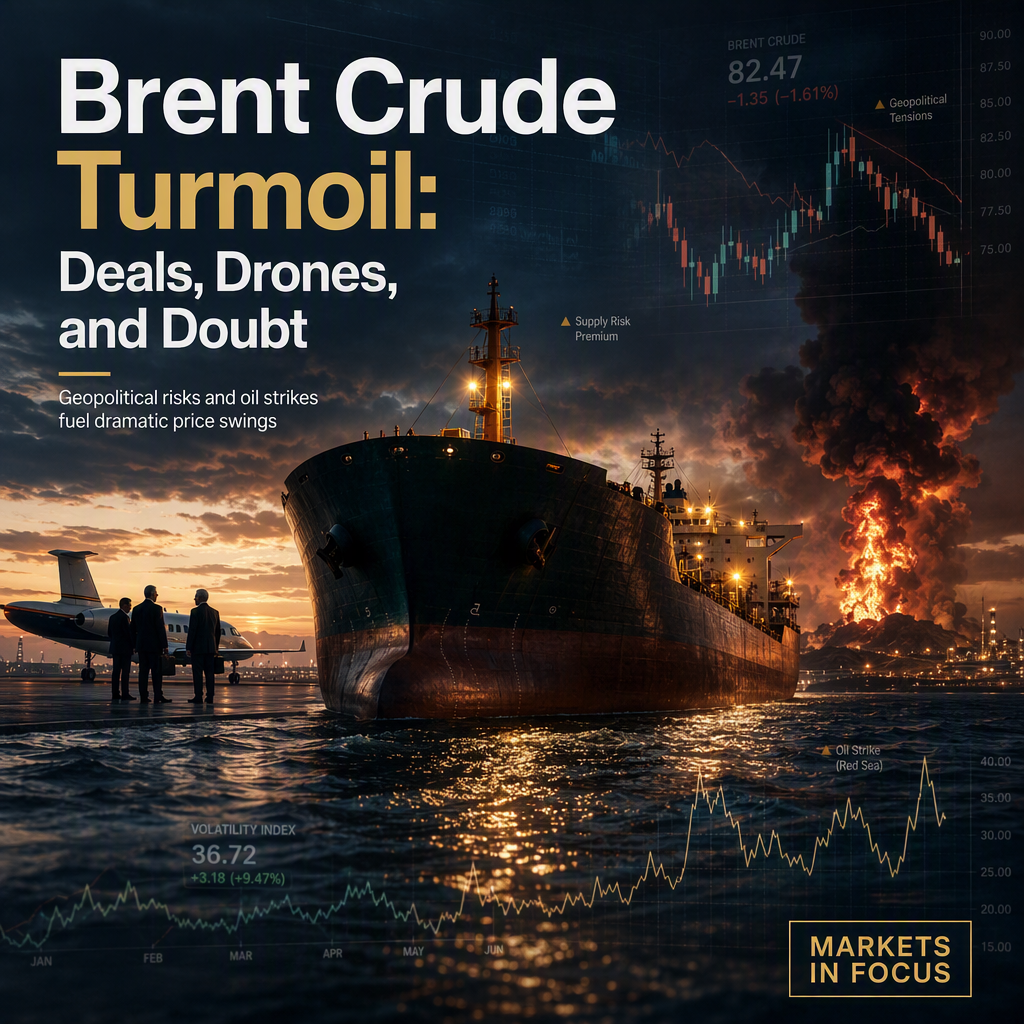
Brent crude prices have experienced significant volatility, dropping below $80 per barrel as markets priced in the possibility of a short-term US-Iran deal that could reopen the Strait of Hormuz, according to ING analysts Warren Patterson and Ewa Manthey [1]. The ICE Brent contract settled more than 5% lower yesterday, with continued downward pressure in early morning trading. This weakness was attributed to growing signs of US and Iran moving closer to a potential deal, although ING cautioned that gaps remain between the two countries regarding the management of the Strait and nuclear issues, raising the risk that any agreement could unravel quickly [1].
However, oil prices rebounded Wednesday after Yemen's Iran-backed Houthis reportedly struck a Saudi Arabian tanker in the Red Sea, denting hopes of a ceasefire agreement that had been rising earlier in the week following comments by Treasury Secretary Scott Bessent [2]. Brent crude was last seen trading at $80.32 a barrel, up more than 1.2%, while U.S. West Texas Intermediate (WTI) futures for September delivery rose 0.67% to $76.28 [2]. The Houthis claimed responsibility for the missile strike near Yanbu, a major port for Saudi crude exports, which rattled markets and soured optimism for a ceasefire deal in the Middle East [2].
The American Petroleum Institute reported that US crude oil inventories increased by 2.7 million barrels last week, contrary to market expectations of a 1.5 million barrel decline. Cushing crude stocks rose by 2.4 million barrels, gasoline stocks increased by 200,000 barrels, and distillate inventories fell by 1.2 million barrels [1]. U.S. Central Command stated that the southern route of the Strait of Hormuz, passing through Omani waters, was "free and open" to commercial vessels [2].
ING analysts noted that if a deal holds and oil flows from the Persian Gulf normalize, market attention will shift to supply and demand balances in the fourth quarter and 2027. They highlighted that a recovery in Persian Gulf supplies, stronger OPEC+ output, and UAE supply increases could lead to a comfortable balance sheet in 2027, though much of the expected surplus next year may be absorbed by restocking demand [1].
CONCLUSION
Brent crude prices have been highly volatile, initially falling on US-Iran deal hopes but rebounding after a reported Houthi strike on a Saudi tanker. Market sentiment remains cautious, with ongoing geopolitical risks and inventory surprises contributing to uncertainty. Forward-looking statements suggest that normalization of Persian Gulf oil flows could shift focus to future supply-demand balances.