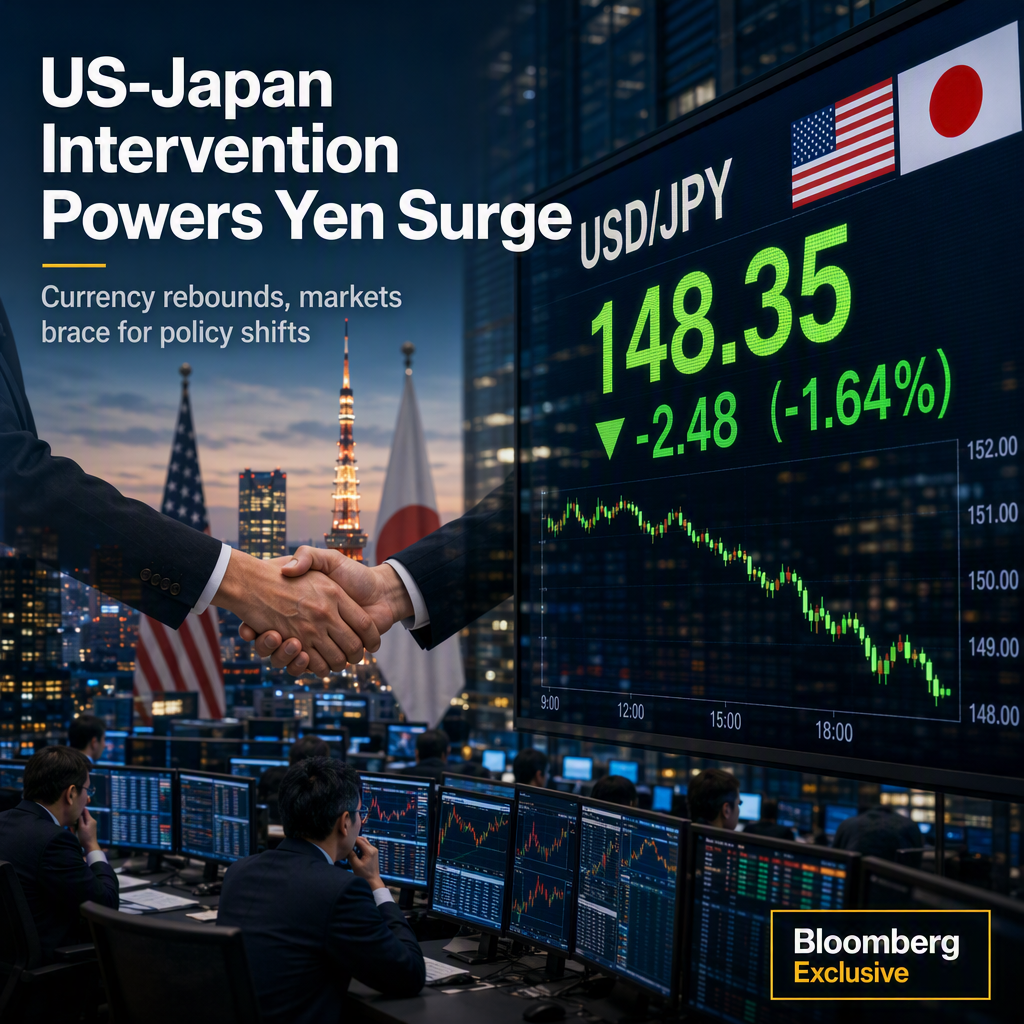
On July 31, Japan, in coordination with the U.S. Department of the Treasury, intervened in the foreign exchange market to strengthen the Japanese yen, as confirmed by Japanese Finance Minister Satsuki Katayama in a statement released on August 3 [1][2]. This joint action led to a sharp appreciation of the yen, with USD/JPY dropping from around 164 to the lower 155 range, marking a significant rebound from multidecade lows [1][2]. MUFG’s Michael Wan noted that the yen strengthened further below the 158 level heading into the weekend, with reports from FT and Bloomberg indicating that the US Treasury intervened by selling Euros to buy Yen [2].
The intervention has had notable market effects: Japanese Government Bond (JGB) yields rose, reflecting concerns about potential policy adjustments, while Japanese equities faced downward pressure due to the stronger yen's impact on exporters' profits [1]. Market participants and analysts remain cautious, emphasizing that while the intervention brought temporary relief, the sustainability of the yen's strength depends on shifts in fundamental factors such as interest rate differentials and inflation expectations [1][2]. Technical analysts cited support for the yen near the 155 level, with resistance seen in the 157-158 range, and traders expect further interventions or verbal warnings if the yen breaks below 155 [1].
Finance Minister Katayama stated that Japan and the US Treasury "will not hesitate to conduct further joint intervention if necessary in close coordination with the US" [2]. MUFG’s Michael Wan highlighted that historic joint interventions often coincide with turning points in USD/JPY, but a durable move lower requires changes in underlying fundamentals [2]. He referenced the June 1998 episode, where USD/JPY fell sharply after joint intervention but took months for the broader trend to shift, underscoring that the current intervention may clear out yen shorts in the short term but lasting effects depend on future policy and economic developments [2].
Overall, market sentiment remains cautious, with traders closely monitoring statements from both Japanese and U.S. officials for further hints on possible interventions and monetary policy direction [1][2].
CONCLUSION
The US-Japan joint intervention has provided a significant, though possibly temporary, boost to the yen and heightened market vigilance. While immediate effects include stronger yen, higher JGB yields, and weaker equities, analysts stress that lasting currency strength depends on fundamental shifts. Traders are expected to closely watch for further official actions and policy signals.