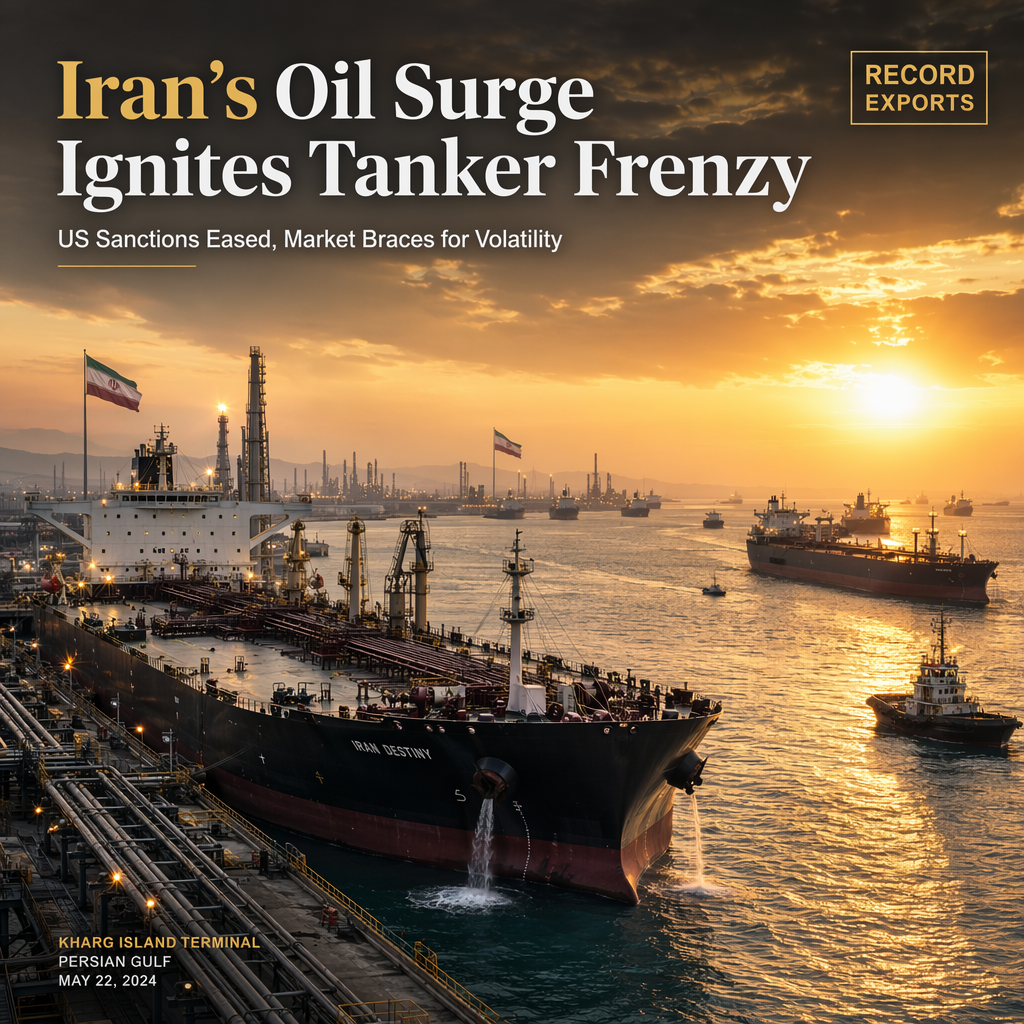
Iran has begun loading crude oil onto tankers for export from the Persian Gulf following a temporary relaxation of US sanctions, potentially generating an estimated $8.5 billion in revenue for Tehran [1]. Nikkei analysis indicates a notable increase in shipping activity around Kharg Island, Iran's main oil export terminal, with at least six tankers departing through the Strait of Hormuz after the US-Iran deal [1]. This surge in Iranian crude exports is expected to impact global energy prices, with analysts suggesting it could bolster Iran's economy and exert downward pressure on oil prices if sustained [1].
Meanwhile, FXStreet reports that crude oil prices experienced a brief bounce of approximately 2.3%, rising from a low near $69.00 to a high around $72.50, following a tanker attack in the Gulf of Oman and the United Nations' decision to halt the evacuation of stranded sailors [2]. However, the price move faded, closing near $71.50, reflecting the market's diminishing fear regarding the Strait of Hormuz [2]. The International Maritime Organization paused its evacuation plans for roughly 11,000 mariners, citing the need for safety guarantees, while Iran reiterated threats against vessels not following Tehran-approved lanes [2].
Shipping data reveals tankers are moving through the Strait at the fastest wartime pace yet, with a single-day record of about 16 million barrels set earlier in the week, surpassing pre-war volumes [2]. Saudi cargoes are also heading toward Ras Tanura to restart Gulf exports for the first time since March [2]. The temporary US waiver allowing the purchase of already-loaded Iranian barrels has contributed to the increased supply [2]. Brent's prompt spread flipped into bearish contango, signaling that near-term supply is no longer scarce, and traders are repositioning for a potential oil glut in 2026 as a major exporter threatens to break ranks over production quotas [2].
Market participants and trading desks are closely monitoring tanker movements and shipping traffic as leading indicators for potential shifts in oil prices, with technical analysts emphasizing the importance of these data points [1]. The only bullish note is Cushing inventories, which sit near 19 million barrels, below comfortable operating levels, but this is outweighed by the reopening of Gulf exports [2].
CONCLUSION
Iran's renewed oil exports, enabled by a temporary US sanctions waiver, have triggered record tanker activity and increased global supply, leading to a brief spike and subsequent fade in crude oil prices. The market is now signaling expectations of a supply glut, with bearish contango spreads and traders repositioning for 2026. While geopolitical risks remain, the influx of Iranian and Saudi oil is reshaping near-term price dynamics and supply expectations.