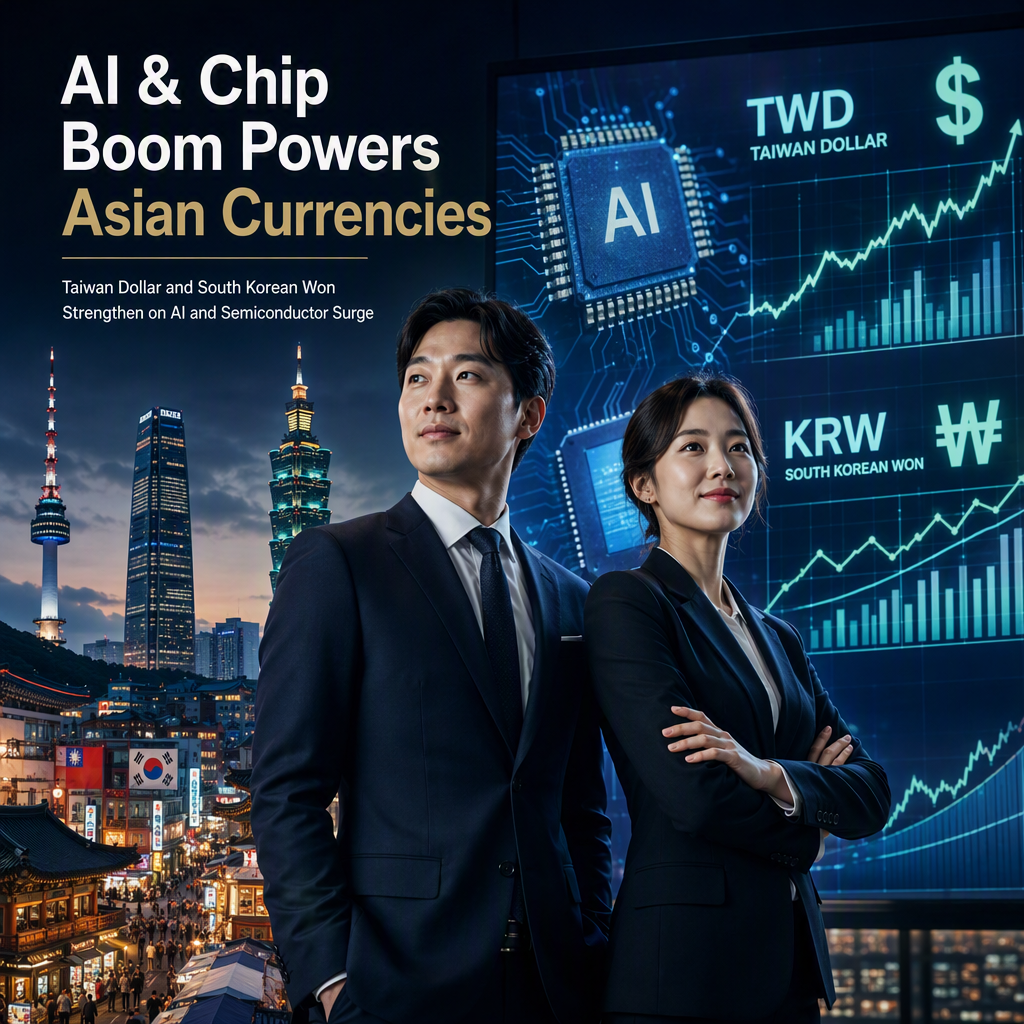
The currencies of South Korea and Taiwan have shown notable strength among Asian currencies, a trend attributed to the ongoing boom in artificial intelligence and semiconductors [1]. Both countries are recognized as leaders in these sectors, and their economic ties to AI and chip manufacturing have contributed to the appreciation of their respective currencies, the South Korean won and the Taiwan dollar [1].
In contrast, other Asian economies such as India and the Philippines, which have implemented high interest rates to combat inflation, have not seen similar gains in their currencies. The Indian rupee and Philippine peso have experienced little boost despite monetary policy tightening, underscoring a divergence in Asia's currency performance [1].
This divergence highlights the market's preference for economies with strong links to the AI and semiconductor industries over those relying primarily on interest rate hikes for currency support [1]. No specific forward-looking statements or analyst opinions are provided in the article.
CONCLUSION
The appreciation of the Taiwan dollar and South Korean won underscores the market's focus on AI and semiconductor-driven growth in Asia. Currencies tied to these sectors are outperforming those in economies relying on monetary policy tightening, signaling a shift in investor sentiment toward technology-led markets.