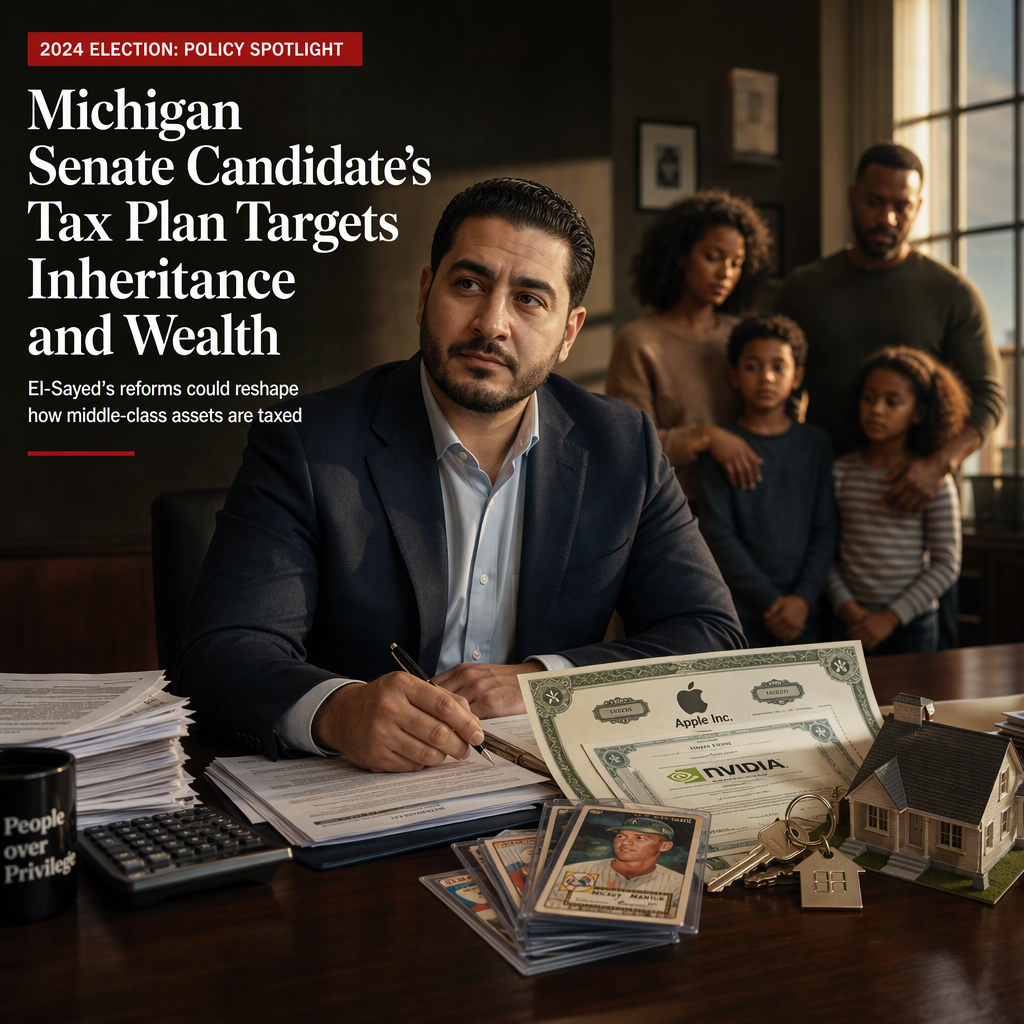
Michigan Senate candidate Abdul El-Sayed has introduced a comprehensive tax platform that extends beyond taxing billionaires and could significantly impact middle-class Americans, particularly those with assets or inheritances exceeding $1 million [1]. El-Sayed's proposals include taxing capital gains above $1 million as ordinary income, eliminating the stepped-up basis for inherited assets, and taxing inheritances greater than $1 million as ordinary income [1]. This means that assets such as appreciated stocks (including Nvidia and Apple), real estate, and even collectibles like baseball cards would be subject to higher taxes when passed on to heirs [1].
Additionally, El-Sayed supports higher marginal income-tax rates for income above $1 million, a progressive tax on wealth held in trusts, a separate wealth tax specifically targeting billionaires, and the elimination of the Social Security payroll-tax cap [1]. The article emphasizes that these measures could affect not only the ultra-wealthy but also small business owners and families who have accumulated assets over a lifetime, potentially impacting their retirement savings and the legacy they leave to their children [1].
The opinion piece warns that these tax changes could represent a significant shift in how wealth and inheritance are taxed in America, suggesting that the policies may have broader implications than campaign slogans imply [1]. No specific market reactions or analyst opinions are provided in the article [1].
CONCLUSION
Abdul El-Sayed's tax proposals could have far-reaching effects on middle-class Americans, small business owners, and those planning to pass on assets to their heirs. While aimed at the wealthy, the measures would also impact individuals with assets or inheritances above $1 million, signaling a potential shift in U.S. tax policy if implemented.