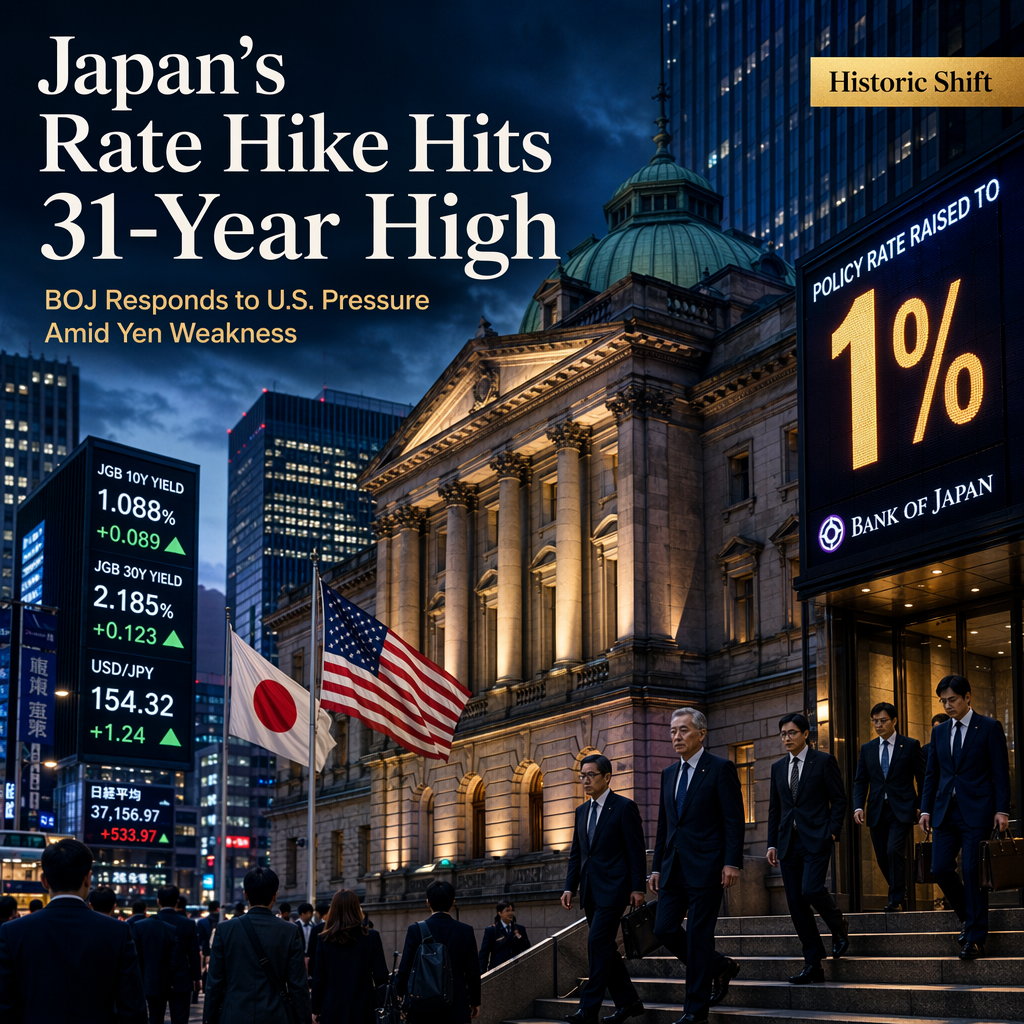
The Bank of Japan (BOJ) raised its policy interest rate to 1% on Tuesday, reaching the highest level in 31 years and marking a significant departure from its longstanding near-zero interest rate policy [1]. This monetary tightening occurred despite Japanese Prime Minister Sanae Takaichi's initial reluctance toward rate hikes. The decision was influenced in part by U.S. Treasury Secretary Scott Bessent, who urged Japanese officials to increase the rate to avoid economic and financial disruptions [1]. Sources familiar with the discussions indicated that Bessent's encouragement, combined with mounting market pressure, played a role in persuading Prime Minister Takaichi to accept the rate hike [1].
The BOJ's move is aimed at combating persistent inflation and stabilizing the yen, which has been under downward pressure due to rising oil prices and global economic uncertainties [1]. Following the announcement, the yield on 10-year Japanese government bonds rose sharply, reflecting market expectations of further tightening and a potential shift in investor behavior [1]. Some analysts have cautioned that higher bond yields could challenge the BOJ's tapering plans, as increased borrowing costs may dampen economic growth [1].
A Tokyo-based strategist described the decision as "the most significant monetary tightening Japan has seen in over three decades," emphasizing the BOJ's commitment to restoring price stability and defending the currency [1]. The yen's purchasing power has continued to weaken, particularly as high oil prices exert additional pressure [1]. The BOJ's rate hike is partly intended to support the currency and prevent further capital outflows [1].
Financial markets are now closely monitoring guidance from BOJ officials regarding the pace of future rate hikes and the central bank's strategy for managing inflation and bond yields [1]. Investors are also seeking clarity on how Japanese policymakers will balance the need for tighter monetary policy with concerns about economic growth, especially amid ongoing global market uncertainties and geopolitical tensions [1].
CONCLUSION
The BOJ's decision to raise its policy rate to 1% represents a historic shift in Japanese monetary policy, driven by both domestic and international pressures. Markets are reacting to the move with higher bond yields and increased scrutiny of future BOJ guidance, as investors weigh the implications for inflation, currency stability, and economic growth.