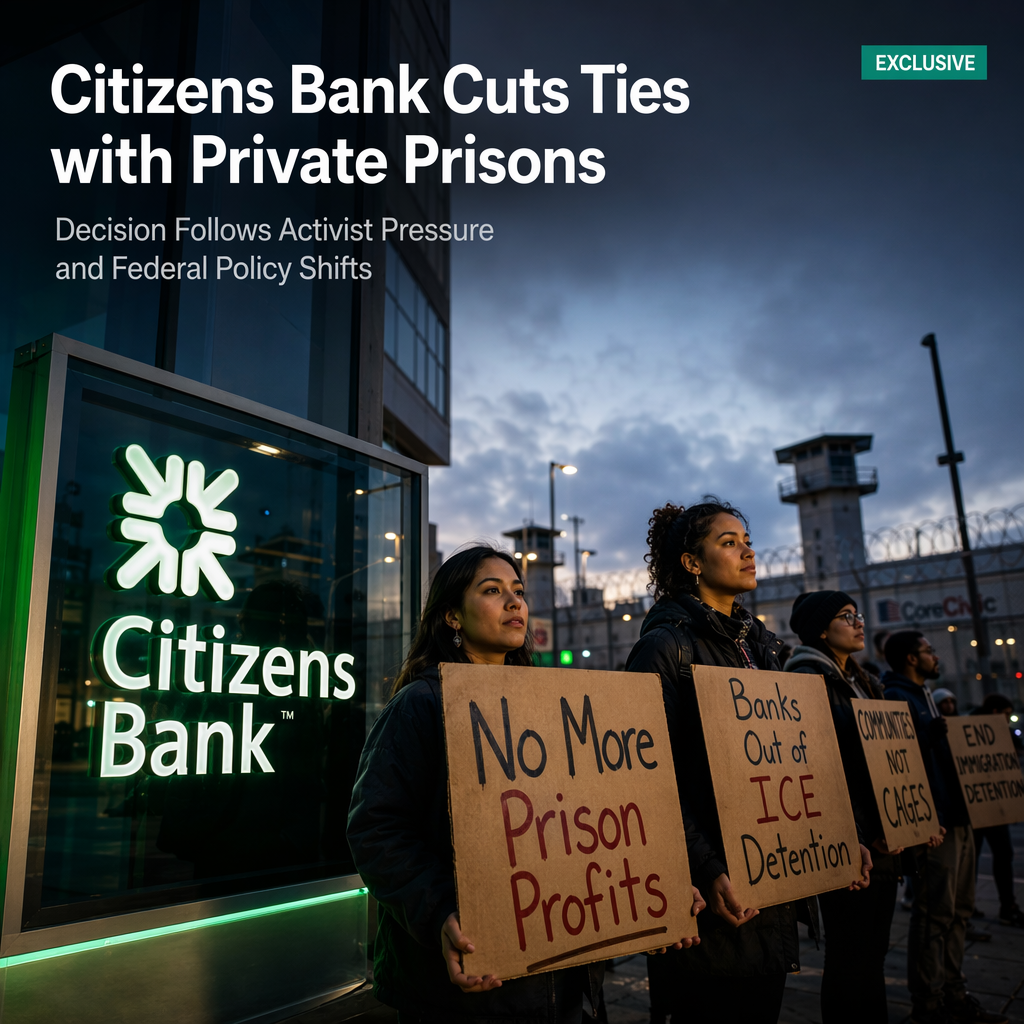
Citizens Bank announced it will end its financial relationships with CoreCivic and GEO Group, two of the largest private prison companies in the United States, following months of protests targeting the bank's involvement with operators of ICE detention facilities [1]. The Rhode Island-based lender stated that the decision to wind down lending to these companies was driven by changing business conditions, specifically recent federal government purchases of correctional facilities that have reduced the capital needs of CoreCivic and GEO Group and altered their financing requirements [1].
Activist groups had urged Citizens Bank's customers and municipalities to sever ties with the bank due to its relationships with these prison operators, and they celebrated the bank's move as a victory [1]. However, Citizens Bank emphasized that the decision was not a response to political pressure or concerns about the companies' business practices, but rather a result of the companies' evolving financing needs [1]. The bank expressed disappointment at being drawn into what it described as a political matter and defended its commitment to immigrant communities and broader community investments, highlighting support for 140 nonprofit organizations, over 265,000 employee volunteer hours, staff participation on more than 1,000 nonprofit boards, and $2 billion in community development financing for affordable housing and local economic development [1].
According to Citizens Bank, GEO Group has been a client since 2018 and CoreCivic since 2011, with both companies operating prisons and detention facilities under federal and state contracts, including contracts with U.S. Immigration and Customs Enforcement (ICE) [1]. The bank's announcement comes amid ongoing scrutiny of financial institutions' relationships with private prison operators and the broader debate over immigration detention practices in the United States [1].
No specific market reaction or analyst opinions were discussed in the article [1].
CONCLUSION
Citizens Bank's decision to end lending to CoreCivic and GEO Group reflects both activist pressure and significant changes in federal policy affecting private prison operators. While the bank maintains its move was based on business considerations, the development marks a notable shift in financial sector involvement with the private prison industry. The market impact is medium, with potential implications for the financing of private detention facilities.