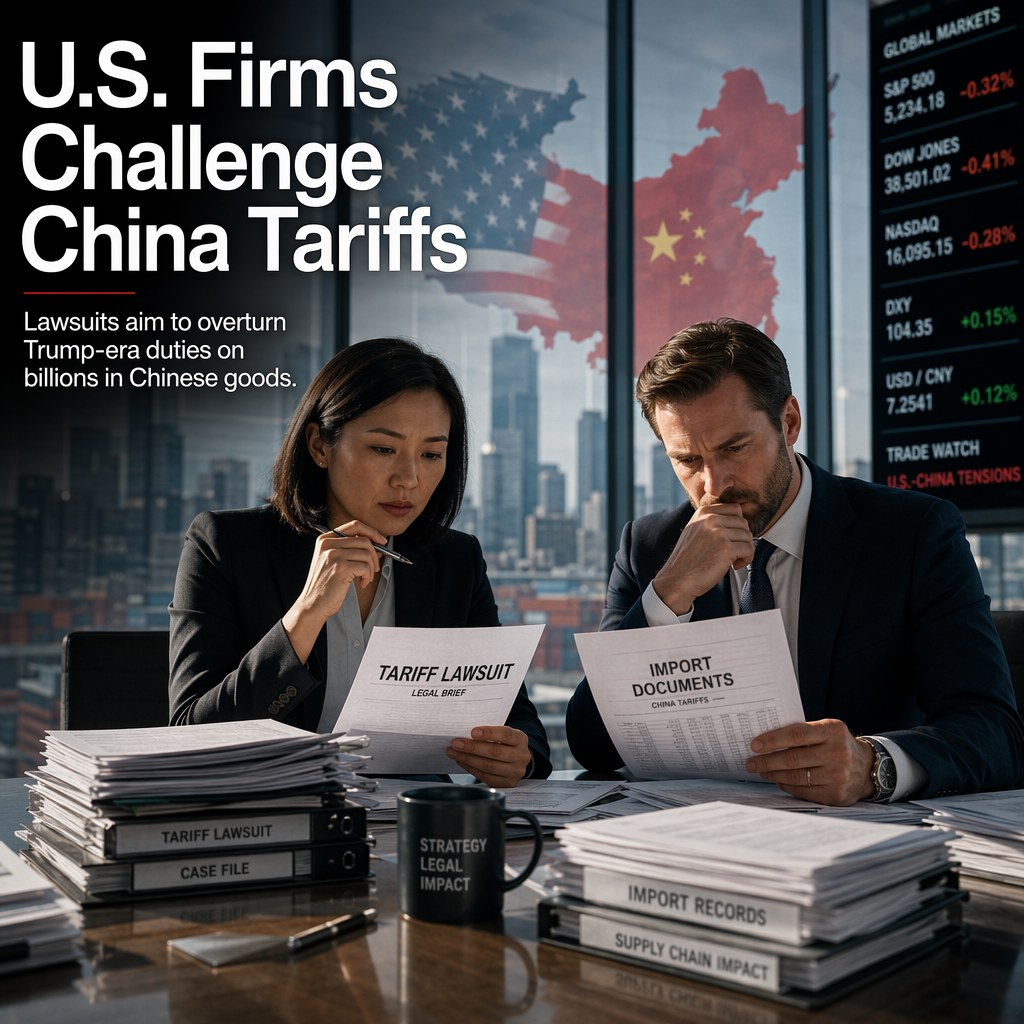
Two U.S.-based import companies have filed a lawsuit seeking the removal of additional tariffs imposed on Chinese products during the Trump administration, arguing that these measures have significantly affected their business operations [1]. The companies claim that the tariffs have led to increased procurement costs, making it difficult to pass these costs onto consumers, which in turn has negatively impacted both domestic employment and consumers in the United States [1].
In the lawsuit, the companies assert that the tariffs are illegal and have diminished their competitiveness in the market [1]. They are requesting the court to overturn the tariff measures. The U.S. government, however, maintains that the tariffs were implemented through proper procedures as a countermeasure against what it describes as China's unfair trade practices, and it continues to defend the legitimacy of the tariffs [1].
The outcome of this lawsuit could have broader implications for U.S. trade policy and the overall market environment. The article notes that financial markets are closely watching the developments, as the court's decision may influence future market trends [1].
CONCLUSION
The lawsuit by two U.S. companies challenging Trump-era tariffs on Chinese goods highlights ongoing tensions in U.S.-China trade relations and their impact on American businesses. The case's outcome could shape future trade policy and market conditions, with financial markets monitoring the situation closely for potential ripple effects.