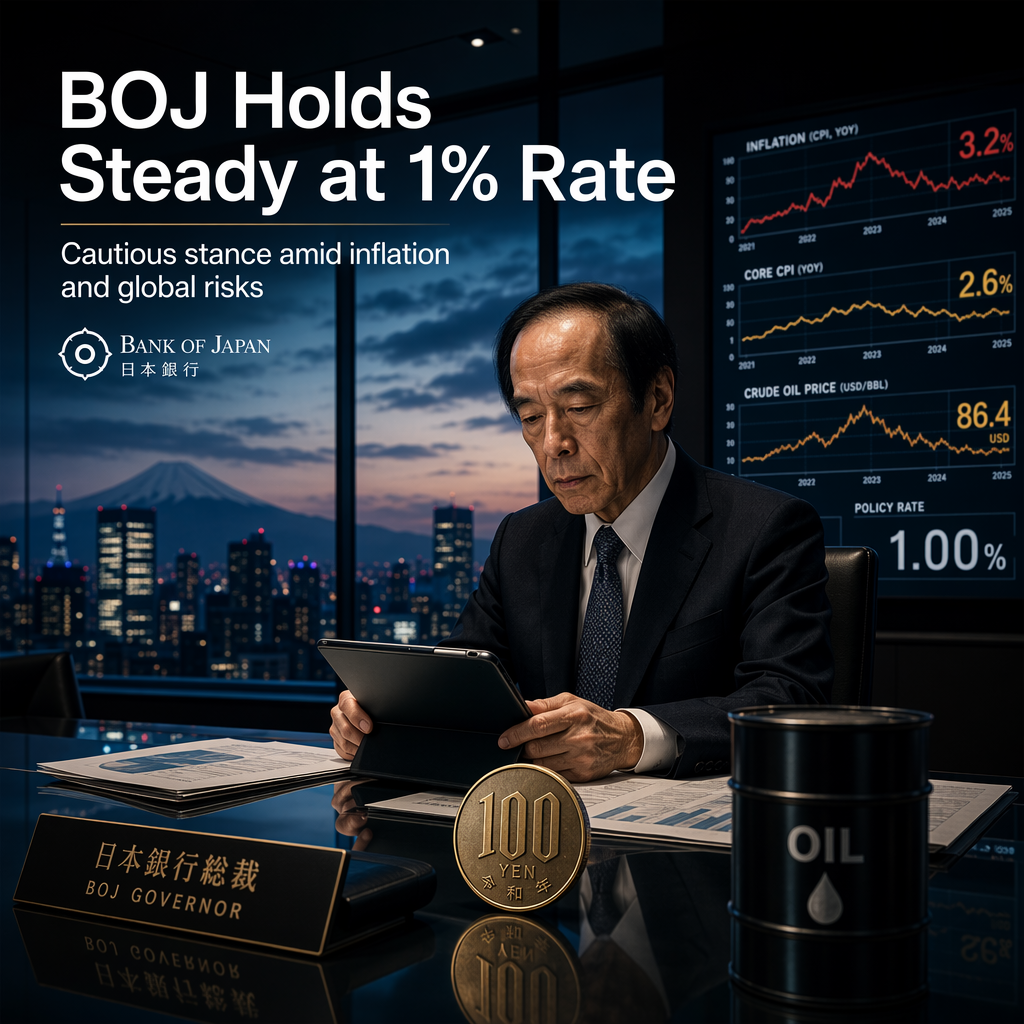
The Bank of Japan is expected to keep its key interest rate unchanged at 1% during its upcoming policy meeting on July 30 and 31, according to sources cited by Nikkei Asia [1]. This decision follows a rate hike implemented in June, with the central bank opting to monitor the effects of that move before considering further adjustments [1].
The central bank's cautious stance is attributed to ongoing concerns about elevated energy costs and geopolitical risks, particularly tensions in the Middle East, which have contributed to inflationary pressures through higher oil prices [1]. Japan's wholesale inflation has recently reached a three-year high, driven by rising fuel costs and a weakening yen [1].
In addition to holding rates steady, the Bank of Japan is reportedly considering an upward revision of its economic growth outlook for fiscal 2026 [1]. The policy focus remains on balancing the need to support economic growth while managing persistent inflation risks [1].
No immediate market reaction or analyst opinions were mentioned in the article. The central bank's wait-and-see approach underscores its intent to carefully assess both global and domestic economic conditions before making further policy changes [1].
CONCLUSION
The Bank of Japan's decision to maintain its key rate at 1% reflects a cautious approach amid inflationary pressures and geopolitical uncertainties. By monitoring the impact of its previous rate hike and considering an upward revision to economic growth, the central bank signals a balanced stance between supporting growth and controlling inflation.