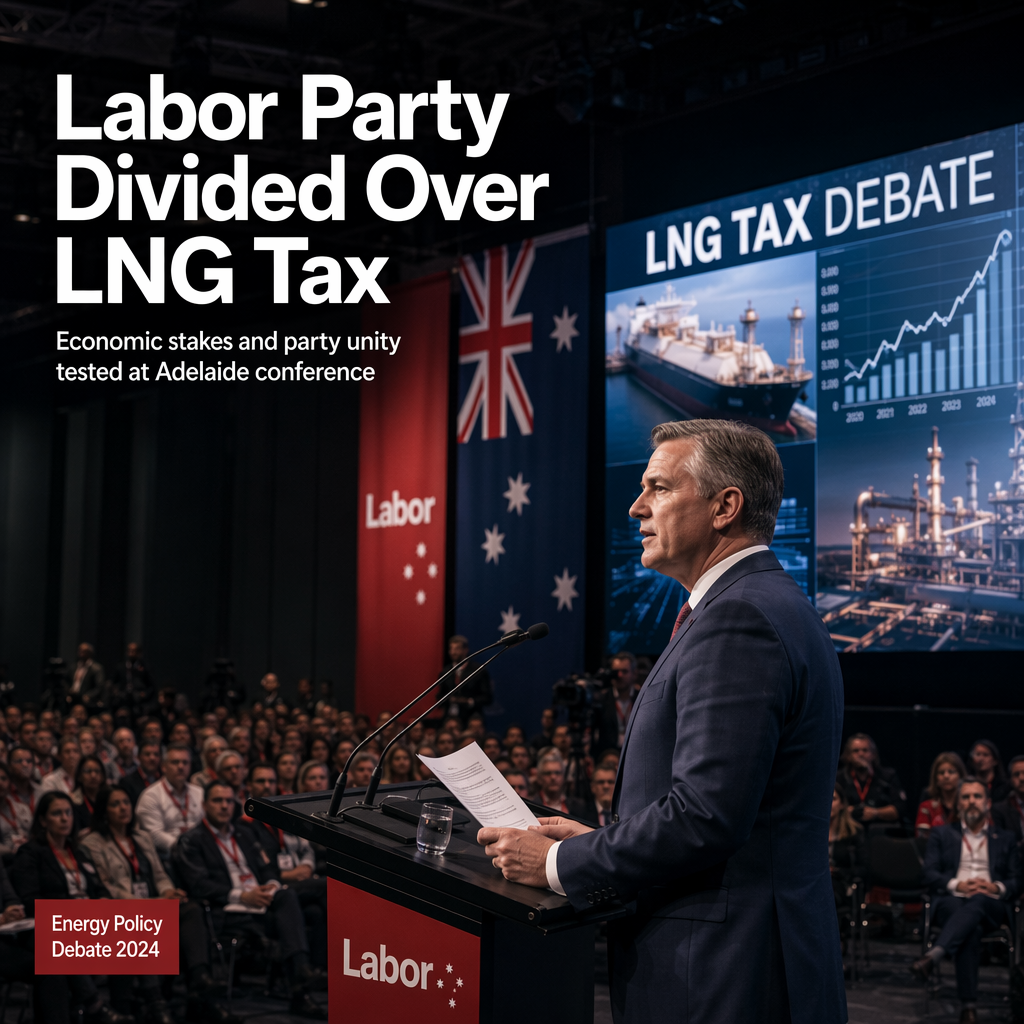
Senior members of Australia's ruling Labor Party are working to counter internal pressure for increased taxes on the country's liquefied natural gas (LNG) exporters, as the issue takes center stage at the party's national conference in Adelaide [1]. Grassroots party members have advocated for higher levies on the LNG sector, arguing that greater revenues are needed to bolster public finances and fund social programs [1].
Prime Minister Anthony Albanese and other party leaders have so far resisted these calls, expressing concerns that a significant tax hike could undermine a sector that contributes tens of billions of dollars annually to the Australian economy, supporting both jobs and government revenues [1]. Industry representatives have warned that higher taxes could deter investment and threaten Australia's position as a leading global LNG supplier [1].
During the conference, Albanese emphasized the need to balance the interests of working Australians with maintaining a competitive and stable investment environment, highlighting the importance of policy certainty for the sector while ensuring the community benefits from resource wealth [1]. The outcome of the tax debate is being closely watched by market participants and investors, as any move to raise levies on LNG exporters could have significant implications for company profits, government revenues, and Australia's international competitiveness in energy markets [1].
In addition to the LNG tax debate, the conference also adopted a motion supporting gambling reform, reflecting broader social concerns within the party [1].
CONCLUSION
The internal debate within Australia's Labor Party over potential tax hikes on LNG exporters is drawing significant attention from market participants due to its potential impact on company profits and the nation's economic competitiveness. While party leaders are resisting immediate changes, the outcome remains uncertain and could influence future policy direction for the energy sector.