
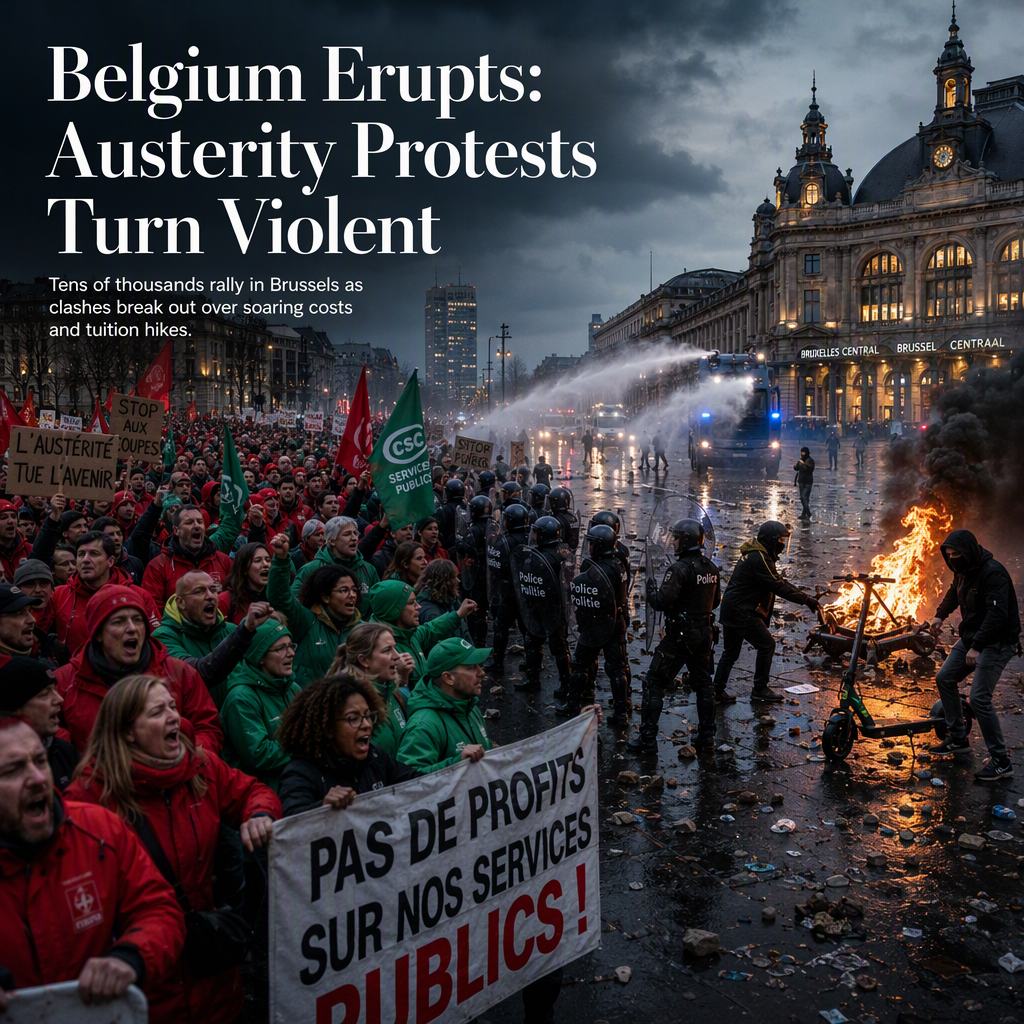
On October 9, 2026, approximately 30,000 demonstrators gathered in Brussels to protest the Belgian government's budget-tightening measures and the rising cost of living, as reported by police and The Associated Press [1]. The protest, organized by two of Belgium’s largest labor unions, was largely peaceful, with union members and supporters marching in red or green attire. However, the demonstration was marred by violent clashes at the central Brussels railway station, where dozens of mostly young, masked individuals unaffiliated with the main protest threw rocks and firecrackers at police and set several fires, including a shared electric scooter [1].
Riot police responded to the unrest by deploying tear gas canisters and using water cannons to disperse the crowds, which led to increased traffic disruptions across the Belgian capital [1]. Union leaders distanced themselves from the violence, emphasizing that those responsible were not part of their movement [1].
The protest was fueled by public frustration over the government's austerity program, which included a roughly 43% increase in standard university tuition by Belgium’s French Community government this academic year, raising fees from €835 to €1,194 [1]. Protesters cited the rising costs of schools, public transport, and train tickets as major concerns, with individuals like Marie Gobert, a single mother and social worker, expressing difficulty in making ends meet [1].
The demonstration is part of a broader wave of discontent, with a separate public-sector walkout planned for the following Monday and recent clashes in June over similar issues, including dissatisfaction with the French-language education system [1]. No specific market reactions or analyst opinions were mentioned in the article.
CONCLUSION
The large-scale protests in Brussels highlight significant public opposition to the Belgian government's austerity measures, particularly the sharp increase in university tuition and the rising cost of living. While the main demonstration was peaceful, the associated violence and ongoing labor actions suggest continued social and economic tensions that could impact the country's stability in the near term.