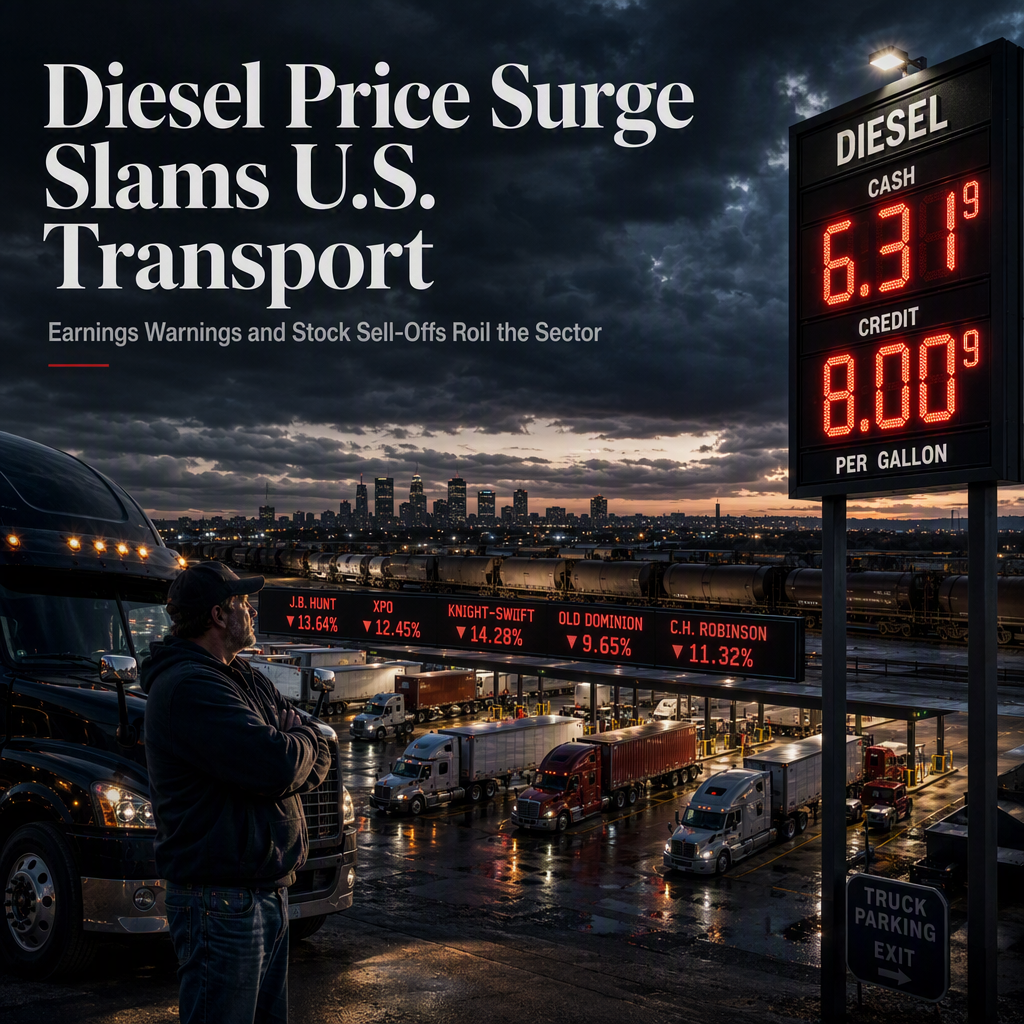
Diesel prices, the primary fuel for trucks and trains, have reached an all-time high of approximately $6.31 per gallon as of Wednesday, according to AAA data, marking a surge of more than 70% from a year ago due to the U.S. war with Iran [1]. Transportation companies, which are critical to the U.S. economy, are sounding alarms as these soaring costs threaten their profitability. Brad Delco, finance chief at J.B. Hunt, stated at a Morgan Stanley industry conference that the company expects a drop in earnings between 5% and 10% from the second to third quarter as a direct result of higher fuel costs [1]. This warning was reflected in the market, with shares of J.B. Hunt plunging over 13% during Wednesday's session, positioning the stock for one of its worst days since its public debut in 1983 [1]. The Dow Jones Transportation Average, a broader sector gauge, also fell more than 2% in midday trading, with J.B. Hunt as the biggest loser among rideshare providers and airlines [1].
Patrick De Haan, head of petroleum analysis at GasBuddy, cautioned that diesel price pressures are likely to intensify further in the coming days. He predicted the national average could surpass $6.50 per gallon within two days, and Midwest states such as Michigan, Ohio, and Illinois may see prices reach $7 per gallon soon [1]. In California, AAA reported that the average price for a gallon of diesel has already exceeded $8, with prices climbing nearly 20% in the past month alone [1]. Claude Elkins, chief commercial officer at Norfolk Southern, described the situation as "science fiction" and noted that he is keeping a "very cautious eye" on what these price levels could mean for the broader economy [1].
The transportation services sector contributed $1.9 trillion to the U.S. economy in 2024, representing more than 6% of the country's enhanced gross domestic product, according to the Bureau of Transportation Statistics [1]. Analysts and industry leaders are warning that continued volatility in diesel prices could have significant ripple effects across the economy, impacting not only transport companies but also the broader supply chain and consumer prices [1].
CONCLUSION
The surge in diesel prices is causing immediate financial strain for U.S. transportation companies, leading to sharp declines in sector stocks and warnings of reduced earnings. With analysts forecasting further price increases and industry leaders expressing concern about broader economic impacts, the market is reacting strongly to the ongoing fuel cost crisis.