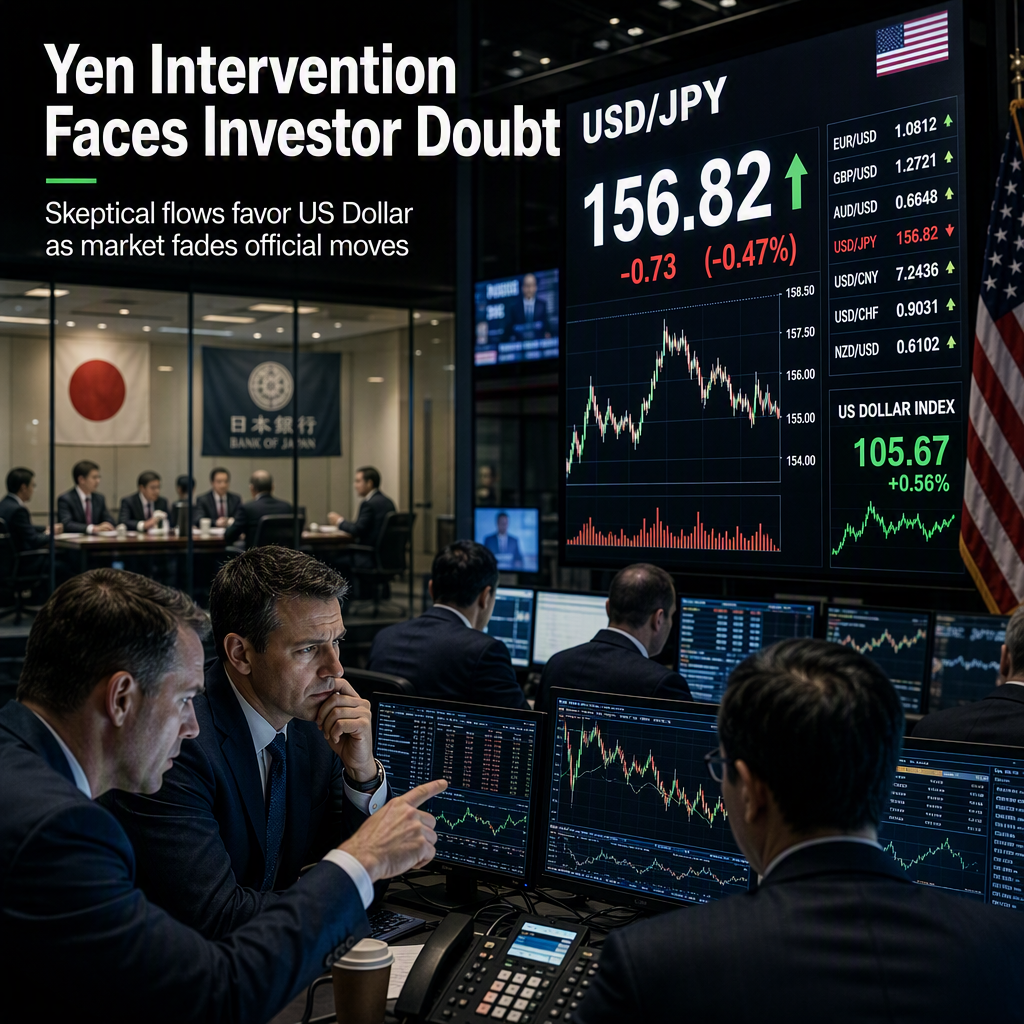
BNY’s Wee Khoon Chong reports that institutional investors increased their purchases of the US Dollar and sold the Japanese Yen following the Bank of Japan's rate hike in June, as well as after the late-July joint intervention by the US and Japan aimed at weakening the USD/JPY exchange rate [1]. On June 17, despite the widely anticipated BoJ rate hike, investors responded to the hawkish stance of new Fed Chair Kevin Warsh by favoring the US Dollar over the Yen [1].
At the end of July, a joint intervention was conducted to weaken the USD/JPY cross. However, real money investors treated this intervention as an opportunity to buy USD and sell JPY, suggesting skepticism about the effectiveness of such official actions [1]. Since July 31, the Yen has continued to weaken, and institutional investor behavior raises doubts about the lasting impact of foreign exchange interventions, especially as long-end Japanese Government Bond (JGB) yields remain elevated [1].
The article questions whether these interventions have any durable efficacy, given that market participants appear to be fading official actions and instead using them as opportunities to reinforce existing trends [1].
CONCLUSION
Institutional investors have shown skepticism toward the effectiveness of recent joint FX interventions, using them as opportunities to buy USD and sell JPY. The continued weakening of the Yen and elevated JGB yields suggest that official actions may have limited lasting impact on market direction.