
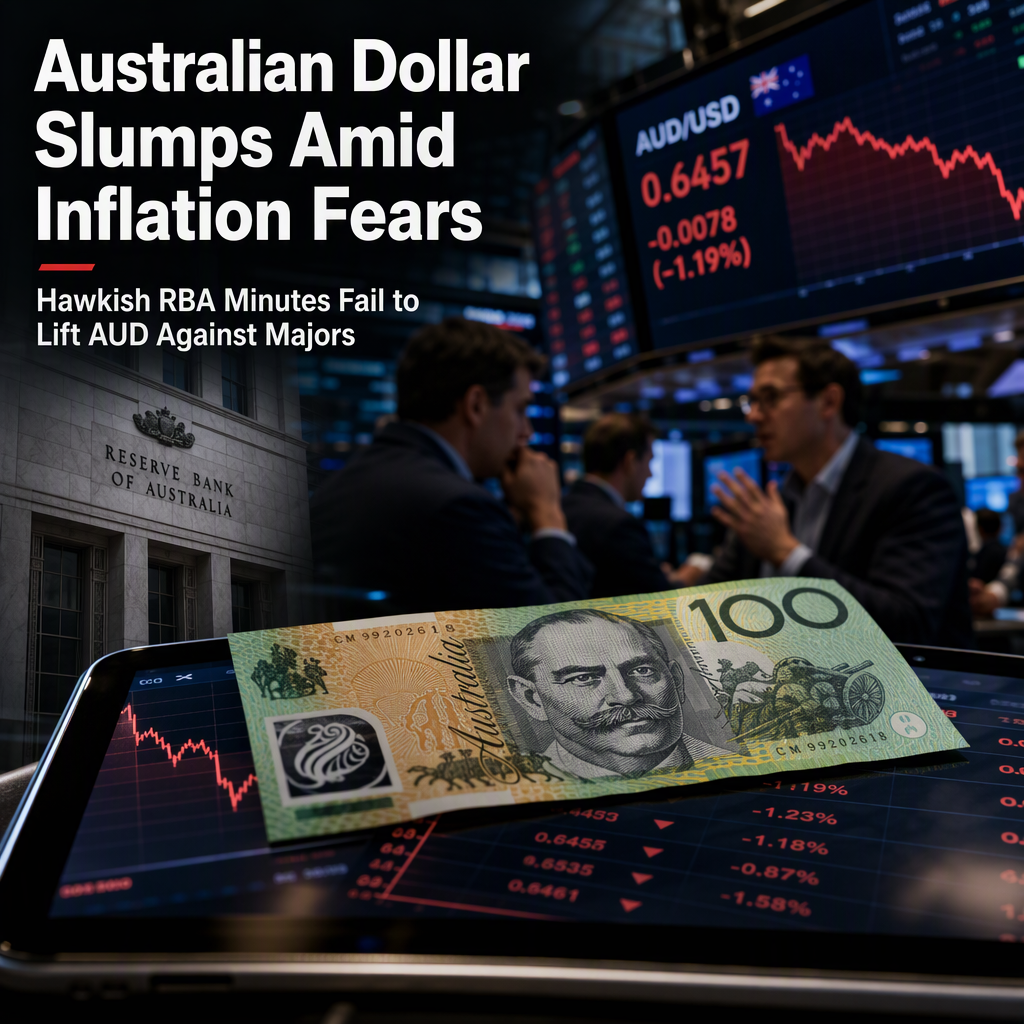
The Australian Dollar (AUD) traded lower against most major currencies during the European trading session on Tuesday, despite the release of hawkish minutes from the Reserve Bank of Australia's (RBA) September policy meeting [1]. According to a table of percentage changes, the AUD was the weakest against the New Zealand Dollar (NZD), with a decline of 0.21%, and also fell against the Euro (EUR) by 0.05%, the British Pound (GBP) by 0.02%, and the Japanese Yen (JPY) by 0.10% [1].
Analysts at Commerzbank highlighted that the RBA minutes revealed a sharpened focus on inflation, with the central bank increasingly concerned about mounting price pressures, particularly those stemming from global developments beyond its control [1]. The RBA expressed specific concern that a weaker AUD could contribute to elevated price pressures through imported inflation. The minutes also noted that a rise in the global neutral interest rate could cause the AUD to depreciate further if Australia's neutral rate did not increase by a similar amount, although the RBA appeared to assume it had [1].
From a monetary policy perspective, Commerzbank argued that three factors are likely to be crucial for the RBA going forward, with the first being the actions of other central banks. If other central banks raise rates more aggressively than expected, this could impact the RBA's policy decisions and the AUD's performance [1].
Despite the hawkish tone of the RBA minutes, the AUD's continued weakness suggests that market participants remain cautious about the currency's outlook, particularly in light of ongoing inflation risks and potential imported price pressures [1].
CONCLUSION
Despite hawkish signals from the RBA minutes and a clear focus on inflation risks, the Australian Dollar remained under pressure against most major peers. Market participants appear concerned about the impact of a weaker AUD on imported inflation and the influence of global monetary policy trends. The outlook for the AUD remains cautious as traders weigh these inflationary and policy risks.