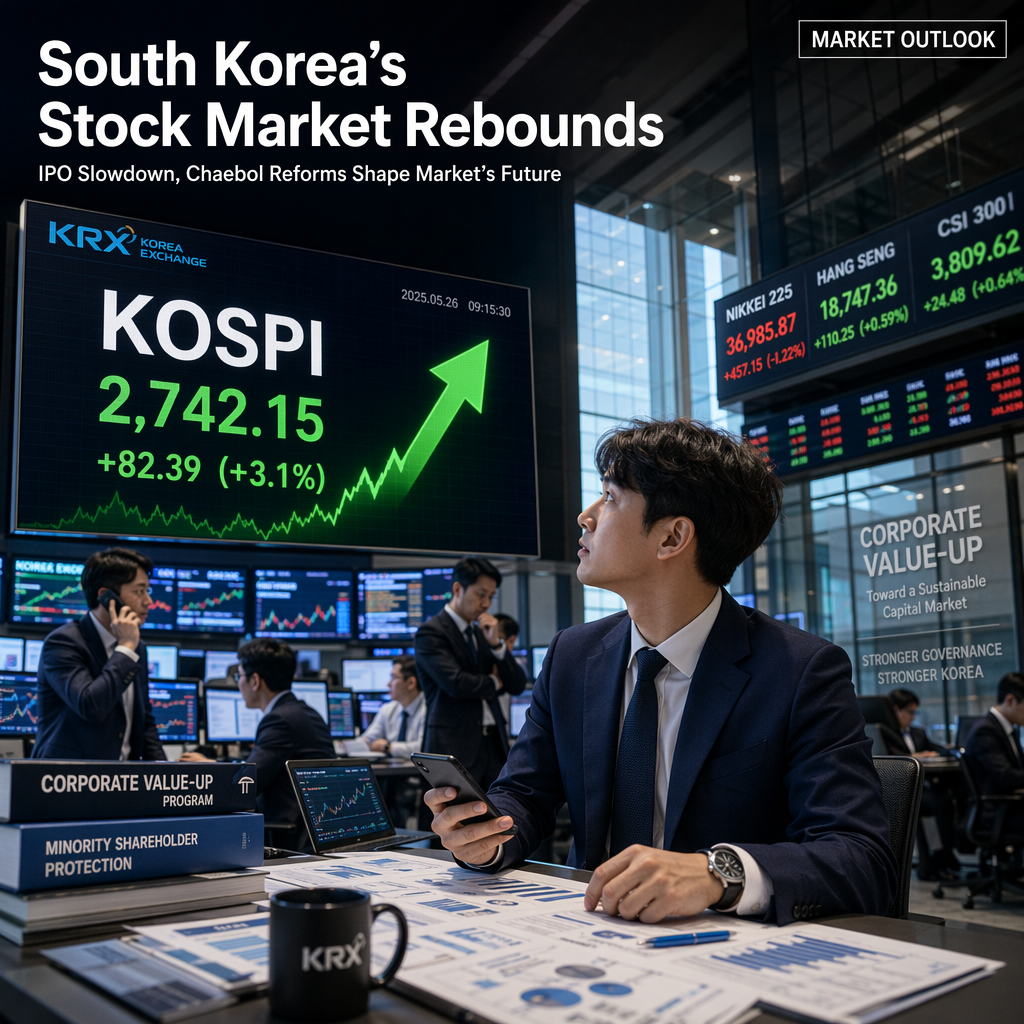
South Korean stocks rebounded strongly on Wednesday, rising more than 3% after an almost 10% fall in the previous day's trading, which analysts described as a correction rather than a breakdown. The sharp movements in the KOSPI index reflected heightened investor concerns and profit-taking following a sustained rally, but the strong rebound suggests underlying support remains intact. Meanwhile, Japanese stocks extended their losses, following a 4% drop on Tuesday, with technical analysts noting resistance at key levels and continued selling pressure reinforcing caution among traders. Analysts highlighted increasing volatility across Asian markets, with both South Korea and Japan reacting to global macroeconomic shifts and localized factors. They recommended monitoring support levels in the KOSPI and resistance zones in the Nikkei for signs of further momentum or reversal, though no specific trading advice was given. The sentiment remains cautious amid ongoing market swings [1].
In parallel, South Korea's IPO activity has plummeted this year, with only 15 new listings and proceeds totaling around $700 million as of June 3, compared to an average of 80 listings and $8 billion in proceeds per year between 2020 and 2025. Malaysia's new listings and proceeds almost double South Korea's. Experts attribute the slowdown to government efforts to boost corporate valuations by limiting parent-subsidiary listings and governance reforms targeting the Chaebol structure. The Korea Exchange CEO stated that parent-subsidiary listings will be prohibited as a general principle to protect minority shareholders and improve corporate governance. The five largest conglomerates—Samsung, SK, Hyundai Motor, LG, and HD Hyundai—accounted for around 70% of South Korea's equity market cap as of Monday. Cross-held shares between listed parent companies and subsidiaries made up about 11% of South Korea's total market cap last year, compared to 4% in Japan and 3% in Taiwan. The Korea Exchange plans to delist around 300 zombie companies by next year to direct capital to new companies and cut off unfair trading practices [2].
Despite the IPO slowdown, the Kospi remains the top-performing major index worldwide, more than doubling in value in the year to Monday. However, the ongoing reforms and volatility have clouded the outlook for new listings, with experts noting that the Chaebol structure is now more of a hindrance than a help for creating new, independently listed champions. South Korea's inheritance tax incentivizes conglomerates to keep valuations and free float low, further restraining IPO activity. The "Corporate value-up initiative" launched in 2024 aims to end the "Korea discount" by improving minority shareholder protection and corporate governance through amendments to the Commercial Act [2].
CONCLUSION
South Korean equities have shown resilience with a sharp rebound following a steep selloff, but the market remains volatile amid ongoing governance reforms and a significant slowdown in IPO activity. The Kospi's strong performance contrasts with the cautious sentiment and structural challenges facing new listings, as the government pushes for improved corporate governance and minority shareholder protection. Market participants are advised to monitor technical levels and policy developments for further direction.