
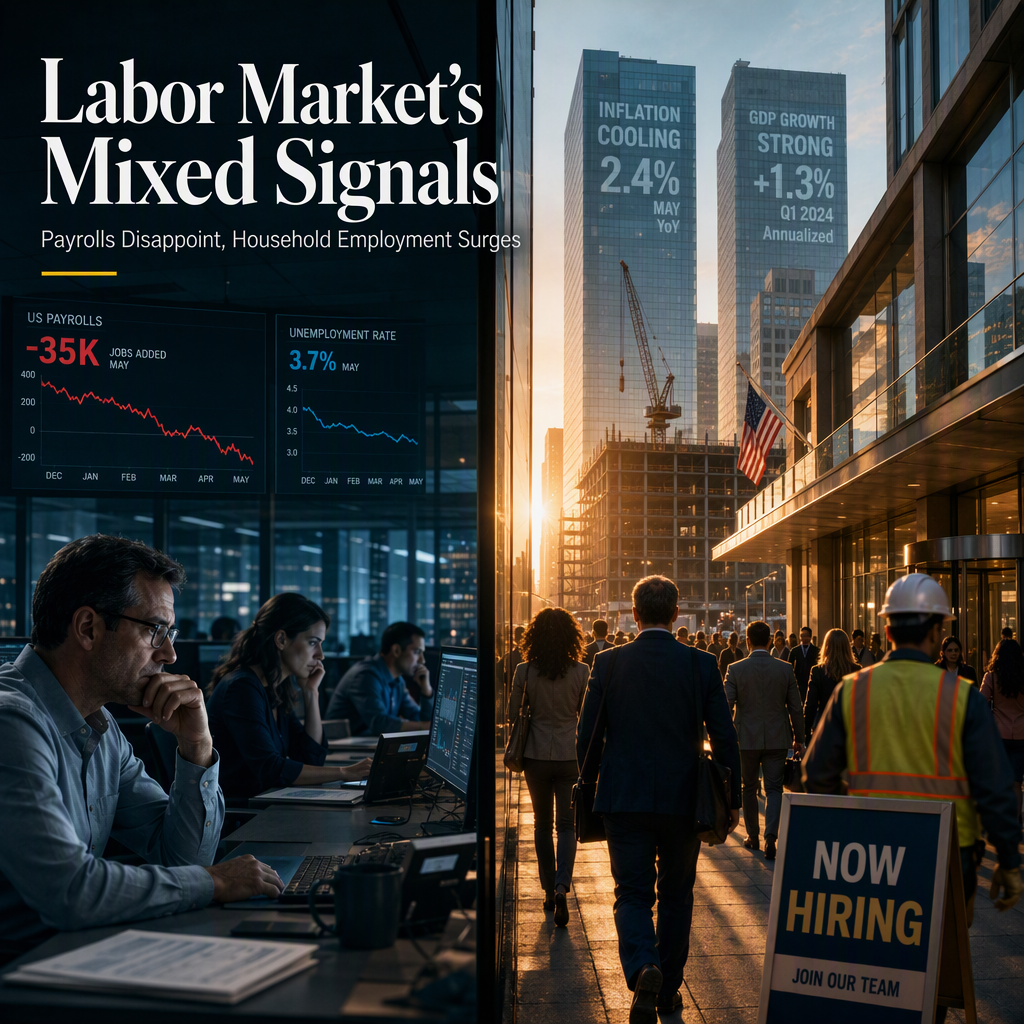
Recent US economic data presented a mixed picture of the labor market and inflation trends. According to NBC Economics and Strategy, nonfarm payrolls increased by just 29,000 in September, falling well short of the 90,000 consensus forecast, as reported by Bloomberg. However, the household survey indicated a much stronger labor market, with employment surging by 406,000 in the same month. The unemployment rate edged up by 0.1 percentage points to 4.2% [2]. FXStreet Insights Team also noted that the moderation in job gains was largely attributed to seasonal factors, particularly in the leisure and hospitality sector, and highlighted that the rise in the unemployment rate was due to increased participation and a higher employment-to-population ratio, which they described as 'good reasons' [1].
On the inflation front, the headline PCE deflator remained at 3.4% in August, unchanged from the previous month and below the consensus estimate of 3.7%. The 12-month core PCE measure also held steady at 3.0%, which was three-tenths lower than economists' expectations. NBC Economics and Strategy pointed out that part of this negative surprise in inflation data was due to a change in methodology [2].
In terms of broader economic growth, the Bureau of Economic Analysis revised Q2 real GDP growth upward to 2.2% annualized from a previous estimate of 1.5%, surpassing consensus expectations that had predicted no revision [2].
Looking ahead, TD Securities expects a relatively quiet US data calendar, with ISM Services likely slipping to 54.0 versus the 55.0 consensus, a modest increase in jobless claims, and a small decline in University of Michigan Sentiment to 47.5. They also anticipate that ISM services will reverse its unexpected August gain, with employment in the sector likely improving for a second consecutive report but remaining in contraction. Prices paid in the ISM survey will be closely watched after recent increases. Additional events this week include Fedspeak, with Waller as a highlight, the release of FOMC minutes, and further consumer sentiment data [1].
CONCLUSION
The latest US economic data reveals a complex labor market, with weak payroll growth but strong household employment gains and a slight uptick in unemployment due to higher participation. Inflation measures surprised to the downside, and GDP growth was revised upward. Market participants are likely to remain cautious as upcoming data and Fed communications are expected to provide further clarity.