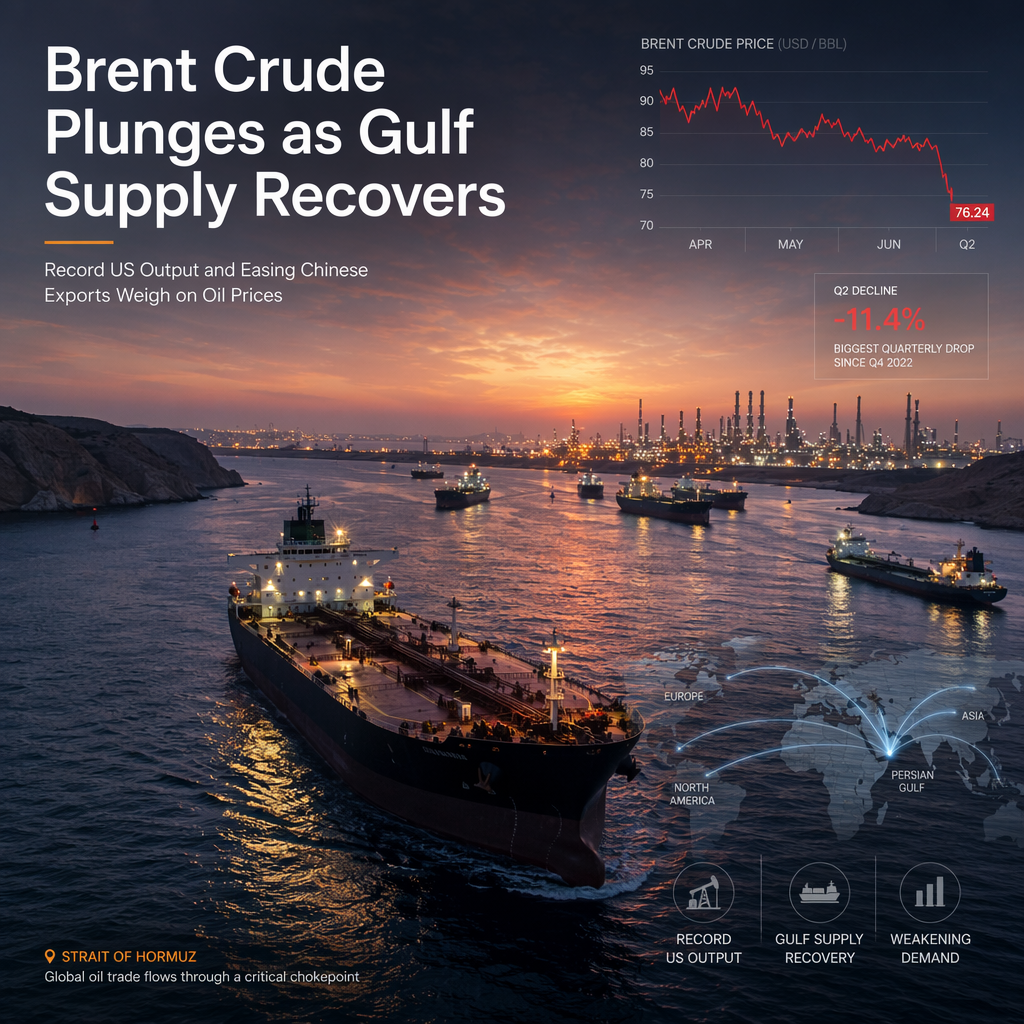
Brent crude oil prices ended the second quarter significantly lower, with ICE Brent declining by more than 38% during the April-June period, marking its weakest quarterly performance since the first quarter of 2020 when the Covid crisis severely impacted demand [1]. ING analysts Warren Patterson and Ewa Manthey attribute this decline to market optimism regarding a recovery in Persian Gulf oil supply, despite ongoing geopolitical tensions between the US and Iran. Indirect talks in Doha this week have reportedly been positive, further supporting the market's optimistic outlook [1].
Tanker vessel movements in the Strait of Hormuz, a key transit point for global oil shipments, remain limited, with total crossings estimated at around 11 on Tuesday, down from a peak of 24 the previous Wednesday. However, there has been a slight increase in inbound tanker traffic, indicating growing confidence among shipowners about moving vessels into the Persian Gulf. If this trend continues, it could further pressure oil prices and challenge expectations of a price rebound [1].
The latest data from the US Energy Information Administration (EIA) shows that US crude oil production reached a record 13.93 million barrels per day (b/d) in April, representing a 1.6% month-on-month increase and a 3.5% rise year-on-year. Additionally, total US crude and petroleum product exports surged to a new record of 13.61 million b/d in April, up 1.74 million b/d month-on-month and 3.26 million b/d year-on-year [1].
Reports also indicate that China has eased restrictions on refined product exports, allowing some state refiners to resume exports of gasoline and diesel, though these exports must still adhere to government quotas. This potential increase in Chinese exports is another factor capping oil prices, despite ongoing geopolitical risks in the region [1].
CONCLUSION
Brent crude's sharp decline in Q2 reflects market confidence in recovering Persian Gulf supply, record US output, and potential increases in Chinese refined product exports. These factors are currently outweighing geopolitical risks, leading to a bearish outlook for oil prices in the near term.