
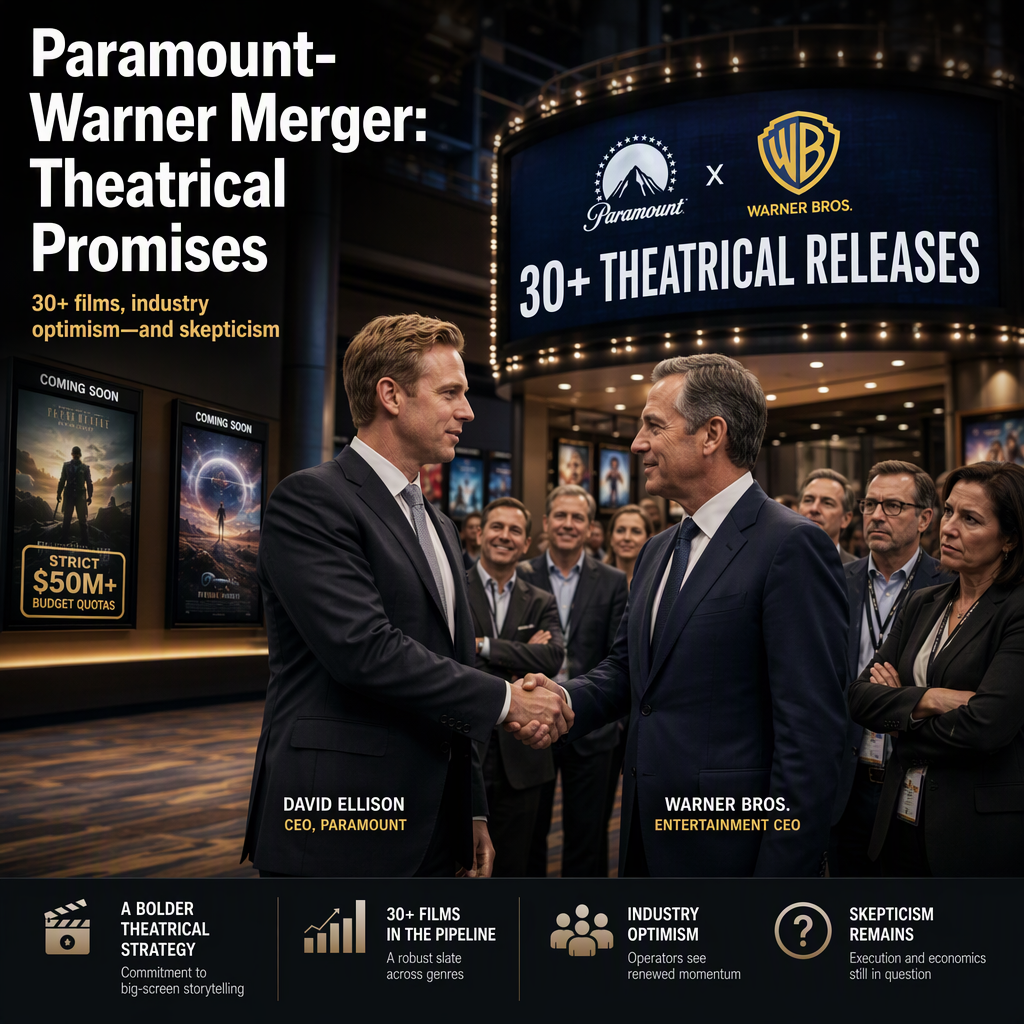
Paramount CEO David Ellison has reached a settlement with state attorneys general regarding the merger of Paramount and Warner Bros., which includes strict requirements for the number of theatrical releases over the next five years, the proportion of wide releases, and a quota for films with budgets exceeding $50 million [1]. The agreement stipulates that the combined company will release at least 30 films in theaters in 2027 and 2028, and at least 32 films annually from 2029 through 2031 [1]. Rentrak data shows that the combined entity currently has 35 films scheduled for release next year [1].
These commitments have been welcomed by some cinema operators, who believe the concessions address many concerns about the merger's impact on the theatrical market [1]. The CEOs of AMC, Cinemark, and Regal had already expressed approval for Ellison's theatrical commitment prior to the settlement, and Cinema United, a major theater owners' lobbying group, has now endorsed the agreement, stating it 'accomplishes many of exhibition's objectives' [1].
However, skepticism remains among several theater executives, who question the quality and consistency of the promised releases and express concerns about what will happen after the five-year agreement expires [1]. Paul Dergarabedian, head of marketplace trends at Rentrak, noted that 'thirty wide releases would represent a meaningful commitment to theatrical,' but emphasized that the true test will be in the performance and variety of the films, as well as the company's execution of these commitments [1].
The settlement also includes steep penalties for Paramount if it fails to meet the agreed thresholds [1]. The backdrop to these developments is an industry still recovering from the Covid pandemic, which led to fewer screens, fewer moviegoers, and a disrupted production pipeline. While higher ticket prices have helped mask some of these issues, consolidation among studios has historically resulted in fewer releases and lower revenues for smaller chains and independent operators [1].
CONCLUSION
Paramount's merger with Warner Bros. comes with significant commitments to theatrical releases, aiming to reassure the industry and regulators. While major cinema operators and lobbying groups have expressed support, some skepticism persists regarding the long-term impact and execution of these promises. The market will closely watch how the combined company delivers on its obligations and how the industry adapts post-merger.