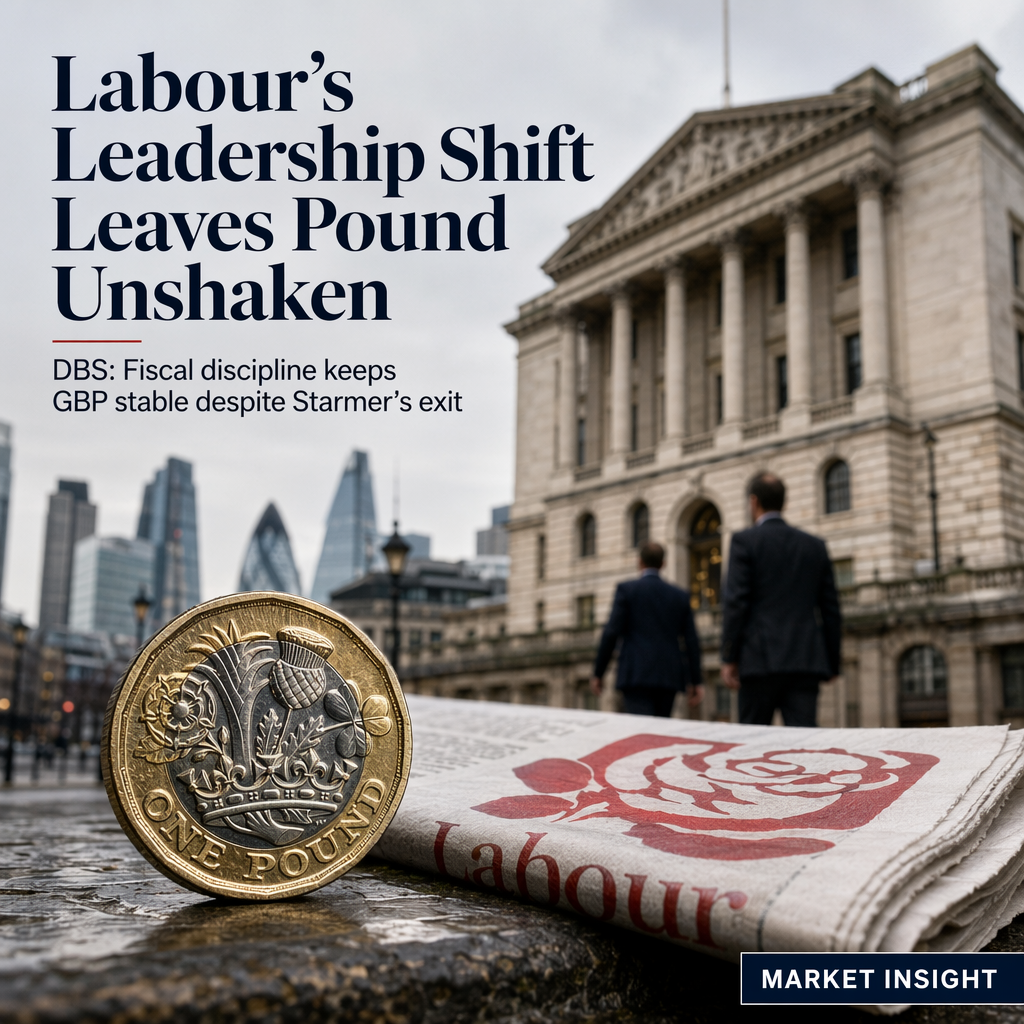
According to DBS Group Research economist Philip Wee, the resignation of Sir Keir Starmer as British Prime Minister and leader of the Labour Party on June 22 is not expected to trigger a repeat of the 2022 UK mini-budget crisis for the British Pound [1]. The report highlights that, should front-runner Andy Burnham become prime minister, the Labour Party may shift from Starmer’s political centre towards more left-leaning fiscal spending increases [1].
However, the analysis stresses key differences between the current Labour framework and the 2022 Conservative strategy under Liz Truss, which caused a severe Gilt market panic due to unfunded tax cuts and a surge in public borrowing [1]. In contrast, the 2026 Labour framework is described as operating on a strict, pound-for-pound revenue-matching model, prioritizing targeted tax adjustments to fund structural cost reductions, such as transport nationalization, rather than aggressive demand-side stimulus [1].
This approach is designed to work alongside markets and independent regulators, thereby neutralizing the risk of a sudden, volatile institutional shock [1]. As a result, DBS expects GBP/USD to remain within the established trading range of 1.30-1.39, set after US President Trump’s Liberation Day tariffs [1].
No immediate market panic or significant volatility is anticipated in response to the Labour leadership contest, according to the report [1].
CONCLUSION
DBS Group Research sees the Labour Party leadership transition as a contained event for the British Pound, with limited risk of market disruption. The party’s revenue-matching fiscal approach is expected to keep GBP/USD stable within its recent range.