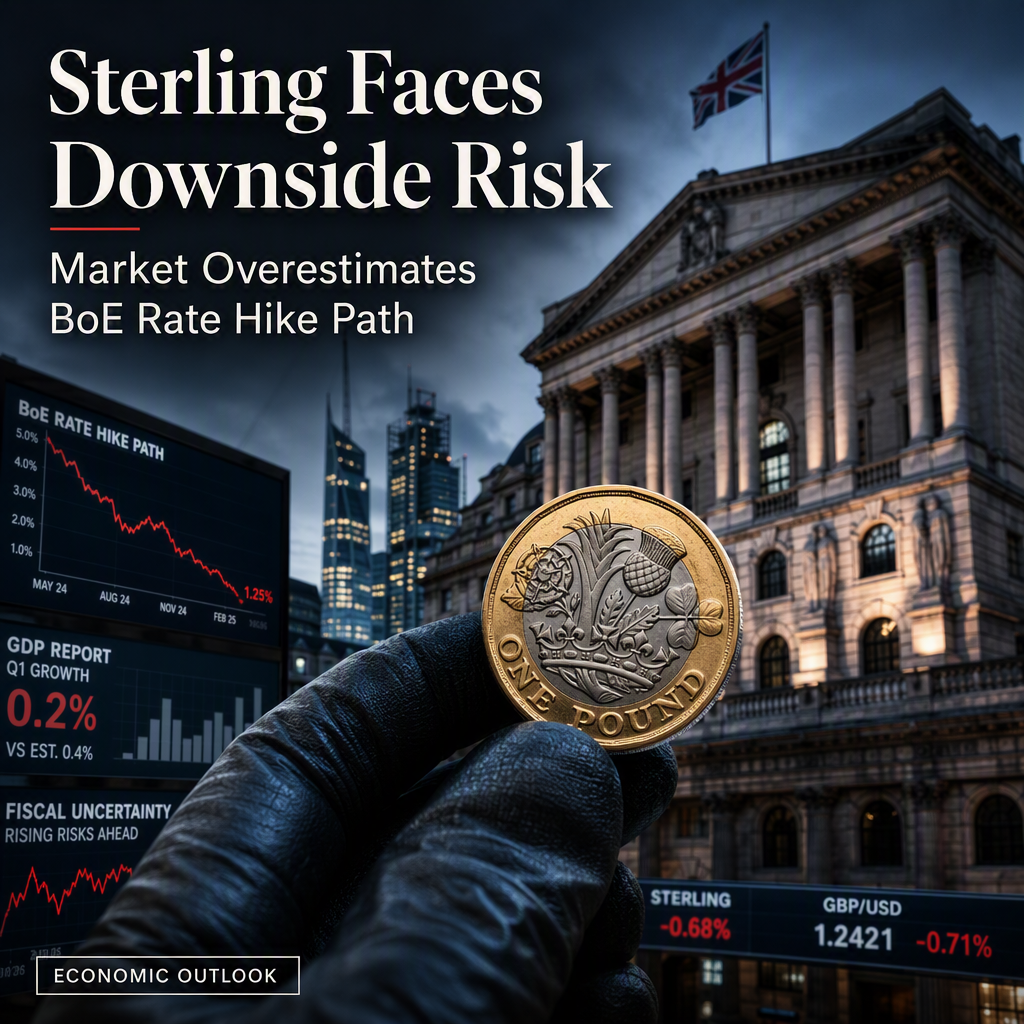
Brown Brothers Harriman’s (BBH) Elias Haddad highlights that the British Pound (GBP) is at risk due to what he considers overly aggressive market expectations for Bank of England (BoE) rate hikes. The swaps curve currently implies 75 basis points of tightening over the next twelve months, bringing the policy rate to 4.50%—a trajectory Haddad believes is too steep given the UK's economic backdrop [1].
The upcoming UK July Gross Domestic Product (GDP) report, expected to show flat growth at 0.0% month-on-month compared to June’s 0.3% increase, is not anticipated to significantly alter BoE expectations. Haddad notes that July’s decline in retail sales volumes offset improvements in the composite PMI, and the BoE’s own baseline forecast for Q3 GDP is a modest 0.1% quarter-on-quarter [1].
Haddad argues that the UK’s negative output gap, a policy rate already above the mid-point of the BoE’s estimated neutral range (2% to 4%), and the likelihood of tighter fiscal policy all suggest the market is overestimating the scope for further rate hikes. He warns that this leaves GBP vulnerable to a dovish repricing if the BoE signals a less aggressive stance [1].
On the fiscal side, UK Chancellor John Healey has committed to building a solid fiscal 'buffer against uncertainty' in the upcoming October 28 Budget, which is expected to include a mix of tax rises and spending cuts. Higher borrowing costs have reportedly halved the government’s fiscal headroom to around £12 billion, further supporting the case for a less aggressive monetary tightening cycle [1].
CONCLUSION
Market expectations for BoE rate hikes appear too aggressive given the UK’s economic and fiscal outlook, leaving the British Pound exposed to downside risk if the central bank adopts a more dovish stance. The upcoming GDP data and fiscal policy developments are unlikely to shift this dynamic in the near term.