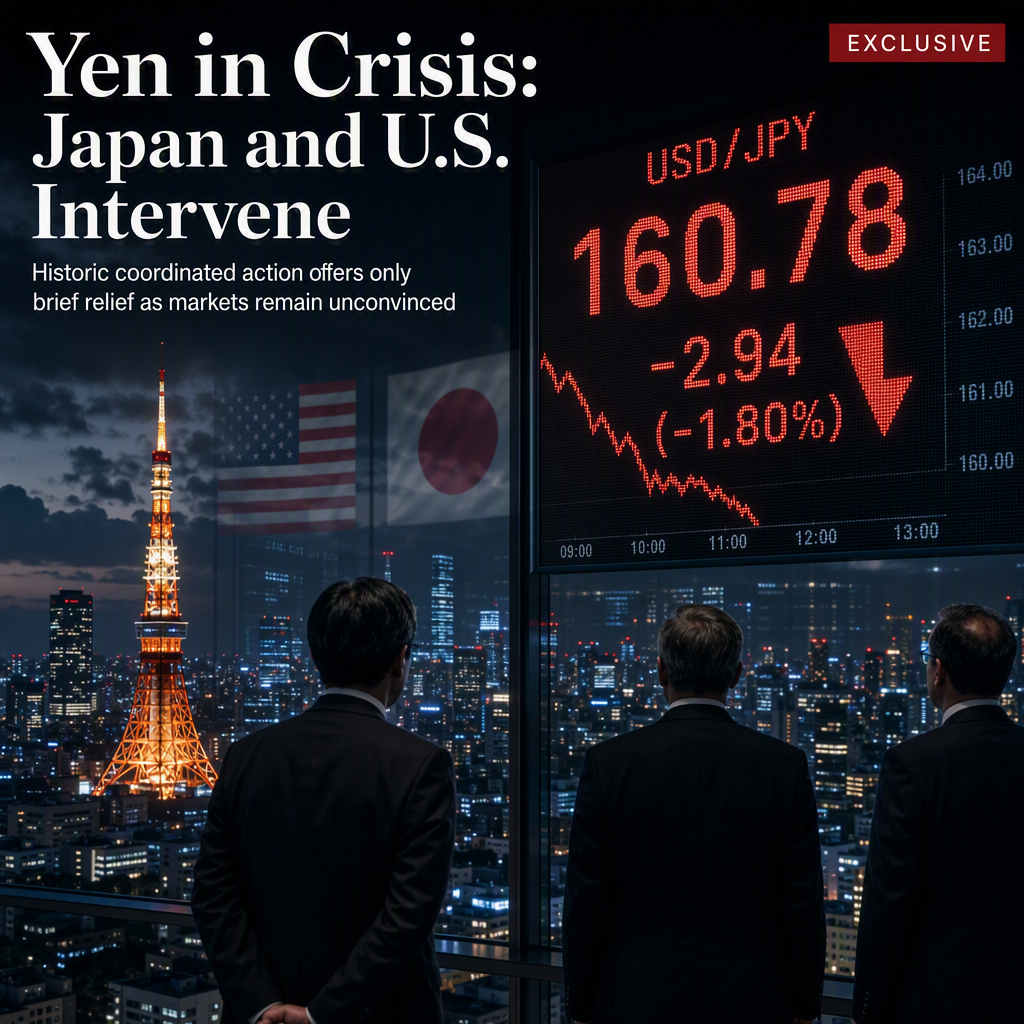
Japan and the United States have executed a coordinated yen-buying intervention for the first time in 28 years, responding to a dramatic loss of confidence in the yen, which briefly approached 164 to the dollar in late July—its weakest level since 1986 [1]. This intervention is notable as such coordinated actions have historically been reserved for periods of crisis, such as the Asian financial crisis and the aftermath of the 2011 Tohoku earthquake [1]. However, the current global economic environment does not constitute a crisis, suggesting the intervention is aimed at preventing excessive yen depreciation and mitigating potential disruptions in global financial markets [1].
U.S. Treasury Secretary Scott Bessent stated that one objective of the intervention was to contain Asia currency risk, noting that many Asian currencies, including the Korean won, are influenced by the yen's movements. He also highlighted concerns about China's undervalued currency and the reluctance to strengthen it due to yen weakness [1]. Despite the intervention, the yen has continued to weaken, reaching 158 to the dollar as Japanese and U.S. authorities attempt to defend the currency [1].
Market participants and analysts remain skeptical about the long-term effectiveness of the intervention. The article emphasizes that intervention alone is unlikely to reverse the yen's weakening trend and, at best, only buys time [1]. The underlying issues are attributed to Japan's lack of fiscal discipline under Prime Minister Sanae Takaichi's government, which continues its expansionary fiscal policy, raising concerns about the country's fiscal health [1]. Additionally, the Bank of Japan is perceived as lagging behind in raising interest rates, with the upcoming BOJ policy meeting in September identified as the next major market focus [1].
Further pressure on the yen comes from persistent real demand for dollars among Japanese companies, driven by higher global energy prices. Increased currency market volatility is also encouraging speculative bets against the yen [1]. Reflecting expectations of continued yen weakness, Toyota Motor has revised its assumed exchange rate for the fiscal year ending March 2027 from 150 yen to 160 yen per dollar [1].
CONCLUSION
The coordinated yen-buying intervention by Japan and the U.S. has provided only temporary relief for the yen, which remains under pressure due to domestic fiscal and monetary policy concerns. Market participants are now looking ahead to the Bank of Japan's September policy meeting for further direction. The intervention signals official concern but does not address the yen's fundamental weaknesses.