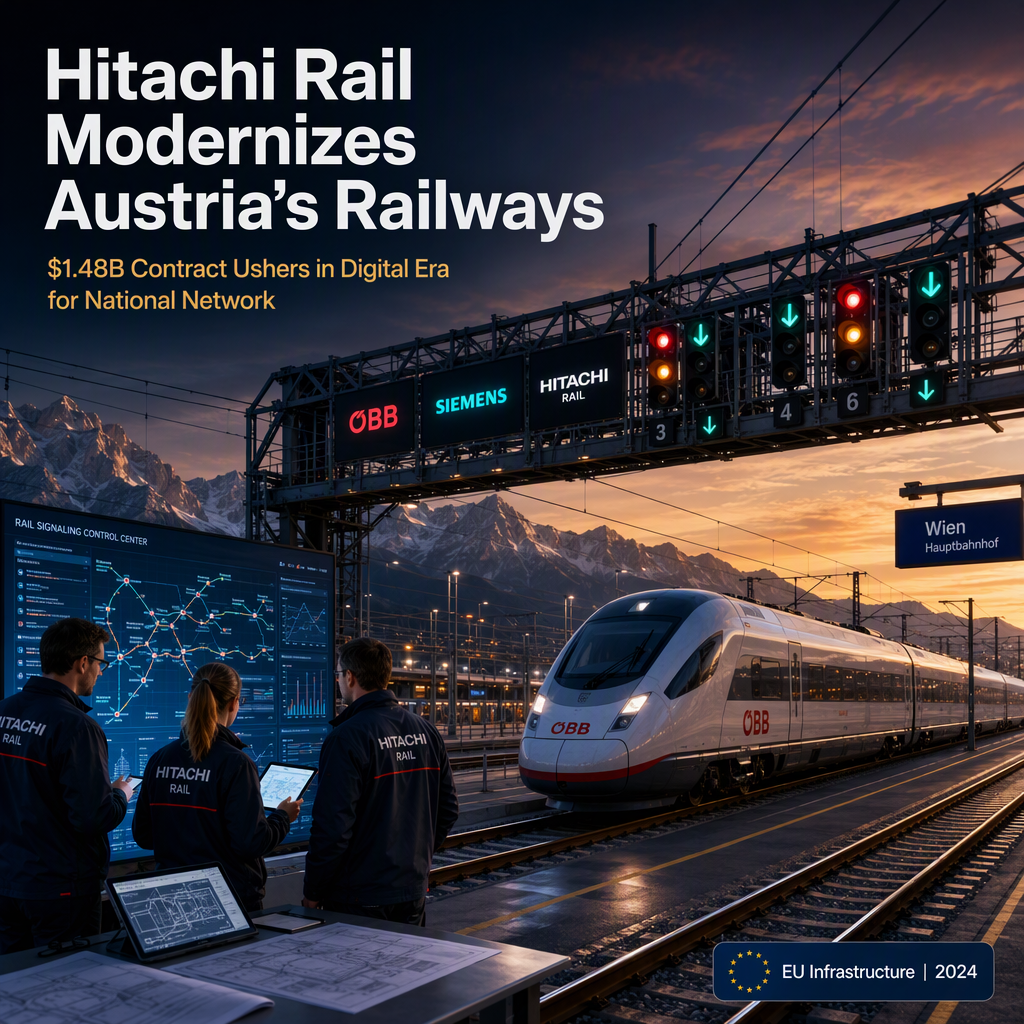
Japan's Hitachi Rail has signed a 30-year contract valued at 1.3 billion euros ($1.48 billion) to install and maintain a next-generation signaling system for Austria's national rail network, marking one of the largest infrastructure deals in the European rail sector this year [1]. The agreement, announced jointly by Hitachi, Siemens, and OBB on September 22 in Berlin, involves a comprehensive upgrade to digital signaling technology, which is expected to significantly enhance operational safety, efficiency, and capacity across Austria's rail network [1].
Hitachi Rail will be responsible for both the installation and ongoing maintenance of digital controls nationwide, positioning the company as a major competitor in the European signaling market alongside established firms such as Siemens [1]. The new digital controls are designed to enable real-time train monitoring, reduce delays, and improve network reliability, with advanced train control systems capable of automating key safety and operational functions [1]. These upgrades are expected to support higher train frequencies and reduce operational costs throughout the duration of the contract [1].
Industry analysts highlight that this partnership is a milestone for Hitachi Rail and Austria's rail industry, reflecting a broader trend toward modernization and digitalization of European rail networks [1]. A Hitachi Rail spokesperson emphasized the company's commitment to delivering world-class signaling technology to drive the future of rail transportation in Austria [1].
Financial markets responded positively to the announcement, citing the long-term revenue stream and growth prospects associated with digital rail infrastructure. Although no specific trading advice or price levels were provided, market sentiment surrounding Hitachi Rail's expansion into Europe remains bullish due to the scale and strategic importance of the Austria contract [1].
CONCLUSION
Hitachi Rail's $1.48 billion contract to modernize Austria's rail signaling system is seen as a major milestone, positioning the company as a key player in the European market. The deal is expected to deliver substantial operational improvements and long-term revenue, with financial markets reacting positively to the announcement. This move underscores the industry's shift toward digitalization and modernization of rail infrastructure.