
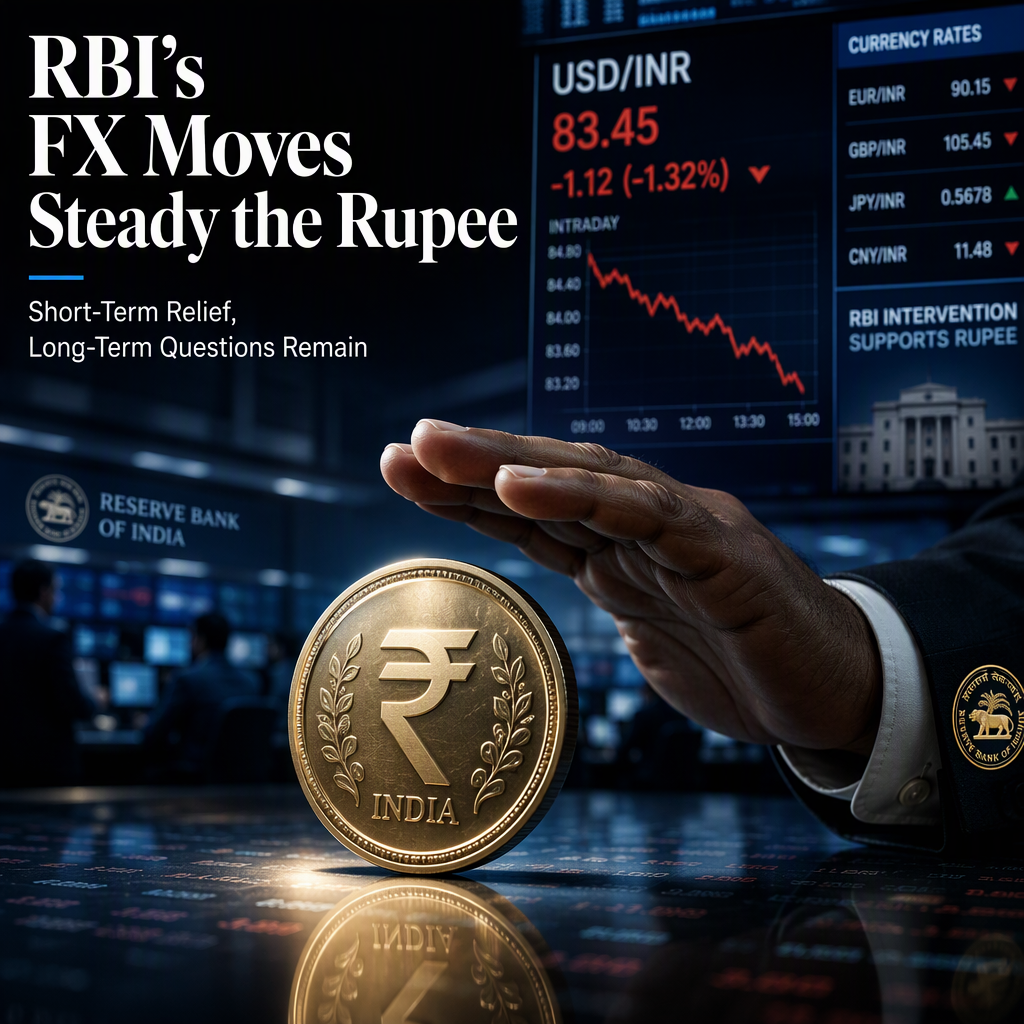
The Indian Rupee (INR) experienced a sharp rebound after the Reserve Bank of India (RBI) implemented tighter FX derivative rules and imposed additional restrictions, according to OCBC strategists Sim Moh Siong and Christopher Wong [1]. The RBI's actions included limiting access to certain INR non-deliverable derivatives strictly for hedging purposes and extending the 20% cash reserve requirement to banks’ own qualifying FX hedges [1]. As a result, the USD/INR currency pair opened 1% lower on Monday, reflecting immediate market reaction to the measures [1].
OCBC analysts caution that while these forceful policy moves may help contain near-term depreciation pressures on the INR, they are unlikely to decisively reverse the broader trend of rupee weakness [1]. The strategists highlight that higher hedging costs could temper forward USD demand but may also discourage genuine corporate hedging activity [1]. Additionally, the introduction of a special USD window for oil companies is seen as shifting demand away from the spot market rather than reducing India's underlying US dollar requirements [1].
Looking ahead, OCBC notes that the sustainability of the rupee's rebound will depend on whether portfolio outflows moderate and if external pressures from oil prices and US yields ease [1]. For now, the RBI's measures may help establish a firmer near-term footing for the INR, but do not mark a decisive reversal in its broader depreciation trend [1].
CONCLUSION
The RBI's recent FX measures have provided short-term support for the Indian Rupee, as reflected in a 1% drop in USD/INR. However, analysts remain cautious about the sustainability of these gains, emphasizing that broader depreciation pressures persist. The market will closely watch portfolio flows and external factors to gauge the rupee's future trajectory.