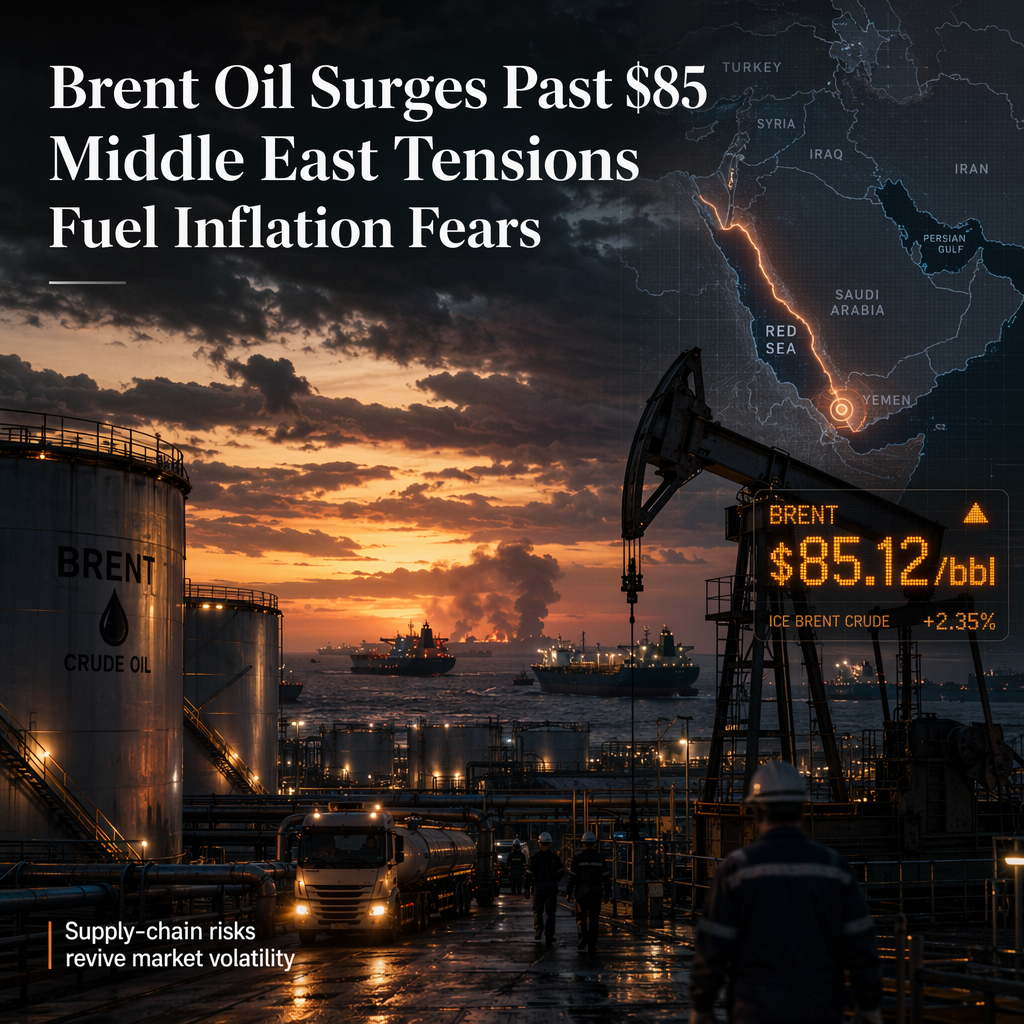
Brent crude oil prices have climbed to around $85 per barrel, with the latest trading at $85.12/bbl, marking a potential first close above the $85 threshold in over a month [1]. Deutsche Bank’s Early Morning Reid attributes this price strength to ongoing tensions in the Middle East, specifically referencing continued strikes between the US and Iran [1]. Additionally, a Reuters report cited by Deutsche Bank indicates that Iran has instructed its Houthi allies in Yemen to prepare to close the Red Sea oil route if the US targets Iran’s power network, heightening fears of further supply-chain disruptions [1].
The rise in Brent prices is reinforcing market concerns about persistent inflation, as higher oil prices can contribute to upward pressure on consumer prices [1]. The report notes that Brent crude is up another +1.06% this morning, reflecting the market’s sensitivity to geopolitical developments and their potential impact on energy supply [1].
These developments have dampened the previously optimistic market sentiment that followed a softer US CPI report earlier in the week, as worries about possible rate hikes and sustained inflation resurface [1]. The combination of geopolitical risk and inflationary pressures is seen as undermining the more buoyant narrative that had emerged in the wake of the US inflation data [1].
CONCLUSION
Brent oil’s move above $85 per barrel, driven by Middle East tensions and supply-chain risks, has reignited inflation concerns in the market. This shift is tempering optimism from earlier in the week and raising the prospect of further volatility tied to geopolitical developments.