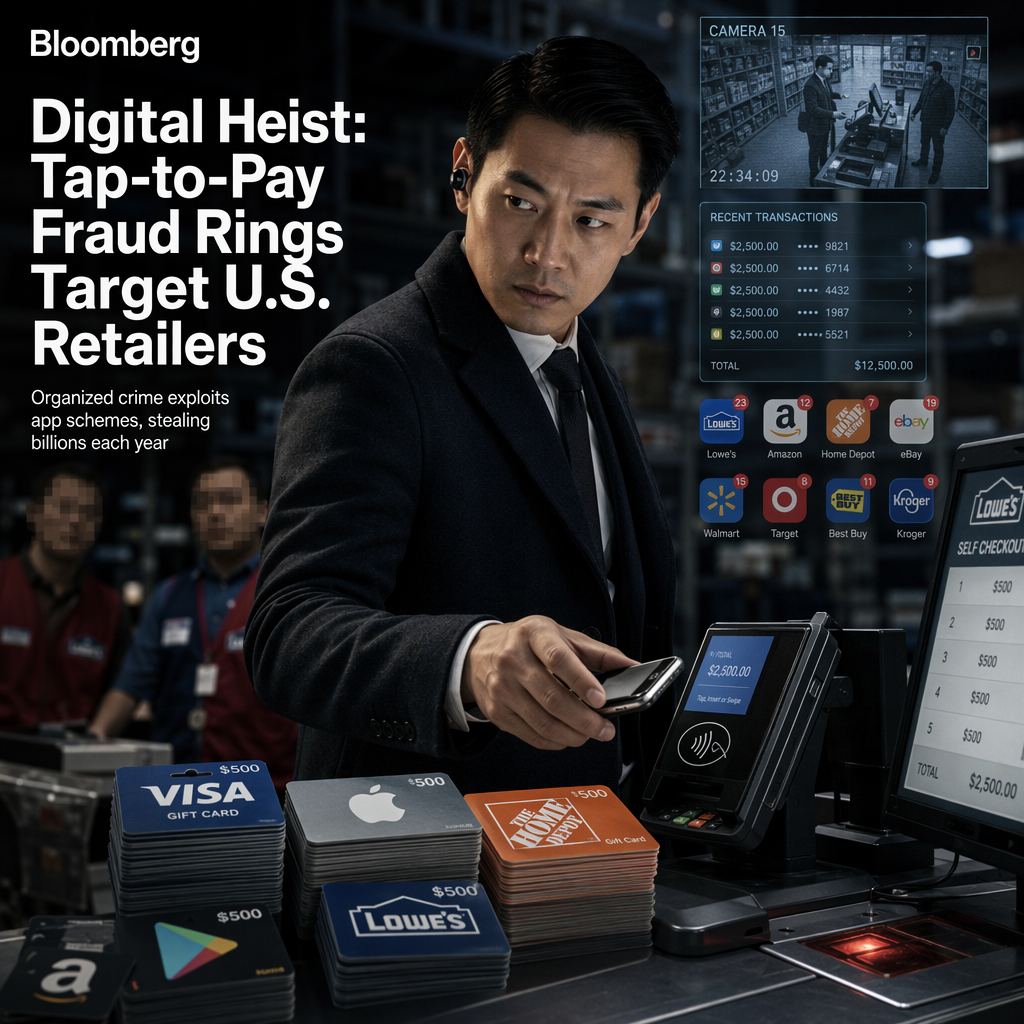
Chinese organized crime rings are leveraging digital theft methods such as tap-to-pay schemes and app fraud to steal as much as $1 billion annually from banks and retailers, according to police sources cited by CNBC. These fraudsters use stolen credit cards to purchase gift cards, which are then resold at a discount or used to buy high-value goods for resale in China [1]. The operations are sophisticated, with individuals coached remotely through wireless headphones during transactions, as seen in a case involving a suspect at a Lowe's store in Hammond, Louisiana. The suspect, believed to be part of a Chinese crime ring, bought multiple gift cards using stolen credit card information and repeated the process at various retailers, all without being apprehended [1].
Unlike traditional retail theft, which involves physically stealing merchandise, these digital crimes are less visible and can be executed from anywhere in the world, making them a preferred method for organized crime over the past several years. Scott Glenn, vice president of asset protection at The Home Depot, noted that these methods are 'very low risk for the bad actors' compared to more obvious in-store theft [1]. Law enforcement officials, including Adam Parks from U.S. Homeland Security Investigations, estimate that hundreds of individuals are conducting these schemes across the country at any given time, with each seemingly small transaction quickly adding up to significant financial losses [1].
Retailers such as Lowe's and TJX Companies have been targeted, but Lowe's did not respond to requests for comment regarding the incidents. The proliferation of tap-to-pay and retail app usage has facilitated the rise of these digital thefts, which are now shaping the next wave of organized retail crime in the United States [1].
CONCLUSION
The rise of digital theft methods by Chinese fraud rings represents a significant and growing threat to U.S. banks and retailers, with annual losses estimated at up to $1 billion. The low-risk, high-reward nature of these schemes is driving their popularity among organized crime groups, signaling an urgent need for enhanced security measures and industry vigilance.