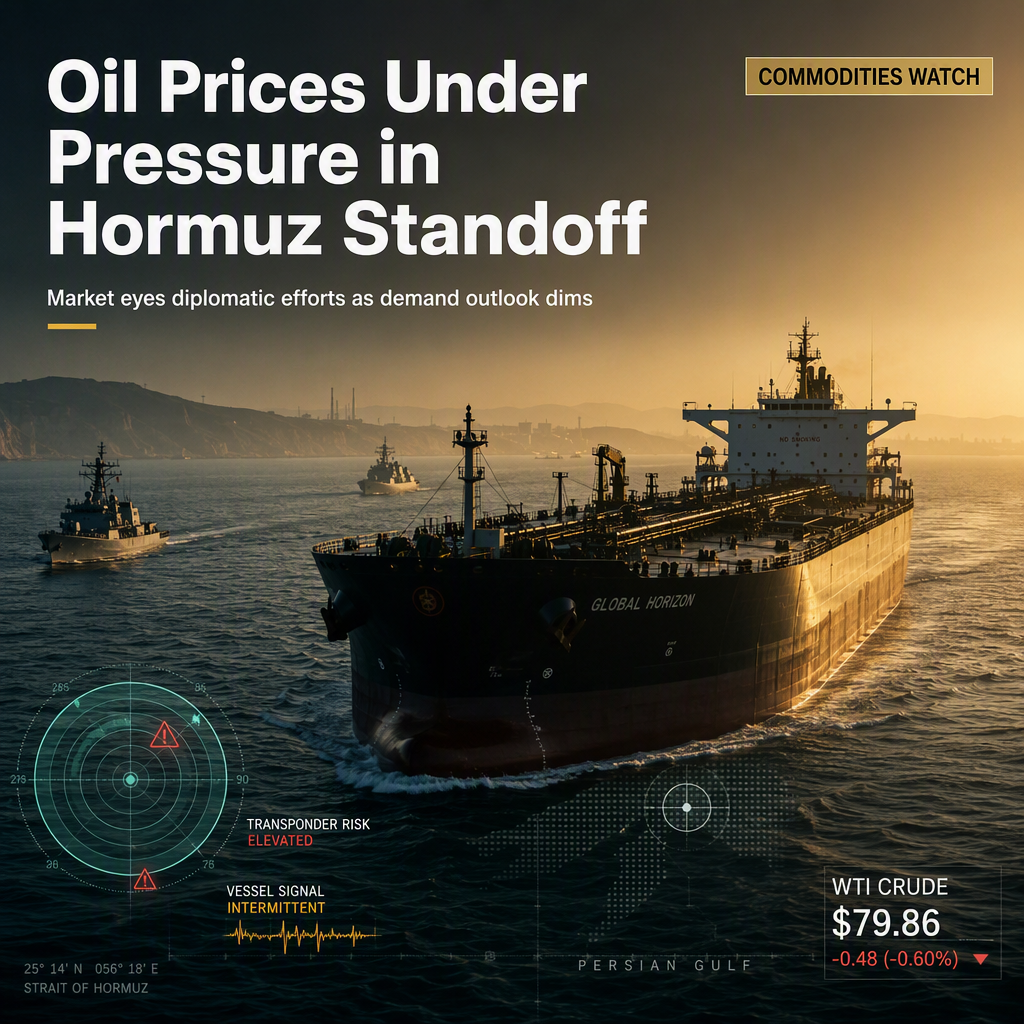
West Texas Intermediate (WTI) crude oil prices remained subdued for the third consecutive day, trading around $80.30 per barrel during Asian hours on Friday, as traders closely monitored ongoing diplomatic efforts to reopen the Strait of Hormuz [1]. Despite the deadlock, crude oil continues to flow out of the Persian Gulf, with some tankers reportedly sailing with their transponders switched off to mitigate risks, though vessels remain exposed to persistent threats in the region [1]. The United States claims that up to 9 million barrels of oil per day are currently transiting the critical waterway, aided by the expanding capacity of U.S. forces to escort tankers [1].
Market sentiment has been pressured by demand concerns, as the International Energy Agency (IEA) recently trimmed its global oil demand outlook, warning that prolonged conflict and elevated prices are negatively impacting overall consumption [1]. Additionally, OPEC lowered its 2026 global oil demand growth forecast to 580,000 barrels per day, marking the fourth consecutive downward revision, further weighing on market expectations [1].
TD Securities noted that the easing of near-term momentum has led to modest selling in WTI crude, as some market participants pare back their positions [1]. However, the bank emphasized that fundamental tightness across crude and product markets should ultimately support further upside, suggesting that the recent pullback is driven more by short-term dynamics than a shift in the underlying bullish supply-demand backdrop [1].
CONCLUSION
WTI oil prices remain under pressure amid ongoing geopolitical risks and softening demand outlooks from both the IEA and OPEC. While short-term sentiment is cautious, some analysts maintain that underlying market tightness could support prices in the longer term. Traders are expected to continue monitoring developments in the Strait of Hormuz and global demand forecasts for further direction.