
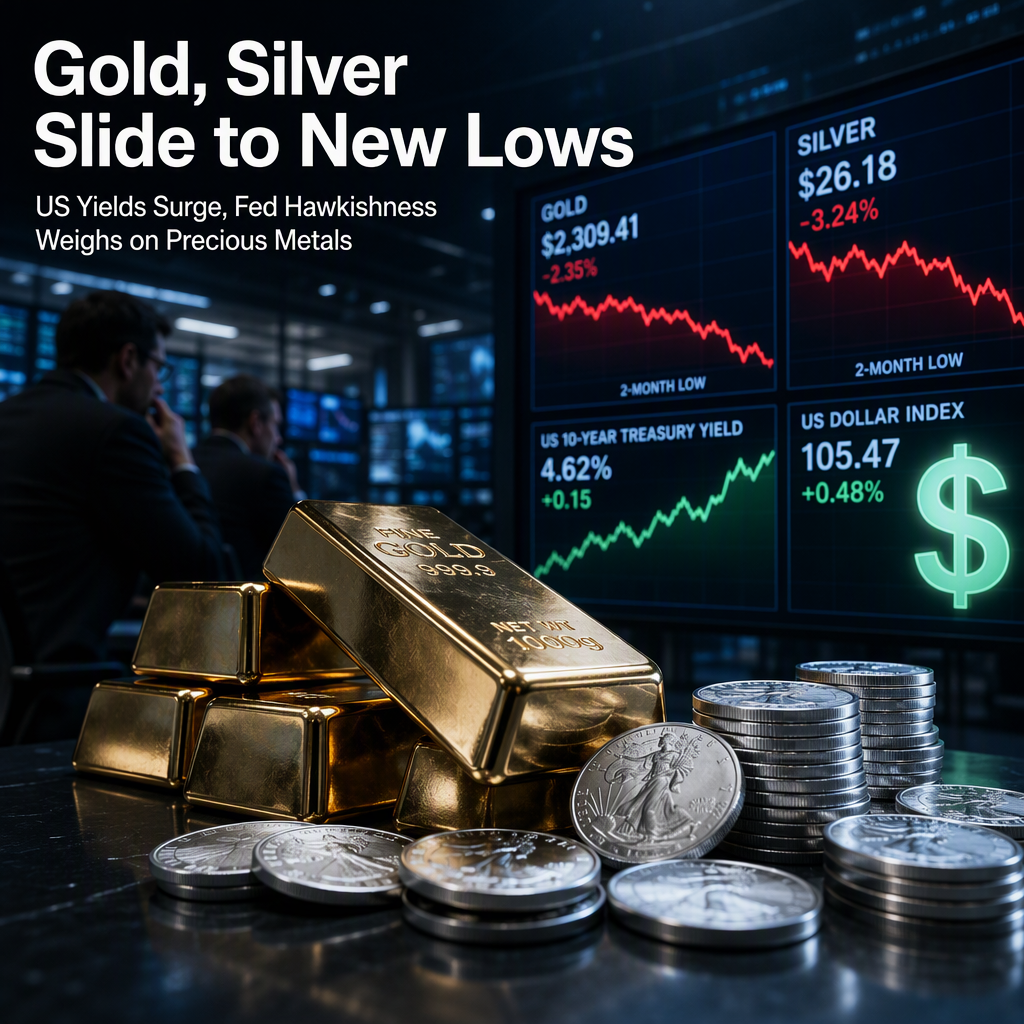
Gold (XAU/USD) and Silver (XAG/USD) both reversed recent recoveries and slid to fresh two-month lows on Thursday, pressured by a stronger US Dollar and surging US Treasury yields [1][2]. Gold traded around $4,119, down from an intraday high of $4,143, while Silver dropped to approximately $58.50 during the European session [1][2]. The 10-year US Treasury yield rose 1.3% to near 5.35%, approaching its two-decade high of 5.36% [2]. This surge in yields was attributed to higher oil prices, which rebounded with West Texas Intermediate (WTI) gaining about 3% after reports that the Pentagon was preparing for possible strikes on Iran, injecting a fresh risk premium into oil markets [1][2].
The Federal Reserve's September meeting minutes, released Wednesday, showed unanimous support for a 25-basis-point hike to 3.75%-4.00%, with most participants considering another rate increase likely appropriate by year-end amid persistent inflation risks [1][2]. Fed Governor Christopher Waller stated, “More hikes needed but flexible about the pace,” and highlighted that inflation remains too high, with the AI buildout and ongoing energy shocks among the persistent inflationary forces [1]. Several FOMC officials also warned that the AI buildout could push aggregate demand ahead of supply, creating additional upward pressure on prices [2].
Strategists at Brown Brothers Harriman noted that persistently high energy prices keep risks to inflation, policy rates, and benchmark bond yields skewed to the upside, favoring the US Dollar over energy importers’ currencies [1]. The US Dollar Index (DXY) traded around 102.40, close to its 18-month high of 102.53 reached earlier in the week, further weighing on precious metals [1]. Societe Generale strategists see US Treasury yields potentially rising to 5.5% after breaking above 5.36% [2].
Technical analysis for both metals points to a bearish near-term bias. Gold remains below its 20-period Bollinger Simple Moving Average at $4,239, while Silver trades under its 20-day Exponential Moving Average at $62.29, with the Relative Strength Index (14) for Silver slipping toward the mid-30s, indicating persistent downside pressure [1][2]. Despite the current weakness, TD Securities argues that robust ETF demand and continued central bank purchases provide a strong floor for gold, and they foresee the stage being set for a new bull run into 2027 [1].
CONCLUSION
Both gold and silver have come under significant pressure due to rising US Treasury yields, a stronger US Dollar, and expectations of further Federal Reserve tightening. While technicals and market sentiment remain bearish in the near term, some analysts highlight underlying demand and potential for longer-term recovery, particularly for gold. The immediate outlook, however, remains cautious as inflation and rate hike risks persist.