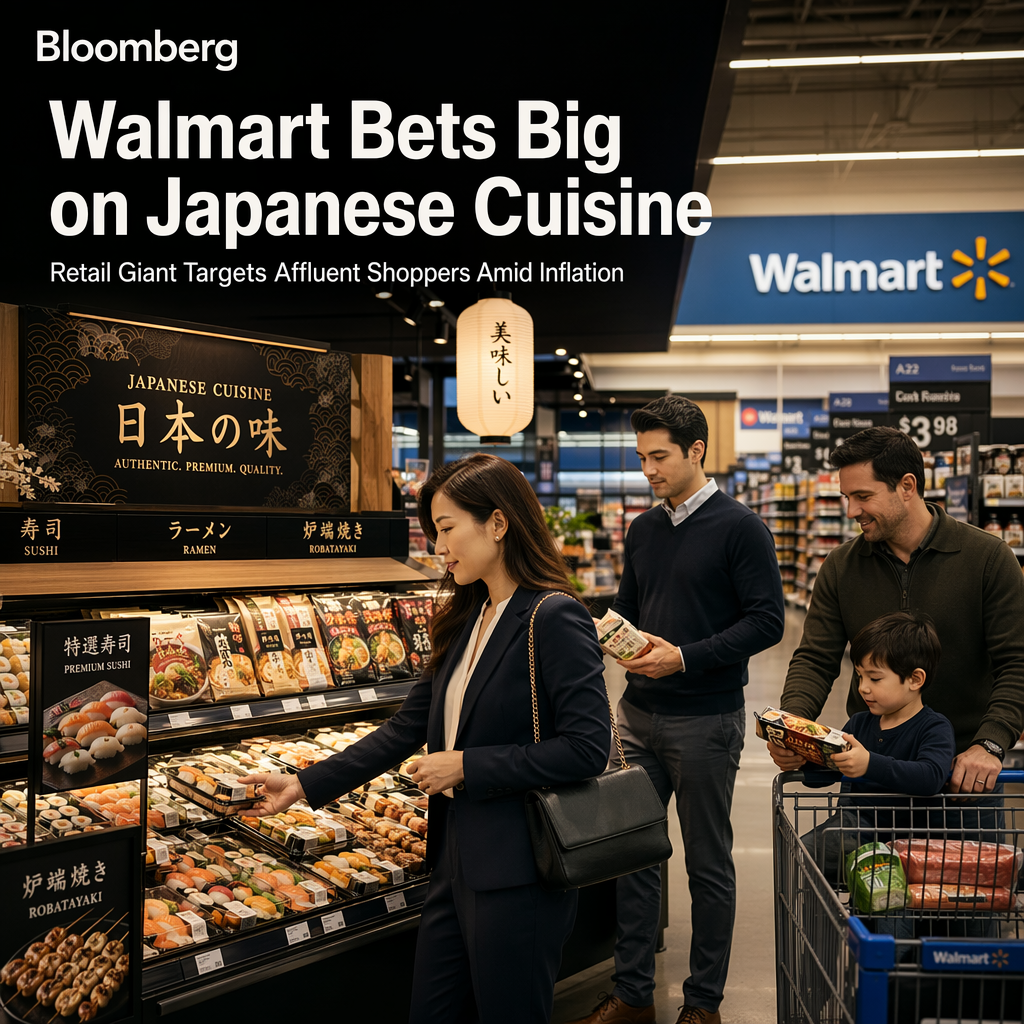
Walmart is increasing its sourcing of Japanese food and ingredients in response to a shift in its U.S. customer base, as inflation has led more affluent and health-conscious shoppers to frequent the retailer's stores [1]. This strategic move is creating new opportunities for Japanese companies, which have previously struggled to secure shelf space at Walmart [1]. The Bentoville Food Theater, located in Walmart's hometown, now features three types of Japanese cuisine—sushi, robatayaki, and ramen—highlighting the retailer's commitment to offering premium and authentic international food experiences [1].
The U.S. retail environment is evolving, with the influx of higher-income shoppers seeking healthier and more premium options, including Japanese food products [1]. This trend aligns with the growing popularity of Japanese cuisine in the U.S., as items like sushi, ramen, and robatayaki become increasingly mainstream [1]. Industry analysts suggest that Walmart's focus on Japanese cuisine could foster greater collaboration between the retailer and Japanese exporters, while also intensifying competition among U.S. retailers to diversify their international food offerings [1].
The shift in shopper demographics is expected to have a lasting impact on product selection and merchandising strategies across the American retail sector, as retailers adapt to meet the demands of a more diverse and quality-focused customer base [1].
CONCLUSION
Walmart's increased emphasis on Japanese food reflects a broader shift in U.S. retail driven by inflation and changing consumer preferences. This strategy is likely to benefit Japanese exporters and reshape competition among American retailers, with long-term implications for product diversity and merchandising approaches.