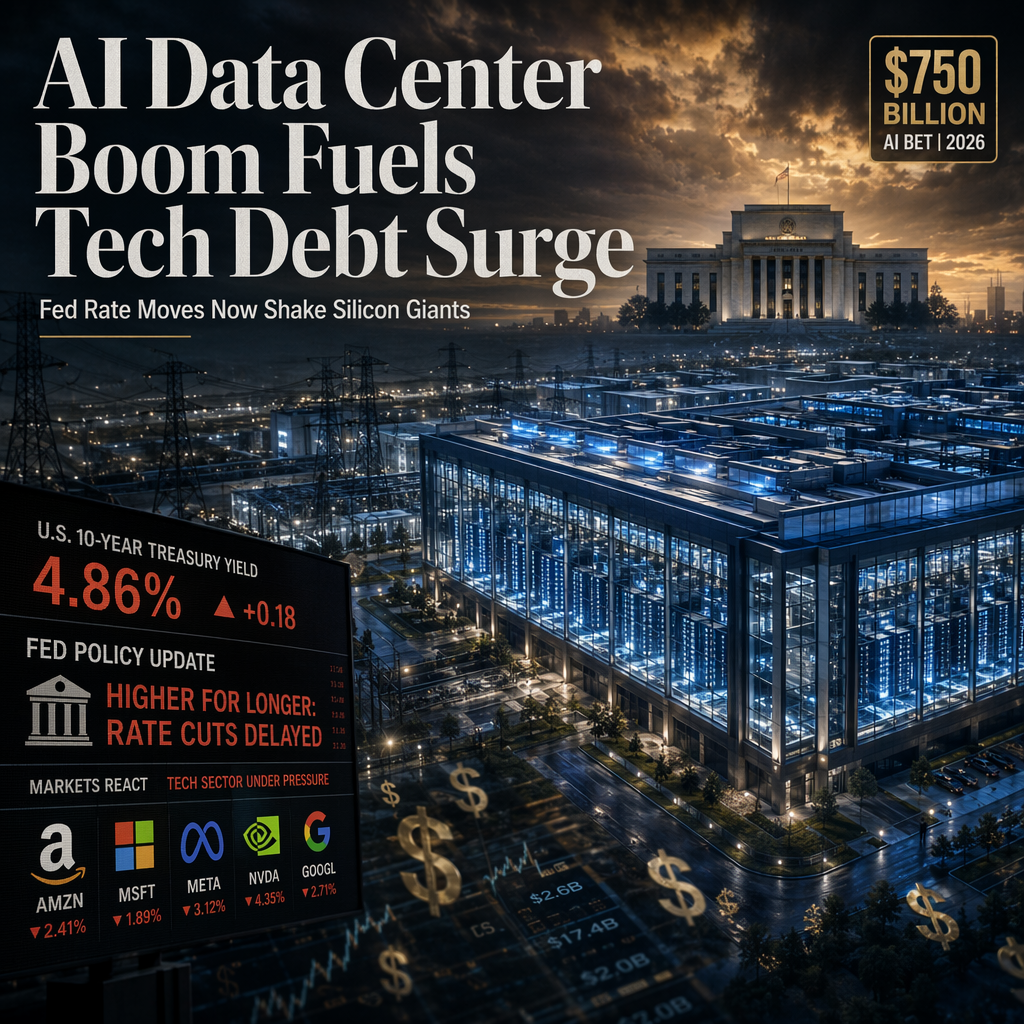
Tech giants are increasingly depleting their cash reserves and leveraging debt to fund ambitious data center buildouts, primarily driven by the rapid expansion of artificial intelligence infrastructure. This shift is making large technology companies more exposed to the cost of borrowing and, consequently, more sensitive to Federal Reserve policy decisions than in previous years, when their strong balance sheets allowed them to largely ignore rising interest rates [1].
According to Peter Boockvar, chief investment officer of One Point BFG Wealth Partners, tech investors are now experiencing the same rate sensitivities as those in traditional industrial sectors. He noted that tech investors must now pay close attention to inflation data, Treasury market movements, and statements from Fed officials such as Chairman Kevin Warsh, who held his first press conference on Wednesday. The Federal Reserve indicated the possibility of a rate hike in 2026, which triggered a sell-off in equities and pushed the 10-year Treasury yield to approximately 4.45% [1].
The impact of higher rates, which has historically affected smaller, less-profitable tech firms, is now being felt by megacap companies. Amazon, Alphabet, Microsoft, and Meta are projected to deploy a combined $750 billion in 2026 for AI infrastructure, representing an increase of more than 80% from 2025. Much of this expansion is being financed through debt, with Nvidia, Oracle, Amazon, Alphabet, and Meta each raising tens of billions of dollars in the bond market. OpenAI's CFO, Sarah Friar, has cited access to debt markets as a motivation for a potential public offering. Additionally, Reuters reported that SpaceX bankers are preparing a bond offering of at least $20 billion following the company's Nasdaq debut last week [1].
Jeff Kilburg, CEO of KKM Financial, emphasized the 'insatiable demand' for AI-related funding and described the current environment as a 'perfect recipe' for tech leaders who are comfortable borrowing and spending aggressively. However, the reliance on debt makes these companies more vulnerable to rising rates, which could increase borrowing costs and impact future cash flows [1].
CONCLUSION
The AI-driven data center expansion is pushing tech giants into the debt markets, making them more sensitive to Federal Reserve rate decisions. With a projected $750 billion in AI infrastructure spending and significant bond offerings underway, the sector faces heightened exposure to borrowing costs. Investors and analysts are now closely monitoring Fed policy as a key market driver for tech stocks.