
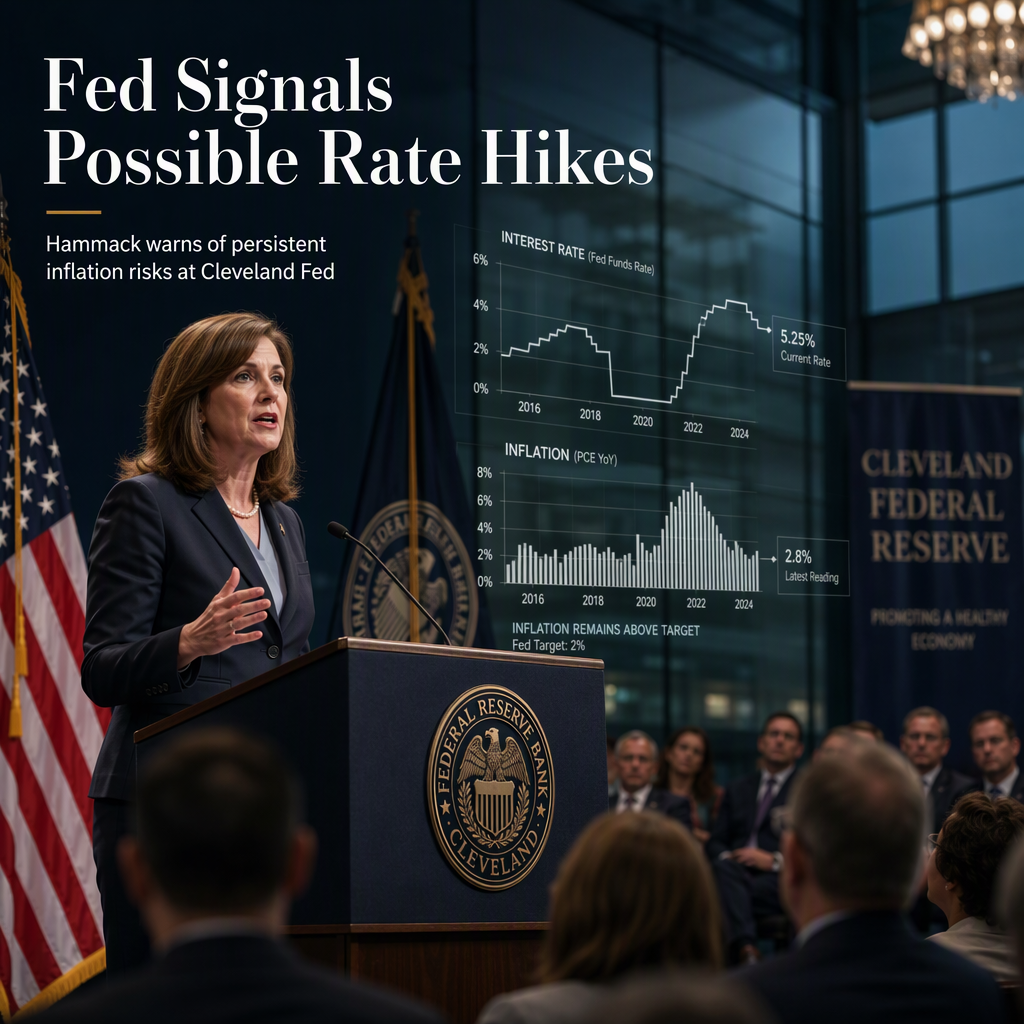
Cleveland Federal Reserve President Beth Hammack stated that tighter monetary policy may be necessary to combat inflation, emphasizing a preference for fast, incremental rate adjustments rather than waiting and risking larger corrections later [1]. Hammack, a voting member of the Fed's policymaking committee, delivered these remarks at the National Association of Business Economics annual gathering, highlighting the importance of a restrictive monetary policy stance to ensure a timely return to the Fed's 2 percent inflation target [1].
Hammack's comments suggest that additional interest rate hikes could be forthcoming. While Fed officials indicated in September meeting minutes that further rate increases are possible, they did not specify a timeline for such decisions [1]. The Fed recently raised interest rates for the first time in three years. According to CME's FedWatch tool, traders currently assign a more than 78% probability that rates will remain unchanged at the upcoming policy meeting, but see a nearly 88% chance of a hike at the Fed's final meeting of the year in December [1].
Inflation remains a significant challenge, with the personal consumption expenditures price index rising 3.4% year over year in August. The core reading, which excludes food and energy, stood at 3% compared to a year prior [1]. Hammack noted that long-run inflation expectations have remained well anchored despite inflation exceeding the target for over five years, but cautioned against complacency, warning that persistently elevated inflation increases the risk of an inflationary mindset becoming entrenched in the economy [1].
Hammack also acknowledged that the breadth of current inflationary pressures means it will take some time to achieve the central bank's goal of 2% annual price growth [1].
CONCLUSION
Beth Hammack's remarks underscore the Federal Reserve's concern about persistent inflation and the potential need for further rate hikes. Market participants are increasingly expecting a rate increase at the Fed's December meeting, reflecting ongoing uncertainty about inflation's trajectory. The Fed's cautious approach aims to prevent inflation expectations from becoming entrenched, signaling a medium market impact.