
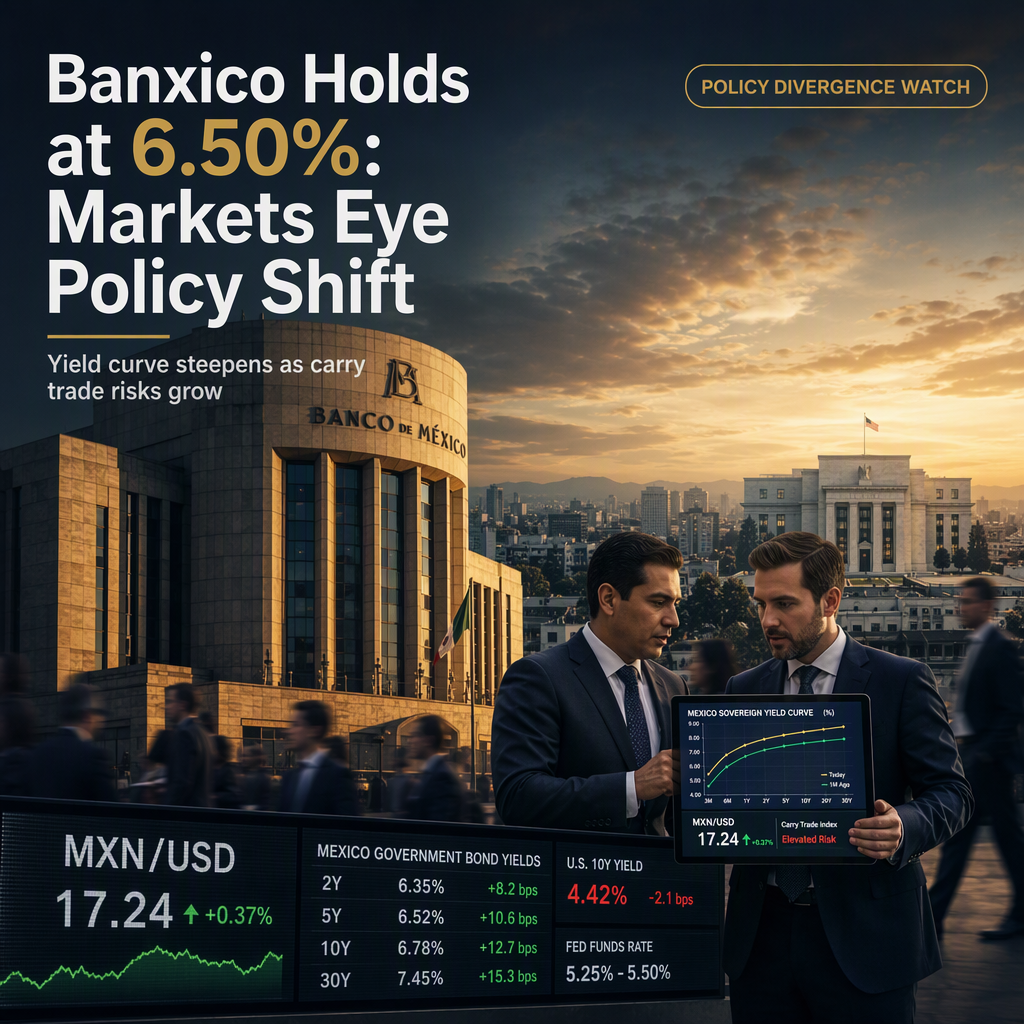
The Bank of Mexico (Banxico) decided to maintain its overnight target rate at 6.50% on September 24, aligning with market expectations. However, the Monetary Policy Statement diverged from some forecasts by removing language that previously indicated the Bank would keep the reference rate at its current level and by emphasizing that future decisions would not necessarily follow the Federal Reserve's path. This stance has prompted speculation among investors about a potential reduction in the Mexico-US rate differential and the possibility of an unwind in the carry trade, although such an unwind has not yet been fully reflected in the USD/MXN exchange rate or in CFTC non-commercial speculator positions. The carry trade has, however, lost some appeal in recent weeks [1].
Rabobank strategists Molly Schwartz and Christian Lawrence highlighted that the risks to Banxico’s inflation outlook—and consequently its rate outlook—are skewed to the upside. While Rabobank maintains the view that Banxico will keep the overnight policy rate at 6.50% through year-end, market-implied pricing suggests investors are anticipating a rate hike within the next three months and more than 100 basis points of hikes over the next year. The Mexican yield curve has steepened significantly compared to the US, and Rabobank expects the narrowing of the Mexico-US 10-year spread to continue, albeit at a slower pace than recent trends. At the front end of the curve, there is still potential for further narrowing [1].
Despite recent price action, foreign ownership of Mexican government securities remains robust. Non-resident investors added approximately MXN 42 billion of government paper in the first half of the year, bringing their total holdings to around MXN 1.78 trillion, which accounts for just over 11% of the total market. This increase was split between Mbonos and Cetes, indicating continued international confidence in Mexican fixed income assets [1].
CONCLUSION
Banxico’s decision to hold rates at 6.50% and its signaling of potential policy divergence from the Federal Reserve have introduced uncertainty regarding the future of the carry trade and the Mexico-US rate differential. While inflation risks remain to the upside and markets are pricing in further hikes, foreign investor participation in Mexican government debt remains resilient. The market will closely watch Banxico’s next moves for further clarity on rate direction.