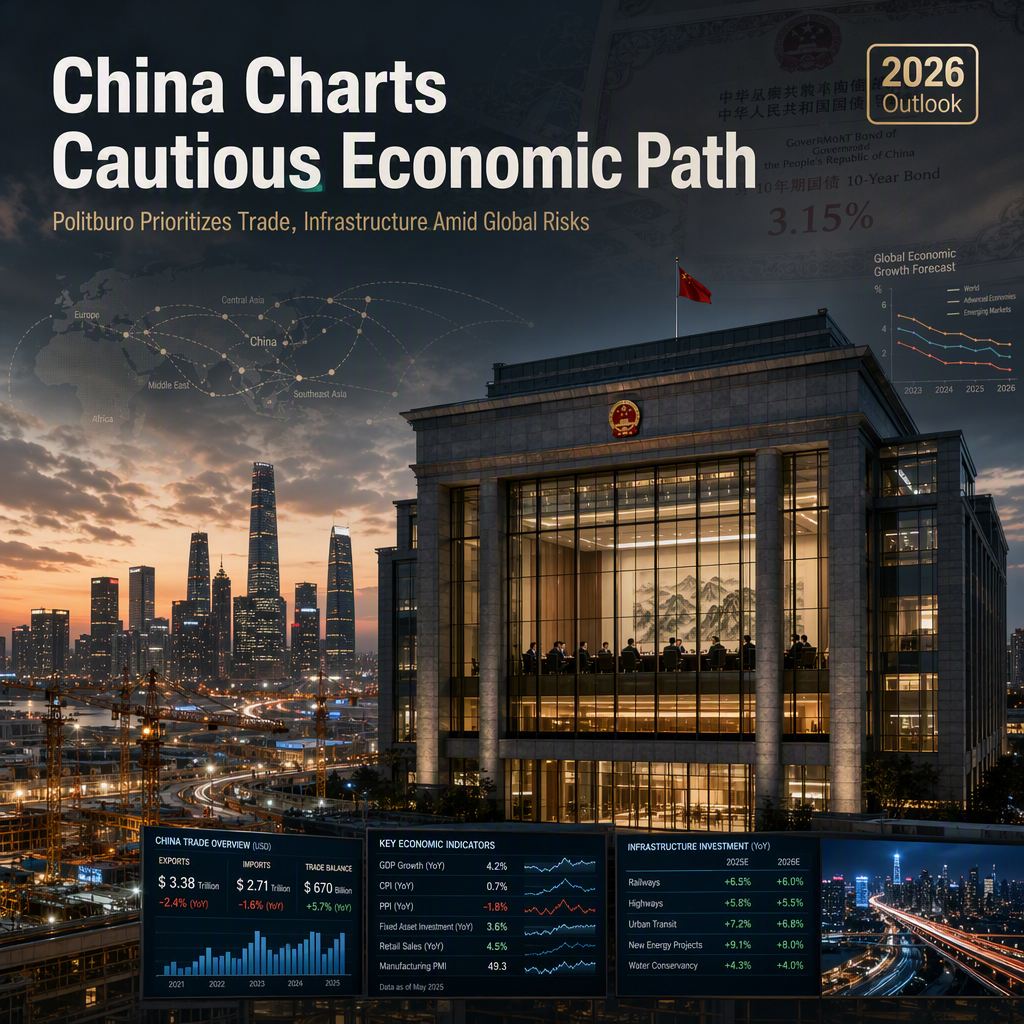
China's top decision-making body has pledged to expand trade ties while adopting a more cautious stance on the domestic economy, in response to ongoing crises in the Middle East and escalating trade tensions with major partners such as the U.S. and European Union [1]. The Politburo emphasized the need for increased policy support, specifically through bond funding and accelerated infrastructure spending, to sustain economic growth in the second half of 2026 [1].
The leadership highlighted concerns over slowing borrowing and liquidity build-up, noting that Chinese banks have accumulated record-high cash reserves as lending activity slows. This trend signals heightened caution among financial institutions and companies, coinciding with Western governments' claims of overcapacity in China's industrial sector—claims that Beijing has rejected, asserting the continued health of its industrial output [1].
To address these challenges, local governments are expected to ramp up bond issuance to finance infrastructure projects, which are seen as crucial for achieving the official 2026 growth target despite mounting global headwinds [1]. Market analysts observed that the Politburo's cautious tone reflects broader concerns about weak domestic demand and external pressures, leading to defensive trading sentiment. Investors are closely monitoring for indications of further policy easing or fiscal stimulus, with Chinese equities potentially facing tests of support levels amid ongoing uncertainties [1].
Additionally, the Politburo underscored the importance of stabilizing employment and maintaining ample liquidity in the banking system. Technical indicators suggest that the Chinese yuan and related assets may remain range-bound, with volatility expected to persist until clearer policy direction is established [1].
CONCLUSION
China's leadership is balancing the need for external trade expansion with domestic policy support, focusing on bond funding and infrastructure to counteract mounting risks. Market sentiment remains cautious, with investors awaiting further policy signals as uncertainties persist both domestically and globally.