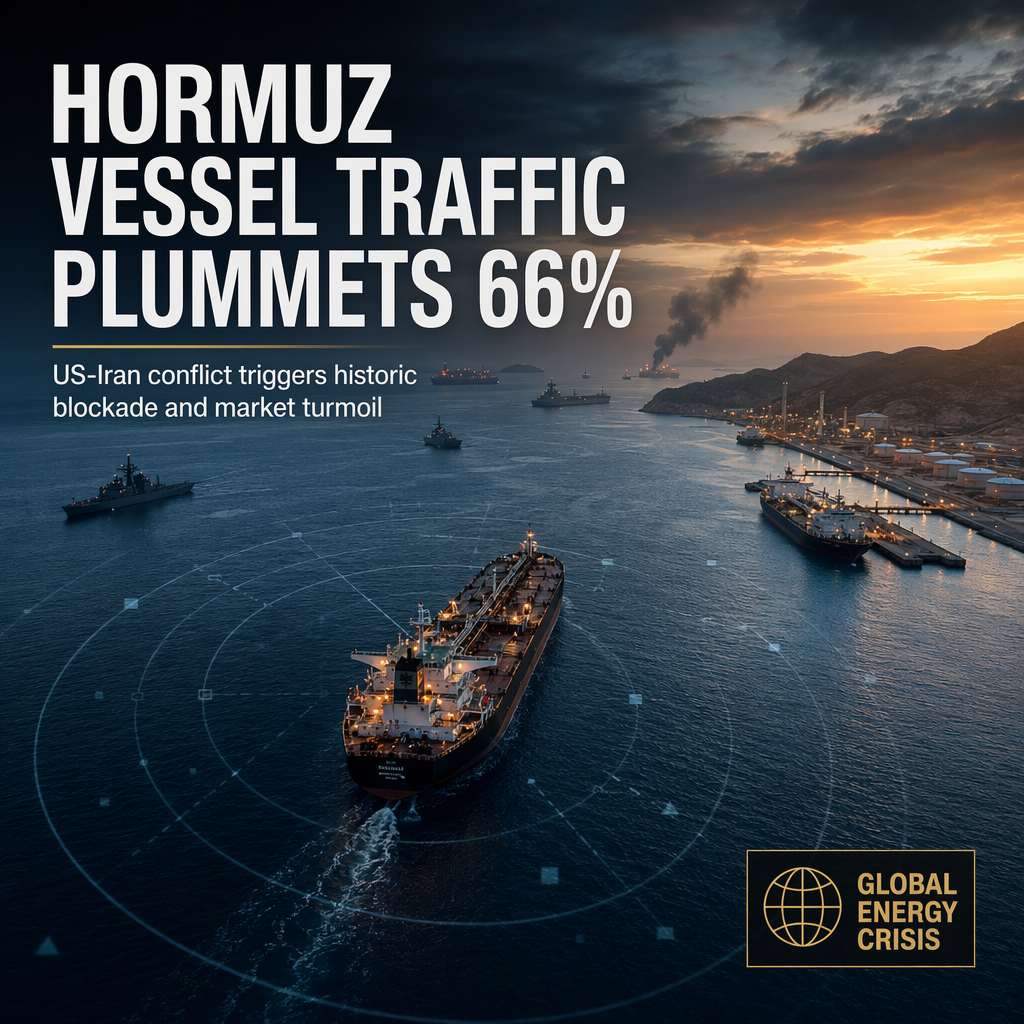
Vessel traffic through the Strait of Hormuz has sharply declined following the reintroduction of a US blockade and renewed fighting between the United States and Iran, with shipowners increasingly avoiding the critical energy corridor. According to Lloyd's List Intelligence, only 53 vessels transited the Strait in the week through July 20, representing a 66% drop from 157 crossings the previous week. Movements of tankers and gas carriers, which are essential for transporting Gulf crude oil and liquefied natural gas, fell to 30 crossings from 90 in the same period [1].
Kpler data corroborates this trend, showing that daily crossings, which had averaged over 20 vessels before July 15, dropped to 16 on July 15 and fell to single digits by July 16, remaining subdued for the rest of the week with only sporadic recoveries [1]. This marks a reversal from the gradual normalization seen after a mid-June ceasefire, as renewed hostilities have nearly emptied the waterway that carries about one-fifth of global oil consumption [1].
S&P Global data further highlights the impact, with just 40 vessels transiting the Strait between July 17 and July 19, averaging roughly 13 crossings per day. Weekly traffic through July 19 fell almost 50% from the previous week. More than 70% of the traffic during this period was commercial ships, but only about one-third were assessed as compliant with maritime restrictions. Iran-linked and sanctioned vessels continued to dominate many movements, indicating that mainstream international shipowners remain hesitant to return [1].
Analysts suggest that vessel movements are likely to continue in 'ebbs and flows' as shipowners take advantage of brief windows of perceived safety before pulling back when tensions escalate. Saul Kavonic, head of energy research at MST Marquee, stated that the latest escalation demonstrates how expectations for a rapid reopening of the Strait were premature, and that the hostilities and reimposed blockade have set the conflict back on an escalatory trajectory [1].
CONCLUSION
The renewed US-Iran conflict and blockade have caused a dramatic reduction in vessel traffic through the Strait of Hormuz, a vital global energy corridor. With shipowners remaining cautious and analysts warning of ongoing volatility, the market faces significant uncertainty regarding the restoration of normal shipping flows.