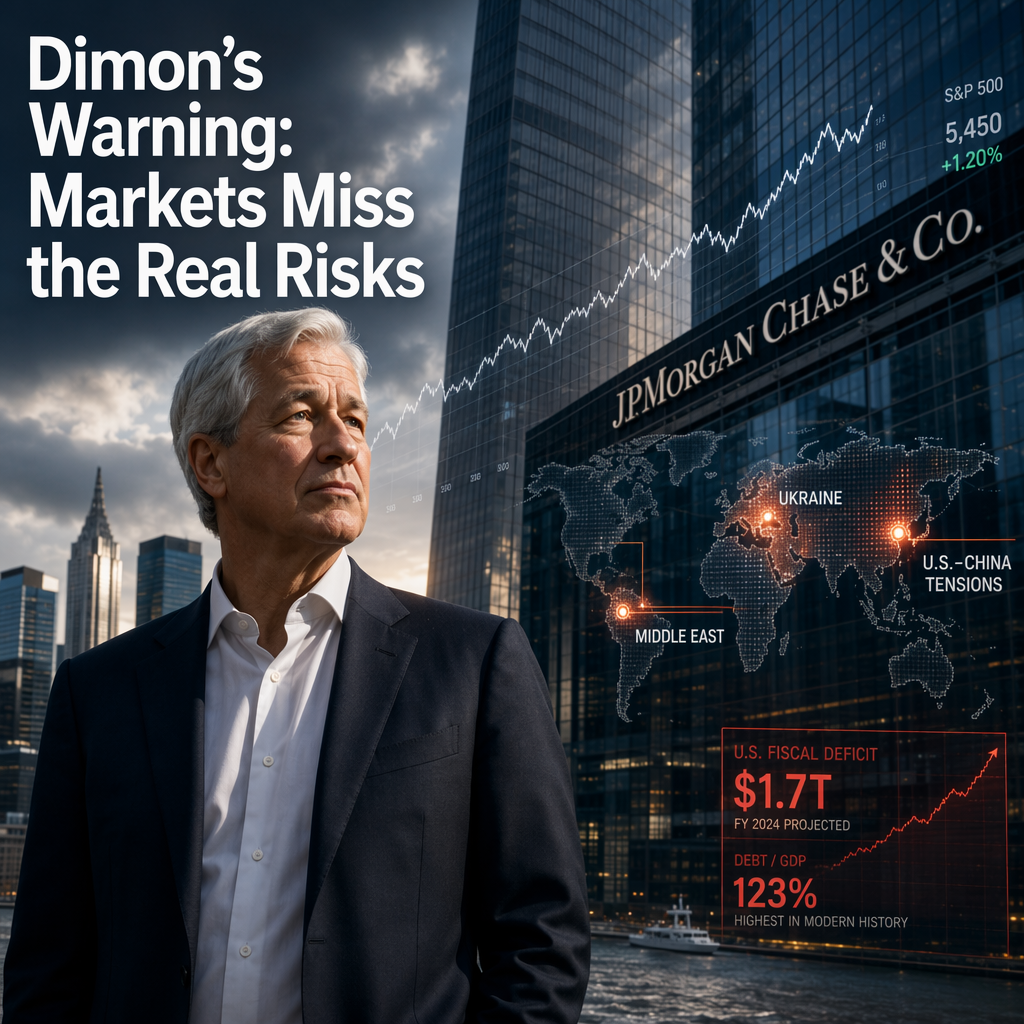
JPMorgan Chase CEO Jamie Dimon cautioned that investors are underestimating significant geopolitical and fiscal risks that could impact financial markets. In an interview released on July 21, 2026, Dimon stated he would not buy equities or long-dated U.S. Treasurys at their current prices, citing concerns over ongoing wars in Ukraine and the Middle East, rising U.S.-China tensions, increased military spending, and mounting government deficits [1].
Dimon emphasized that while some risks may be reflected in current asset prices, the market is not fully pricing in the potential for major shocks. He noted, "It's possible something's baked in, but what's not baked in is what actually happens" [1]. Despite the S&P 500 returning nearly 10% this year, driven by consumer spending, moderating inflation, and enthusiasm for artificial intelligence, Dimon's outlook remains cautious [1].
He further warned that persistent U.S. budget deficits could eventually force a reckoning, potentially driving interest rates higher as bond investors demand greater compensation to finance government debt. Dimon suggested that even if inflation returns to the Federal Reserve's 2% target, the 10-year Treasury yield should be at 4% to 4.5%, indicating little upside for Treasury prices at current levels [1].
While acknowledging the global economy's increased resilience due to lower energy dependence, Dimon maintained that this does not eliminate the risk of a sudden market inflection point. He also compared the current artificial intelligence investment cycle to the early days of the internet, implying a measured approach to the sector's rapid growth [1].
CONCLUSION
Jamie Dimon's remarks highlight a cautious stance on both equities and Treasurys, underlining concerns about underappreciated geopolitical and fiscal risks. Despite strong recent market performance, Dimon warns that persistent deficits and global tensions could eventually trigger higher rates and market volatility. Investors may need to reassess risk as these factors evolve.