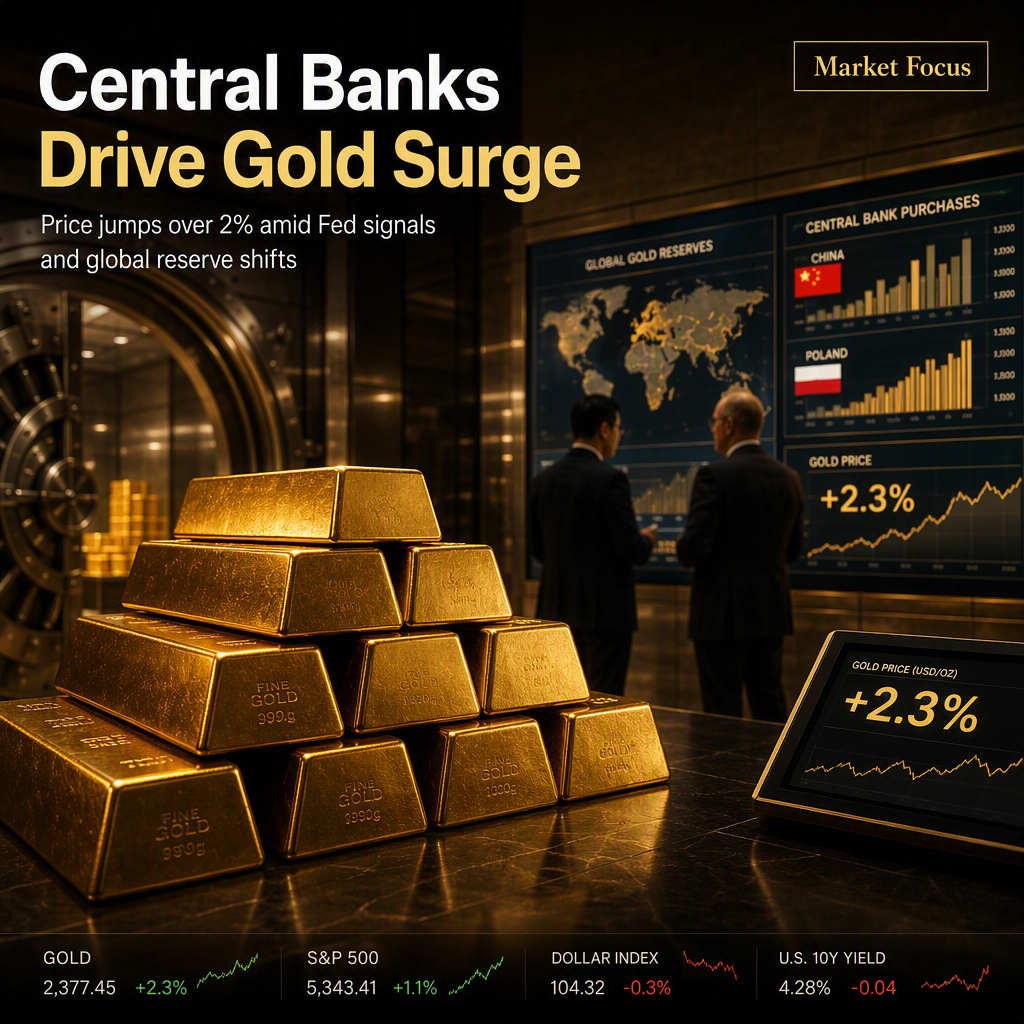
Central banks, led by China and Poland, continued net gold purchases in July, with a reported total of 23 tonnes added to reserves, according to World Gold Council data cited by ING analysts Warren Patterson and Ewa Manthey [1]. China's central bank extended its buying streak to 21 consecutive months, contributing 20 tonnes in July alone [1]. Although the pace of central bank buying has slowed compared to last year, official sector demand remains a key support for the gold market, particularly as emerging market central banks pursue ongoing reserve diversification [1].
Gold prices experienced a notable rise of more than 2% on Thursday, following a weaker-than-expected ADP employment report released on Wednesday [1]. Additionally, comments from US Federal Reserve official Christopher Waller, who indicated openness to holding rates steady at the next FOMC meeting if inflation remains contained, provided further support to gold prices [1].
ING analysts suggest that structural demand for gold is likely to persist, even if central bank purchases moderate from recent highs, due to continued diversification efforts among emerging economies [1].
CONCLUSION
Central bank gold buying, particularly by China and Poland, continues to underpin gold prices, despite a slower pace than last year. Weaker US employment data and dovish Fed comments have further boosted gold, resulting in a price increase of over 2%. Structural demand from official sector buyers is expected to sustain the market even if purchases decline.