Hungary is experiencing an uptick in inflation, which is complicating the central bank's path toward continued interest rate cuts, according to ING analyst Peter Virovacz [1]. Following a disappointing industrial performance in June, ING expects a rebound in industrial production in July, which is seen as crucial for avoiding a quarterly GDP decline. However, August is expected to bring headwinds due to heatwave-related energy issues, leading to voluntary reductions in industrial production volumes [1].
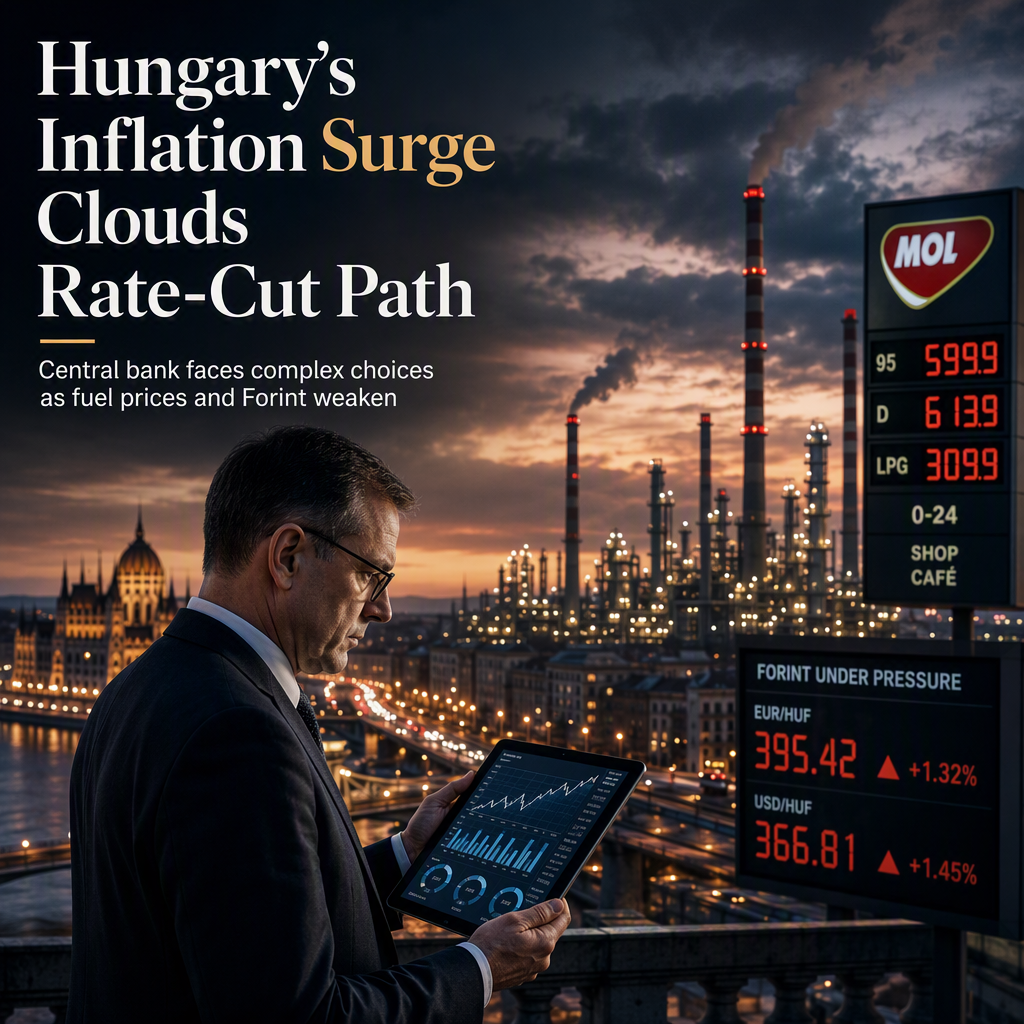
August inflation is projected to rise, driven by higher fuel prices and a weaker Forint. ING estimates that fuel prices will contribute approximately 0.10-0.15 percentage points to the monthly inflation rate, with an overall expected 0.2% monthly inflation reading pushing up the headline figure after months of disinflation [1]. Despite this inflation uptick, ING believes that the 1.4% headline figure will not prompt the Monetary Council to halt its rate-cutting cycle [1].
Nevertheless, the backdrop for monetary policy has become more complex, with rising yields, higher energy prices, and a weaker HUF (Hungarian Forint) adding to the challenges faced by policymakers [1]. ING maintains its expectation for continued rate cuts, but acknowledges that these factors are making the decision-making environment more difficult [1].
CONCLUSION
Hungary's inflation is rising due to higher fuel prices and a weaker Forint, complicating the central bank's rate-cut trajectory. Despite these challenges, ING expects rate cuts to continue, though the environment is becoming more complex. The market is likely to remain cautious as policymakers navigate these headwinds.