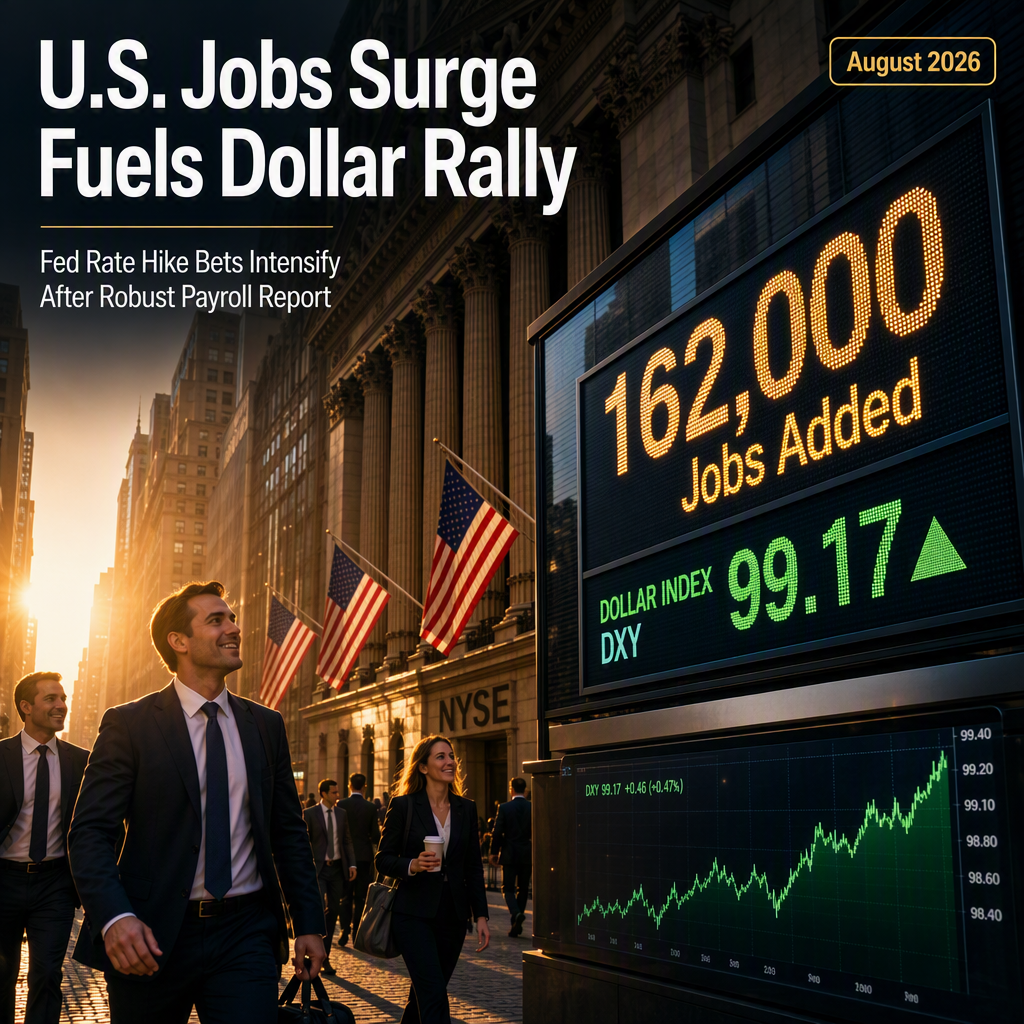
The U.S. economy added 162,000 nonfarm payroll jobs in August 2026, significantly surpassing the consensus forecast of approximately 53,000 to 56,000 jobs, marking the strongest monthly gain since March and reversing a previously soft summer for job growth [1][2]. The Bureau of Labor Statistics also revised June and July figures upward by a combined 55,000 jobs, with July's initial loss now showing a gain of 21,000 [1][2]. The unemployment rate remained steady at 4.1%, which is below the Federal Reserve officials' year-end estimate of 4.5% and unchanged from July, while also being 0.2 percentage points lower than a year ago [1][2].
Average hourly earnings increased by 0.3% month-over-month to $37.75, representing a 3.1% rise over the past year, though this pace has cooled slightly from previous months [1]. The average workweek edged up by 0.1 hour to 34.4 hours, and labor force participation rebounded to 61.6% after hitting a multi-year low in July [1]. A broader measure of underemployment fell to 7.7%, its lowest since June 2025, and planned layoffs in 2026 dropped to a four-year low [1].
The robust jobs report had immediate market implications. The United States Dollar Index (DXY) rose by 0.17% on Friday, reaching 99.17 after touching a daily high of 99.39, as traders reacted to the strong employment data [2]. U.S. Treasury yields also moved higher initially, though the move faded later in the session [2]. Market-implied odds of a Federal Reserve rate hike at the September 16 meeting increased, with the swaps market showing a 63% probability of a 25-basis-point increase, up from 54% the previous day [1][2].
Looking ahead, traders are focusing on upcoming inflation reports, with both producer and consumer price data due next week. According to Fed Governor Christopher Waller, the Fed is in no rush to raise rates if inflation cools, but a disappointing inflation print could keep the possibility of a rate hike alive at the next Federal Open Market Committee meeting [2]. Technical analysis of the DXY suggests a near-term bearish tone, with the index trading below key moving averages and resistance levels, though the strong jobs data has provided some support [2].
CONCLUSION
August 2026's robust U.S. jobs report exceeded expectations, driving the Dollar Index higher and increasing the likelihood of a Federal Reserve rate hike in September. While the labor market shows strength, upcoming inflation data will be crucial in determining the Fed's next move. Market sentiment is cautiously optimistic, with attention now turning to inflation trends and further Fed guidance.