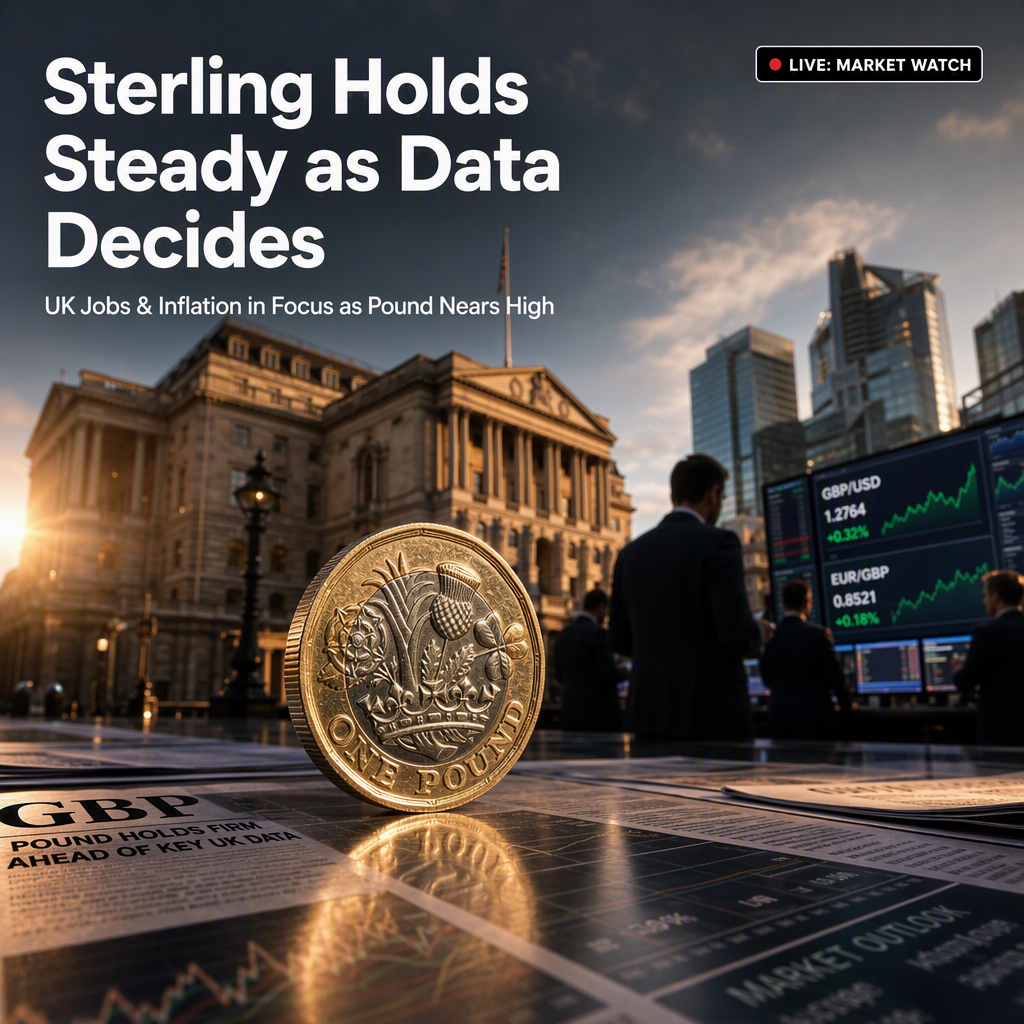
The British Pound has shown modest strength ahead of the release of crucial UK jobs and inflation data, with GBP/USD registering a 0.14% gain on Monday and trading at 1.3552 after reaching a three-month high of 1.3571 [2]. The EUR/GBP cross, meanwhile, remains confined to a narrow range around the mid-0.8500s, trading at 0.8546 and showing little conviction in either direction as traders await the UK jobs report [1].
Market participants are closely watching the UK’s Average Earnings figures, Claimant Count, Employment Change, and the ILO Unemployment Rate, which is expected to edge down from 4.9% to 4.8% in the three-month rolling average to June [1][2]. The Claimant Count Change for July is projected to rise from 6.7K to 11.2K [2]. The upcoming wage data is particularly significant for the Bank of England as it assesses the persistence of domestic inflation; a strong wage print could support the Pound, while a weaker reading may favor the Euro [1].
On the inflation front, the UK Consumer Price Index (CPI) is projected to increase from 0.1% to 0.3% month-on-month in July, and from 2.6% to 2.9% year-on-year, with core inflation expected to tick lower from 2.6% to 2.5% year-on-year [2]. Last week’s data showed the UK economy grew above estimates in June, providing additional support for Sterling [2].
Technical analysis for EUR/GBP indicates a mildly bearish tone, with the cross capped beneath both the 20-period and 100-period Simple Moving Averages at 0.8547 and 0.8557, respectively. Immediate support is seen at 0.8544, with further downside possible if this level is breached [1]. For GBP/USD, the daily chart shows a constructive near-term bullish bias, with the pair holding above key moving averages and trend-line supports, and the Relative Strength Index near 65, suggesting bullish momentum remains in place [2].
Geopolitical developments, particularly regarding US-Iran tensions, are also being monitored. A senior Iranian official warned of a shift to a "fully offensive" stance if the US does not implement the June memorandum of understanding, potentially escalating tensions in the Strait of Hormuz [1]. However, the Iranian Foreign Ministry stated that the "Islamabad agreement has not collapsed and the possibility of returning to it remains" [2]. If US-Iran conflict escalates, this could benefit the US Dollar as inflationary pressures push US yields higher [2].
CONCLUSION
The British Pound is holding firm as traders await key UK jobs and inflation data, with technical and fundamental factors providing near-term support. The outcome of the upcoming wage and inflation releases will be pivotal for Sterling’s direction, while geopolitical risks remain a background factor. Market participants are likely to remain cautious until these critical data points are released.