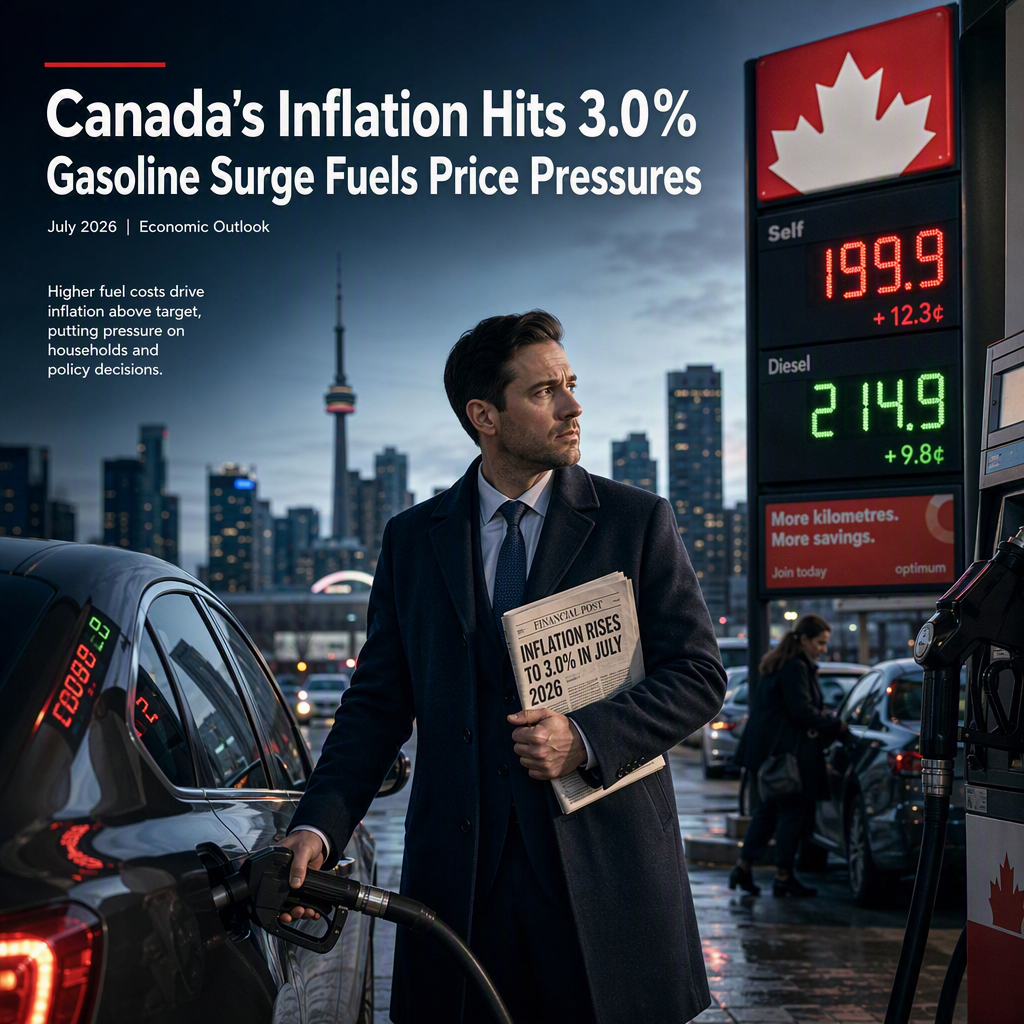
Canada's inflation rate increased to 3.0% year-over-year in July 2026, surpassing the 2.9% forecast by economists and up from 2.8% in June, according to Statistics Canada data. The primary driver of this uptick was a sharp rise in gasoline prices, which surged 25.7% compared to a year earlier, up from a 20.5% increase in June. This spike was attributed to disruptions in global energy supply chains, specifically a blockade in the Strait of Hormuz and issues in Red Sea shipping routes, which pushed pump prices higher for Canadian consumers [1].
Excluding gasoline, inflation appeared more subdued, with the Consumer Price Index (CPI) rising just 2.2%—a level consistent for the third consecutive month. The Bank of Canada’s preferred core inflation measures, CPI-trim and CPI-median, averaged 1.95%, remaining below the central bank’s 2% target. Other components of the CPI showed mixed trends: grocery prices rose 3.1% (down from 3.9%), marking the 18th straight month above headline CPI, while shelter costs increased only 1.3%, the slowest pace since May 2020. Travel-related costs also contributed to inflation, with travel tour prices up 15.2% and air transportation up 12%, driven by World Cup demand and higher jet fuel costs [1].
Despite the headline inflation reaching the upper end of the Bank of Canada’s 1% to 3% target range, underlying price pressures remain contained. Analysts observed little evidence that higher energy costs are spilling over into the broader economy. As a result, markets anticipate the Bank of Canada will maintain its policy rate at 2.25% for the remainder of 2026 [1].
CONCLUSION
Canada's July 2026 inflation data shows a headline increase to 3.0%, primarily due to a surge in gasoline prices linked to global supply disruptions. However, underlying inflation remains subdued, and markets expect the Bank of Canada to hold rates steady. The data suggests that while energy costs are volatile, broader price pressures are not intensifying.