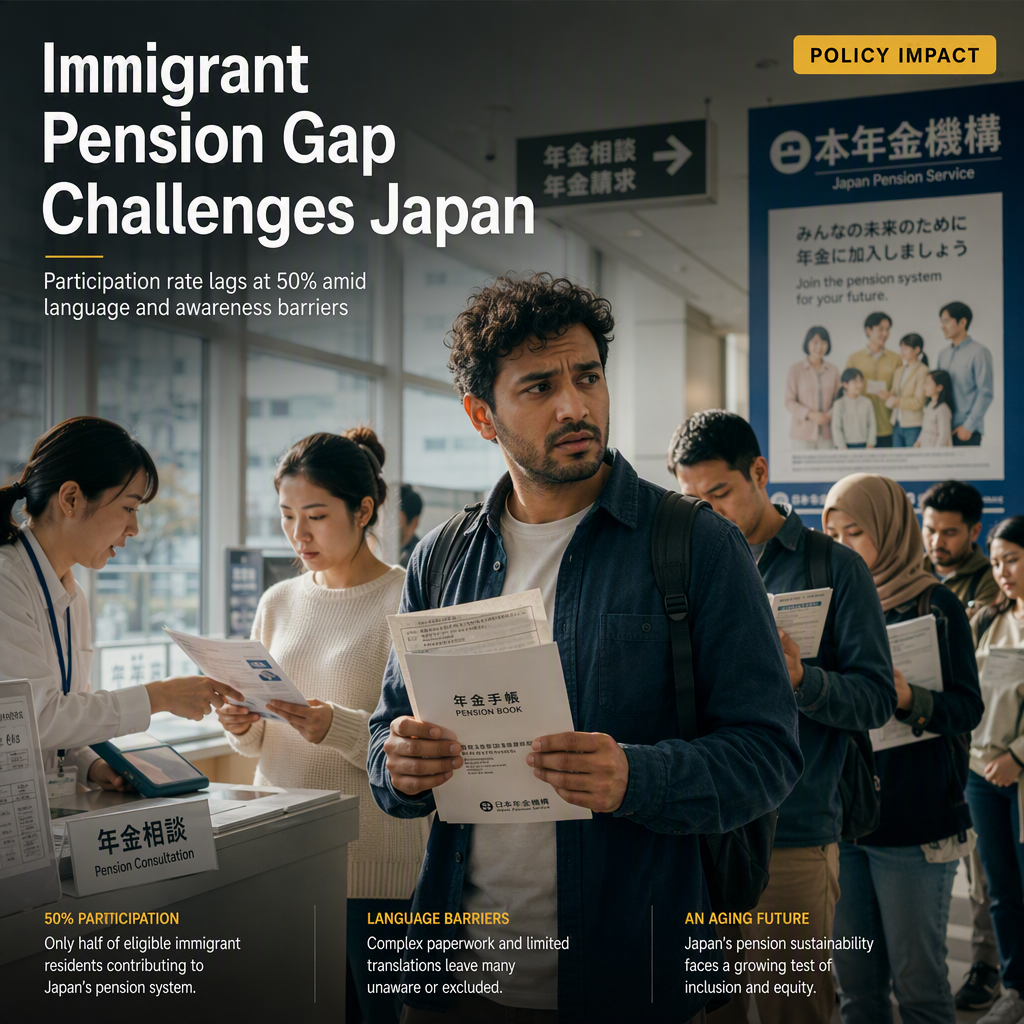
Japan is experiencing a significant shortfall in pension contributions from foreign residents, with official data showing that immigrants are paying into the national pension program at only about 50% of the expected rate [1]. Japanese law requires all residents aged 20 to 60, regardless of nationality, to participate in the national pension system [1]. However, the participation rate among foreign residents is notably lower than that of Japanese nationals [1].
The article attributes this gap to a lack of awareness and language barriers, as many immigrants are either unaware of the pension requirement or struggle to understand the necessary procedures and documentation due to limited Japanese language proficiency [1]. The data underscores the difficulties immigrants face in navigating government benefits bureaucracy and highlights the need for more accessible information and support for this population [1].
While the article does not provide specific financial figures, technical chart analyses, or trading advice, it notes that the participation gap may have longer-term implications for Japan's social security system and the financial security of immigrant workers [1]. No immediate market reactions or analyst opinions are discussed in the source [1].
CONCLUSION
Japan's immigrant pension participation rate remains at only half the expected level, primarily due to awareness and language challenges. While the article does not indicate immediate market impact, the participation gap could have longer-term effects on the country's social security system and immigrant financial security.