
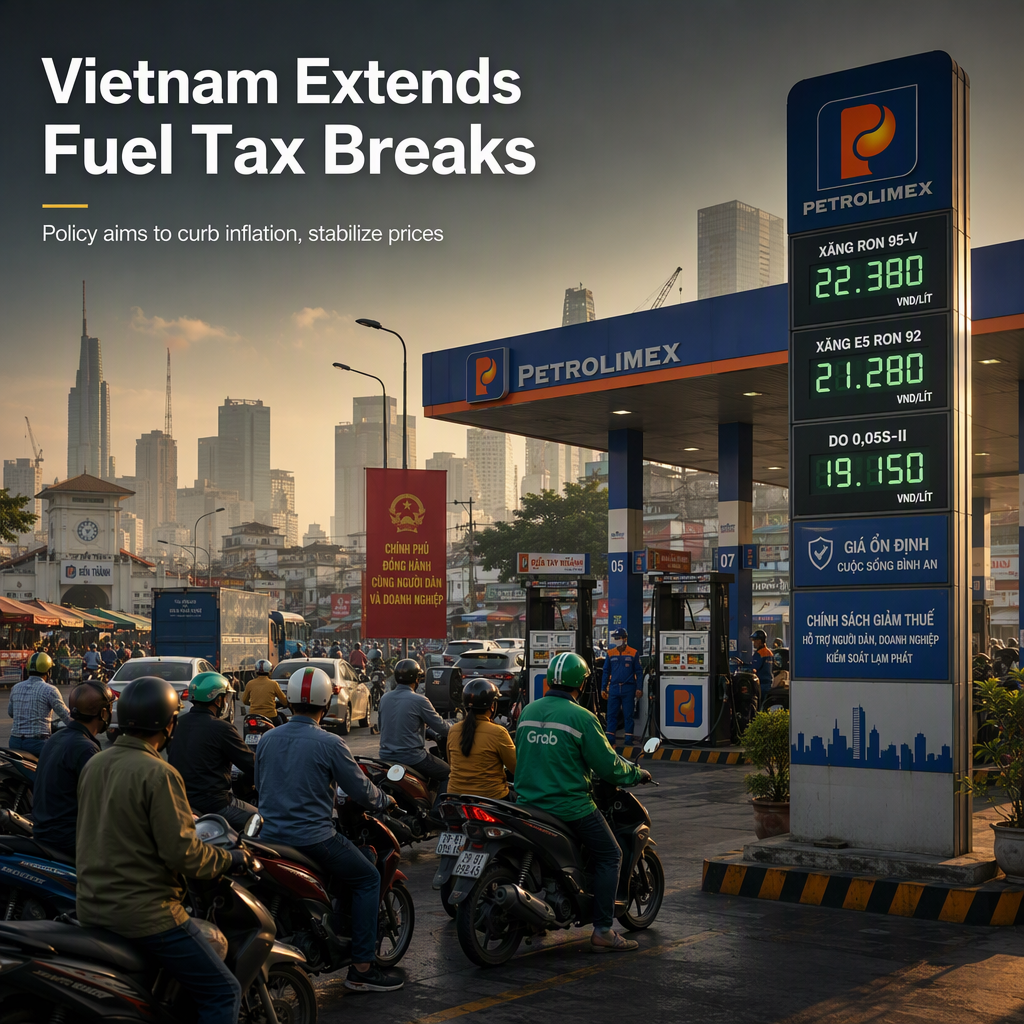
Vietnam has announced an extension of several fuel-related tax breaks through the end of 2026 in response to ongoing global energy supply disruptions caused by the Middle East conflict [1]. The government’s decision is aimed at containing inflation and keeping domestic fuel prices lower, as volatility in global energy markets continues to impact the economy [1]. The tax breaks include reductions on fuel consumption and import taxes, and are expected to result in a revenue loss estimated at $530 million in the fourth quarter of the year [1].
Officials stated that the policy is designed to stabilize domestic fuel prices and prevent secondary effects on transportation and other key sectors of the economy [1]. The extension of these tax breaks comes as Vietnam, along with other countries, faces inflationary pressures due to persistent instability in global energy markets [1]. Policymakers hope that by easing the tax burden on fuel, they can anchor inflation expectations and support economic activity during this period of heightened uncertainty [1].
No specific market reactions or analyst opinions were mentioned in the article. However, the government’s proactive fiscal measures highlight its commitment to mitigating the economic impact of external shocks on inflation and growth [1].
CONCLUSION
Vietnam’s extension of fuel tax breaks through the end of 2026 is a targeted response to global energy market disruptions and inflationary pressures. The policy is expected to help stabilize domestic fuel prices and support the broader economy, despite an anticipated revenue loss of $530 million in the fourth quarter. Market participants will be watching for further developments as the government seeks to balance fiscal costs with economic stability.