
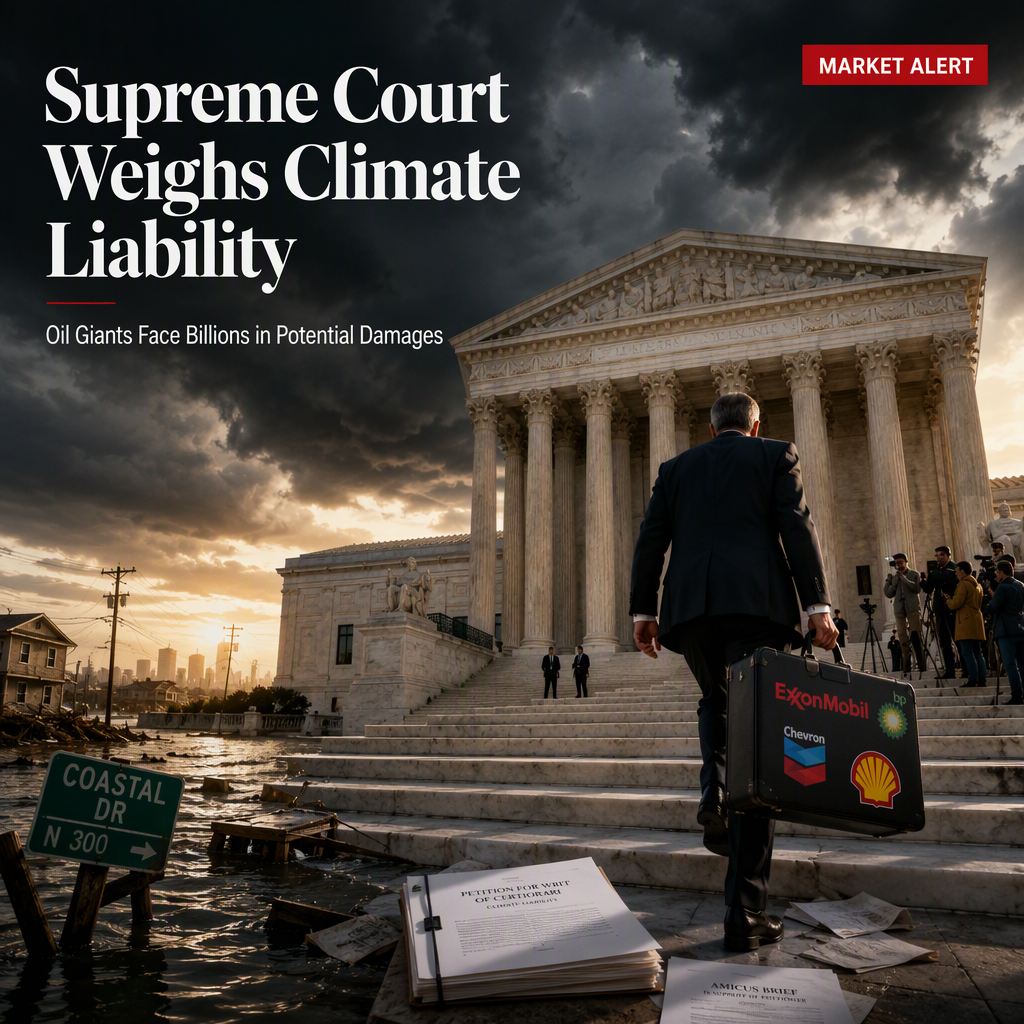
The Supreme Court commenced its new term by hearing arguments in a pivotal case that seeks to hold large energy companies financially responsible for damages attributed to climate change [1]. The case centers on whether these companies should be liable for costs related to infrastructure damage, public health issues, and environmental remediation resulting from climate-related disasters [1]. Plaintiffs contend that energy companies ought to bear the significant financial burdens faced by local and state governments due to these disasters [1].
The potential financial implications for the energy sector are substantial, with the possibility of oil and gas companies facing billions of dollars in liability claims if the Court rules in favor of the plaintiffs [1]. Legal analysts suggest that such a ruling could set a precedent, opening the door for future lawsuits against companies whose products contribute to greenhouse gas emissions [1].
During the hearing, justices focused on the scope of liability and the challenges in quantifying financial damages directly linked to corporate actions [1]. Legal experts are closely monitoring the proceedings for indications of how the Court might rule and the subsequent effects on energy company stock prices and the broader market [1].
Market analysts have cautioned that the outcome could lead to significant volatility in the shares of major oil and gas firms, advising investors to stay alert to sector developments and to consider the risks to company earnings and future litigation exposure [1].
CONCLUSION
The Supreme Court’s consideration of energy company liability for climate change damages carries major financial and legal implications for the sector. A ruling in favor of the plaintiffs could expose oil and gas firms to substantial liabilities and increased market volatility, making this a closely watched case for investors and industry stakeholders.